



Mental Health & Therapy Speech Therapy
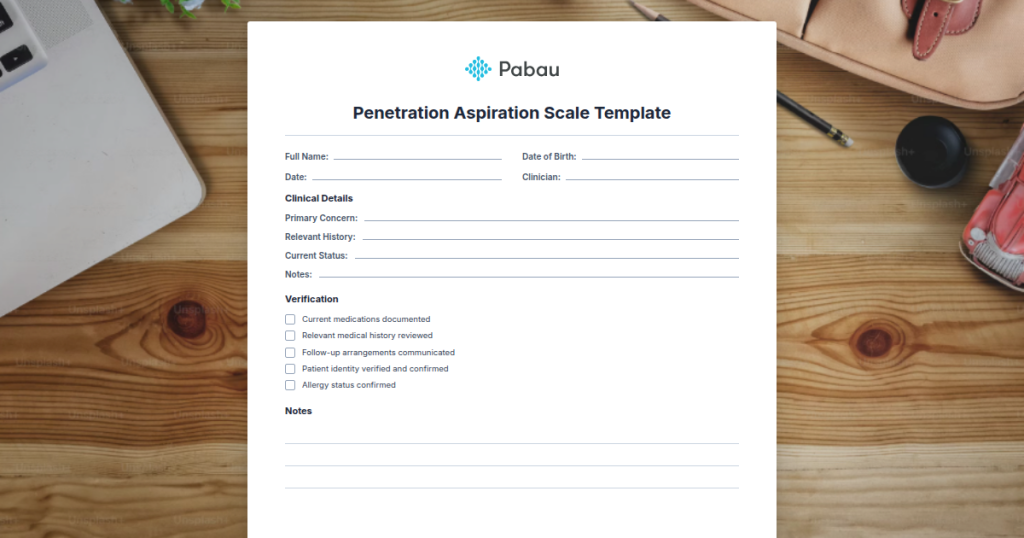
Penetration Aspiration Scale Template
Penetration Aspiration Scale Template Overview The Penetration Aspiration Scale ...

March 17, 2026


Buy now, pay later is now available in Pabau

"I recommend Pabau to all of my colleagues looking to start up a clinic. We are able to book patients, manage the diary, fill in forms, and annotate."
Dr Ahmed El Houssieny
Founder and medical director of Bank MediSpa

"I chose Pabau because I appreciate the importance of Customer Relationship Management in the 21st century."
Dr Leah Totton
Founder / Co-Owner, Dr. Leah

"Since using Pabau, our operations are more efficient. Productivity is better, and we waste fewer manpower hours. We have greater visibility over our business."
Roxanne Merchant
Head of Operations, Juvea Medical

The Circle of Control Worksheet helps clients categorize concerns into three zones: what they can directly control, what they can influence, and what they must accept
This evidence-based tool reduces anxiety by focusing energy on actionable items and building psychological resilience
Mental health professionals use this worksheet across therapy, coaching, stress management, and cognitive behavioral therapy settings
Professionally designed therapeutic worksheet to help clients identify and categorize controllable vs. uncontrollable factors. Printable PDF format, ready to use immediately.
Download templateThe Circle of Control contains only what you can directly change through your own actions: your behavior, thoughts, words, and choices. The Circle of Influence includes situations where you have some impact but not complete control, like influencing colleagues’ opinions, contributing to team results, or affecting policy through participation. Understanding this distinction prevents wasted energy on false expectations.
During acute stress or when learning the concept, weekly completion builds the skill of distinguishing controllable factors. For ongoing anxiety management, every 2-4 weeks works well when facing new stressors. Some clients keep it as a quick reference tool to use whenever worry feels overwhelming or they feel stuck.
Yes, with age-appropriate modifications. Children ages 8-12 benefit from simplified language and concrete examples (homework, friendships, family rules). Visual aids help younger children understand the concept. Teens typically handle the standard worksheet with guidance. This exercise helps children develop emotional regulation and resilience by understanding what they can and cannot change.
Absolutely. The Circle Of Control Worksheet integrates seamlessly with cognitive behavioral therapy by challenging unhelpful thoughts about control. It complements mindfulness and acceptance-based approaches perfectly. Combine it with problem-solving therapy, solution-focused brief therapy, and stress management interventions for comprehensive treatment.
It reduces anxiety by externalizing and categorizing worries visually. Identifying concerns outside your control helps you practice acceptance and release unnecessary stress. Focusing on what you can control provides actionable steps and restores agency, directly countering the helplessness that fuels anxiety.