



Mental Health & Therapy Speech Therapy
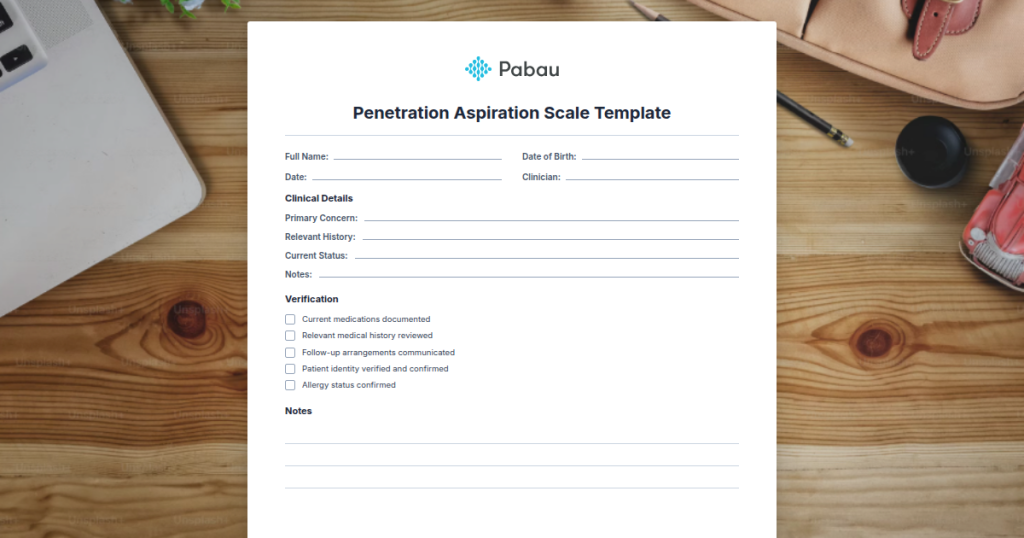
Penetration Aspiration Scale Template
Penetration Aspiration Scale Template Overview The Penetration Aspiration Scale ...

March 17, 2026


Buy now, pay later is now available in Pabau

"I recommend Pabau to all of my colleagues looking to start up a clinic. We are able to book patients, manage the diary, fill in forms, and annotate."
Dr Ahmed El Houssieny
Founder and medical director of Bank MediSpa

"I chose Pabau because I appreciate the importance of Customer Relationship Management in the 21st century."
Dr Leah Totton
Founder / Co-Owner, Dr. Leah

"Since using Pabau, our operations are more efficient. Productivity is better, and we waste fewer manpower hours. We have greater visibility over our business."
Roxanne Merchant
Head of Operations, Juvea Medical

A Self Worth Worksheet Template is an evidence-based therapeutic tool that helps clients systematically explore and strengthen their sense of personal value
Using structured worksheets in practice increases consistency, saves time on material creation, and enables better progress tracking across client sessions
Digital templates integrated into practice management software streamline delivery and allow automated pre- and post-session worksheet assignments
Comprehensive therapeutic tool with guided exercises and reflective questions to help clients explore and strengthen their sense of personal value.
Download templateSelf-worth refers to intrinsic, unconditional value as a human being, while self-esteem typically reflects evaluations of specific competencies or achievements. A self-worth worksheet focuses on existential value independent of performance, whereas self-esteem materials often address accomplishments, skills, and comparative judgments. Both are valuable, but they address different psychological dimensions.
Frequency depends on your treatment plan and the client’s needs. Many practitioners recommend weekly completion during intensive therapy phases, then shifting to monthly or quarterly check-ins once progress stabilizes. Regular completion creates better data for progress tracking and maintains momentum on self-perception work between sessions.
Yes, with appropriate adaptations. Adolescent versions should address developmental concerns like peer relationships, social media, and identity formation. Use age-appropriate language, relatable examples, and account for developmental cognitive capacities. Always involve parents or guardians as clinically appropriate and within your jurisdiction’s regulations.
Digital delivery enables automated pre-session and post-session distribution through client portals, ensures consistent administration, allows easier progress comparison across multiple timepoints, and reduces administrative burden on clinicians. Automated pre- and post-care systems also boost client engagement by normalizing therapeutic homework.
Any worksheet revealing acute risk requires immediate clinical attention. Don’t rely solely on the worksheet; follow up with direct conversation, safety assessment, and appropriate crisis protocols. Document your clinical decision-making. The worksheet is a clinical tool, not a diagnostic assessment, so always combine it with direct clinical judgment.