



Primary & Preventive Care
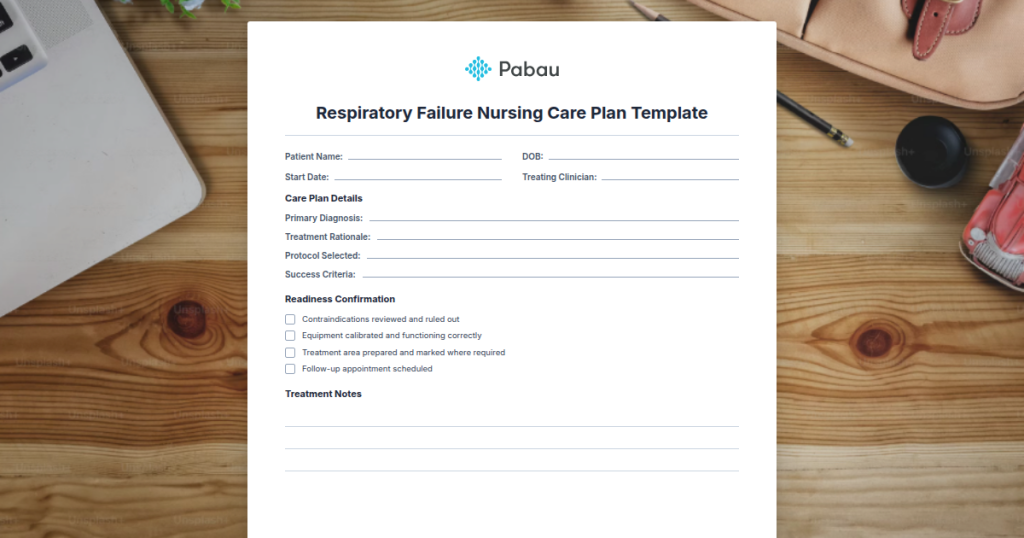
Respiratory Failure Nursing Care Plan Template
A Respiratory Failure Nursing Care Plan Template provides clinicians with a syst...

March 17, 2026


Buy now, pay later is now available in Pabau

"I recommend Pabau to all of my colleagues looking to start up a clinic. We are able to book patients, manage the diary, fill in forms, and annotate."
Dr Ahmed El Houssieny
Founder and medical director of Bank MediSpa

"I chose Pabau because I appreciate the importance of Customer Relationship Management in the 21st century."
Dr Leah Totton
Founder / Co-Owner, Dr. Leah

"Since using Pabau, our operations are more efficient. Productivity is better, and we waste fewer manpower hours. We have greater visibility over our business."
Roxanne Merchant
Head of Operations, Juvea Medical

An Atrial Fibrillation Nursing Care Plan Template provides a structured framework for managing AFib patients, ensuring consistent, evidence-based care across all settings
Key nursing diagnoses include decreased cardiac output, risk for stroke, activity intolerance, and anxiety related to cardiac symptoms
Essential interventions focus on cardiac monitoring, medication management, patient education, and stroke prevention strategies
Downloadable templates save time and standardize documentation while meeting compliance requirements for healthcare providers
Comprehensive evidence-based template for managing AFib patients with structured assessment, nursing diagnoses, interventions, and discharge planning.
Download templateThe primary goal is to provide structured, evidence-based care that maintains stable cardiac output, prevents stroke through anticoagulation, ensures medication compliance, and reduces hospital readmissions through comprehensive patient education and symptom management.
Acute care settings require continuous telemetry monitoring. Stable outpatients may transition to periodic ECG monitoring or portable cardiac event monitors based on symptom frequency and rate control status. Your care plan should specify monitoring frequency based on individual patient needs.
The CHA2DS2-VASc score predicts stroke risk in AFib patients by assessing congestive heart failure, hypertension, age, diabetes, prior stroke, vascular disease, age, and sex. A score of 2 or higher typically indicates the need for anticoagulation therapy to prevent thromboembolism.
Activity restrictions depend on symptom severity and heart rate control. Most stable AFib patients tolerate moderate activity well. Your Atrial Fibrillation Nursing Care Plan Template should include individualized activity prescriptions based on functional capacity and cardiology recommendations.
Essential education includes medication adherence (especially anticoagulants), recognition of warning signs, heart rate monitoring techniques, dietary considerations with anticoagulation therapy, stress management, and when to seek emergency care. Effective education significantly improves outcomes and reduces readmissions.