




Top 5 EHR Systems in Ireland (2026 Guide)
Compare the top 5 EHR systems used by Irish healthcare practices in 2026. Covers...

March 25, 2026


Buy now, pay later is now available in Pabau

"I recommend Pabau to all of my colleagues looking to start up a clinic. We are able to book patients, manage the diary, fill in forms, and annotate."
Dr Ahmed El Houssieny
Founder and medical director of Bank MediSpa

"I chose Pabau because I appreciate the importance of Customer Relationship Management in the 21st century."
Dr Leah Totton
Founder / Co-Owner, Dr. Leah

"Since using Pabau, our operations are more efficient. Productivity is better, and we waste fewer manpower hours. We have greater visibility over our business."
Roxanne Merchant
Head of Operations, Juvea Medical

Kareo (now Tebra) excels at US insurance billing but lacks depth for multi-specialty, private-pay, and international clinics.
Pabau leads as the best Kareo alternative for aesthetic, wellness, and multi-location private practices requiring integrated booking, clinical documentation, and payment workflows.
Jane App scores highest on ease of use among allied health alternatives, while athenahealth suits larger US medical groups needing robust RCM.
Pricing structures vary significantly – Kareo/Tebra charges per provider plus RCM fees, which can escalate quickly for growing practices.
Your ideal platform depends on specialty, billing model (insurance vs private pay), practice size, and whether you operate inside or outside the US.
Kareo built its reputation serving independent US physicians with integrated EHR, scheduling, and insurance billing under one roof. Since merging with PatientPop to form Tebra in 2021, the product has continued under the Kareo brand name in many markets – but the transition has not been seamless. Reviews on G2 and Capterra consistently flag customer support delays, per-provider pricing that scales poorly, and limited suitability for practices operating outside the US fee-for-service model. If you are searching for the best Kareo alternatives, you are likely weighing whether the platform still fits how your clinic actually operates.
The market has matured considerably. Clinics running aesthetic medicine, physiotherapy, private GP services, mental health practices, and multi-specialty hybrid models now have more purpose-built options than ever before. This guide evaluates the leading Kareo alternatives across scheduling, clinical documentation, billing, integrations, and support – covering what each platform does well and where it falls short. According to the Medical Group Management Association (MGMA), software switching decisions are most often triggered by support failures and billing workflow friction, which maps directly to the pain points Kareo/Tebra users report most frequently.
Seven platforms consistently emerge as credible replacements when evaluating the best Kareo alternatives for medical practices. Each serves a different segment of the market, and no single tool is the right fit for every clinic type. The list below is ordered with Pabau first, followed by the remaining alternatives evaluated alphabetically.

The platforms above vary substantially in their approach to clinical documentation, billing model support, scheduling complexity, and the types of practices they serve best. The sections below break down what each alternative offers, where it excels, and what trade-offs you should anticipate. Kareo’s core strength has always been US insurance billing workflows – understanding where alternatives match, exceed, or intentionally diverge from that focus is the starting point for any evaluation.
Three criteria matter most when comparing the best Kareo alternatives for clinical practices: how the platform handles your billing model (insurance, private pay, or hybrid), whether the clinical documentation tools match your specialty, and how the pricing structure scales as your team grows. A platform optimised for solo US primary care physicians will create friction for a 10-practitioner aesthetic clinic – and vice versa.
AdvancedMD positions itself as a comprehensive cloud-based platform covering EHR, practice management, scheduling, billing, and telehealth within a single system. For US specialty practices running high volumes of insurance claims, the platform offers deep customisation across clinical templates – a genuine differentiator compared to platforms with more rigid documentation structures. The telehealth integration capability is well-documented, which matters for practices that shifted to virtual care and do not want to manage a separate video consultation tool. Reviewers on Capterra rate AdvancedMD at 3.6 out of 5, citing specialty customisation and billing depth as standout positives.

Cost is the most consistent complaint. AdvancedMD is expensive for smaller practices – the pricing model can involve per-provider fees alongside implementation and training costs, making total cost of ownership difficult to predict. Several reviewers on G2 (rated 3.5 out of 5) specifically mention long-term contract commitments as a concern. The learning curve is steep; practices without a dedicated billing specialist or IT resource may find the initial setup period disruptive. For clinics outside the US insurance ecosystem – aesthetic practices, private wellness clinics, or physiotherapy providers – AdvancedMD’s feature depth becomes largely irrelevant, and the pricing premium is hard to justify.
The athenaOne platform combines EHR, practice management, and revenue cycle management into a unified system built explicitly for US ambulatory care. For mid-to-large medical groups running complex billing operations, the RCM automation is a genuine strength – the platform handles ERA/EOB processing, denial management, and claims follow-up at a depth that few alternatives match. Reporting and analytics are robust, making it a reasonable choice for group practices that need visibility across multiple providers and locations. According to information available on their website, athenahealth’s integrated approach to claims management and scheduling is built around the US fee-for-service model. Capterra reviewers give athenahealth 3.8 out of 5, with billing automation cited as a key strength.
Small practices and independent physicians consistently report that athenahealth’s cost is prohibitive. Implementation is complex, and practices describe onboarding timelines measured in months rather than weeks. Customer support responsiveness has drawn criticism across multiple review platforms – G2 reviewers rate it at 3.8 out of 5, with support speed flagged repeatedly. For any clinic outside US insurance billing – including private GP practices, aesthetics, or functional medicine providers – athenahealth’s value proposition largely does not apply. The platform is not designed for private-pay, package-based, or international billing models.
DrChrono is built around an iPad-first design philosophy, making it one of the more usable mobile EHR options for US independent physicians who conduct rounds or see patients across multiple rooms. The digital forms and clinical template customisation are genuine strengths – practices can tailor documentation workflows to their specialty without requiring significant IT support. Built-in medical billing is included, which reduces the need for separate billing software for smaller practices. Capterra reviewers assign DrChrono a 3.9 out of 5 rating, noting the mobile interface as a particular advantage.
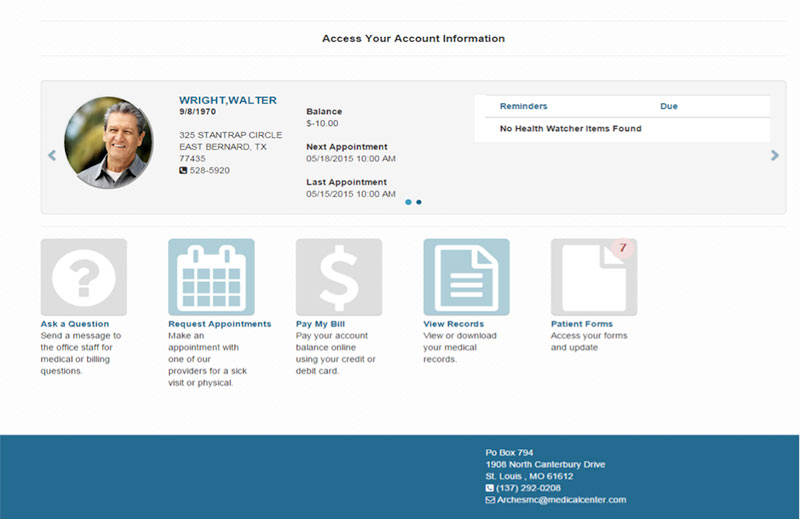
Customer support is DrChrono’s most frequently cited weakness across review platforms. G2 reviewers rate the platform at 3.6 out of 5, with billing errors and claim denial rates mentioned in multiple reviews. Some users describe an interface that feels dated relative to newer platforms. Like AdvancedMD and athenahealth, DrChrono is built around US insurance billing workflows – making it a poor fit for clinics operating on private-pay or package-based billing models, or for practices outside the US. The private practice EHR market has moved quickly, and DrChrono’s pace of feature development has drawn some criticism.
Jane App has built a reputation for exceptional user experience – the platform consistently receives the highest ratings among the alternatives in this comparison. Capterra reviewers give Jane App 4.8 out of 5, while G2 reviewers rate it 4.7 out of 5 – significantly higher than Kareo and most alternatives listed here. Its strength lies in allied health: physiotherapy, chiropractic, massage therapy, occupational therapy, and mental health providers consistently cite it as their preferred tool. Online booking is clean and patient-facing, and the onboarding experience is widely praised as one of the easier transitions in the market. For Canadian practices and US allied health providers who do not depend on complex insurance billing, Jane App is a compelling option.
Jane App’s US insurance billing capabilities are limited. Practices that depend on high-volume insurance claims submission, ERA processing, or clearinghouse integration will find the platform underpowered for that workflow. The integrations ecosystem is smaller than US-centric platforms. For physical therapy EMR or chiropractic practices in the US that bill primarily through insurance, Jane App may require supplementary billing tools. It is not designed for aesthetic or medical spa workflows, and multi-location practices with complex room and resource scheduling may encounter limitations.
Practice Fusion markets itself as a lower-barrier entry point into EHR for US independent practices. The platform covers core ambulatory EHR functions – charting, e-prescribing, lab ordering, and scheduling – with a design philosophy aimed at smaller practices that need functional tools without enterprise complexity. For solo physicians transitioning from paper records or an ageing legacy system, the initial setup is relatively accessible.

Practice Fusion’s pricing model has changed significantly in recent years – the previously free-to-use model has been replaced, and current costs should be verified directly with the vendor before making any comparison. The platform’s positioning outside the US market is minimal, and the feature depth for anything beyond basic US ambulatory EHR is limited. Practices looking for integrated online booking, patient portal functionality, or package-based billing will find gaps that require workarounds or third-party tools. The platform also carries reputational context from a 2019 Department of Justice settlement regarding data practices – worth noting during due diligence.
SimplePractice is purpose-built for mental health and therapy providers – psychologists, therapists, counsellors, and social workers who need scheduling, notes, billing, and a client portal within a single system. The platform’s clinical documentation tools are calibrated to therapy workflows: progress notes, treatment plans, and intake forms are built in and straightforward to customise. Online booking, automated appointment reminders, and integrated billing – including insurance claim submission for US providers – are well-implemented for the therapy context. For mental health EMR needs in solo or small group practices, it is a credible option.
SimplePractice is designed for one specific clinical context. Practices that offer services outside traditional therapy – integrative health, functional medicine, aesthetic treatments, or multi-disciplinary care – will quickly encounter the platform’s boundaries. f your clinic focuses on holistic care, you may find that a dedicated functional medicine emr provides the specific charting and supplement tracking tools that general therapy platforms lack. There is no meaningful support for clinical photography, aesthetic treatment records, injection documentation, or the multi-room scheduling complexity common in larger private practices. For any clinic that has evolved beyond a single-specialty mental health model, SimplePractice requires supplementary tools that reduce its appeal as a unified system.
Pabau is an all-in-one clinic management platform built for private medical, aesthetic, wellness, and multi-specialty practices. Where Kareo centres on US insurance billing, Pabau is designed for the operational reality of private-pay and hybrid clinics – combining online booking, clinical documentation, consent forms, treatment records, invoicing, payment processing, and patient engagement in a single system. The platform supports aesthetic medicine workflows that no US-centric EHR addresses: clinical photography with before-and-after tracking, injection plotting, customisable treatment notes, and integrated consent form management.

Multi-location support is a core capability rather than an add-on. Clinics running two to twenty locations can manage booking, staff schedules, room allocation, and reporting across all sites from a single dashboard. The online booking system supports complex booking flows – multiple practitioners, service types, room requirements, and patient intake forms – with automation built in for confirmation messages, reminders, and pre-appointment forms. According to Capterra reviewers, Pabau scores 4.2 out of 5, with all-in-one clinic management and strong onboarding support among the most frequently cited positives. G2 reviewers give Pabau 4.3 out of 5, and Trustpilot shows 4.5 out of 5 – consistently higher than Kareo/Tebra across all measured platforms.
Pabau supports a broad range of healthcare industries: medical aesthetics and dermatology, private GP and wellness clinics, longevity and functional medicine, women’s and men’s health, fertility and sexual health, physical therapy, sports medicine, chiropractic, osteopathy, mental health, and multi-specialty hybrid clinics. Unlike Kareo’s US physician focus, Pabau is built to scale across different clinical models. The AI-assisted documentation capability supports faster clinical note completion – reducing administrative time without requiring a separate ambient AI tool. Pabau’s pricing uses a subscription-based model, avoiding the per-claim and percentage-of-collections fee structures that make Kareo/Tebra costs difficult to predict as a practice grows.
Pabau is not the right tool for US practices whose entire workflow depends on insurance claim submission, ERA/EOB processing, and US clearinghouse integration. The platform is stronger for private-pay and hybrid billing models. New users report a learning curve during initial setup – the breadth of features means there is more to configure than in single-purpose tools. Some users have noted that certain feature requests take time to reach the product roadmap. The mobile app experience, while functional, has room for development relative to the desktop interface.

Pabau combines online booking, clinical documentation, consent forms, treatment records, invoicing, and patient engagement in one platform – without per-claim fees or US insurance complexity. Book a demo to see it working in your clinic type.

The table below compares core features across the seven best Kareo alternatives and Kareo/Tebra itself. Feature availability is based on information available at the time of writing – verify current capabilities directly with each vendor before making a purchasing decision.
Pricing transparency varies considerably across this group. Kareo/Tebra uses a per-provider model that can include additional RCM service fees – costs that grow substantially as a practice adds physicians or expands billing volume. For multi-provider practices, this structure can make total cost of ownership significantly higher than the base rate implies. Always verify current pricing directly with each vendor, as models change and introductory rates may differ from renewal terms.
AdvancedMD and athenahealth both carry pricing that reflects their enterprise positioning – they are generally not competitive for small independent practices on budget. Jane App and SimplePractice use clearer subscription-based structures that make monthly costs predictable. Pabau’s subscription model avoids per-claim or percentage-of-collections fees, which makes it easier to forecast costs as a clinic scales across locations or adds practitioners. Practice Fusion’s pricing model has changed; current costs require verification directly with the vendor. For a detailed breakdown of how Pabau’s pricing compares to the market, visit the pricing page.
Before committing to any Kareo alternative, request a full pricing breakdown that includes implementation fees, training costs, per-user or per-location add-ons, and any percentage-of-collections RCM charges. The advertised monthly rate rarely reflects actual total cost of ownership for a growing practice.
Review platform data reveals meaningful gaps between how Kareo/Tebra and its alternatives are perceived by active users. Kareo/Tebra holds a 3.9 out of 5 on Capterra and 3.7 out of 5 on G2 – among the lower scores in this comparison. The most consistent complaint themes across both platforms relate to customer support responsiveness following the Tebra rebrand, billing module complexity for non-specialist staff, and pricing concerns as practices grow.
According to Capterra reviewers, Pabau scores 4.2 out of 5. Positive themes include all-in-one clinic management, strong online booking and patient forms, and responsive onboarding support. Users note a learning curve during initial setup and some feature request lead times as areas for improvement. G2 reviewers rate Pabau at 4.3 out of 5, and the platform holds a 4.5 out of 5 on Trustpilot – the strongest set of scores across all platforms compared here relative to Kareo.
Jane App leads the group on user satisfaction scores. Capterra reviewers give it 4.8 out of 5 and G2 reviewers rate it 4.7 out of 5. The consistent themes are ease of use, patient experience quality, and onboarding. The limitation acknowledged in reviews is US insurance billing – something Jane App users in allied health generally accept as a trade-off for the overall experience.
All three US-centric platforms receive moderate ratings. AdvancedMD sits at 3.6 on Capterra and 3.5 on G2, with recurring complaints about cost and long-term contracts. athenahealth holds 3.8 on both Capterra and G2, with implementation complexity and support speed as the main friction points. DrChrono scores 3.9 on Capterra and 3.6 on G2, with mobile usability praised and support quality cited as a concern.
Review platform ratings reflect the mix of practice types using each platform. A tool with a 4.8 rating from allied health solo practitioners may score far lower for a 15-physician group practice with complex billing needs – always filter reviews by practice size and specialty before drawing conclusions.
The right platform depends on three variables above all others: your billing model, your specialty mix, and your growth trajectory. Here is a direct-access decision framework.
Choose Pabau if: you run a private-pay or hybrid clinic – aesthetic medicine, dermatology, wellness, private GP, functional medicine, physiotherapy, mental health, or any multi-specialty model. Pabau is also the right choice if you operate across multiple locations or plan to scale, need integrated clinical photography and consent management, and want predictable subscription pricing without US insurance complexity. The Pabau vs Tebra comparison page provides a more detailed side-by-side breakdown for practices weighing these two options directly.
Choose athenahealth if you run a mid-to-large US medical group with a dedicated billing team, need robust RCM automation, and can absorb higher upfront implementation costs for long-term billing efficiency.
Choose AdvancedMD if you are a US specialty practice with complex insurance billing needs, a tolerance for a steep learning curve, and the budget for an enterprise-grade system.
Choose Jane App if you are an allied health practitioner – physiotherapist, chiropractor, massage therapist, or mental health provider – who prioritises ease of use and patient experience over US insurance billing depth.
Choose SimplePractice if you run a solo or small group therapy practice and need a streamlined system purpose-built for that single clinical context.
Choose DrChrono if you are a US independent physician who works primarily on an iPad and values mobile-first EHR with built-in billing.
Approach Practice Fusion with caution – verify current pricing and product status directly with the vendor before making a commitment.
The platforms in this comparison serve meaningfully different clinic types. Mapping alternatives to specific use cases helps narrow the shortlist before a demo or trial.
Aesthetic clinics, medical spas, and dermatology practices should evaluate Pabau first. The platform’s clinical photography, injection plotting, consent form management, and package billing capabilities are built for exactly this context – no other platform in this comparison addresses aesthetic clinical workflows at the same depth. The medical spa software and dermatology EMR pages detail the specific features relevant to these specialties.
US-based primary care and internal medicine practices serving insurance patients will find athenahealth or AdvancedMD better aligned – the billing infrastructure for US fee-for-service is deeper than any alternative designed for private-pay markets. Practices in this category that are dissatisfied with Kareo’s support or pricing trajectory should compare athenahealth and AdvancedMD head-to-head before deciding.
Allied health providers – physiotherapy, occupational therapy, chiropractic, speech therapy – have a genuine choice between Jane App and Pabau depending on billing model. Jane App suits those in Canada or US who accept direct payment with minimal insurance billing. Pabau suits allied health practices that also offer aesthetic treatments, operate across locations, or need more sophisticated patient journey management. The physical therapy EMR and chiropractic software pages provide specialty-specific context.
Mental health and therapy providers with a single-specialty focus will find SimplePractice the most frictionless option. Those offering integrative or functional medicine alongside therapy, or operating a multi-practitioner mental health practice, should evaluate Pabau’s mental health EMR capabilities – particularly the multi-location management and unified patient record features.

Switching from Kareo and want to see how Pabau compares directly? Pabau vs Tebra (Kareo) provides a detailed side-by-side breakdown of features, pricing approach, and clinic fit across both platforms.
Looking for the broader market view of practice management platforms? Best Medical Practice Management Software covers the full landscape of options for clinical practices across specialties.
Running a medical spa or aesthetic clinic and need platform-specific guidance? Medical Spa Software outlines the specific operational capabilities aesthetic practices should prioritise in any software evaluation.
Need a private practice EHR comparison rather than a billing-centric tool? Best EHR for Private Practice evaluates platforms from the perspective of clinics operating outside insurance-driven workflows.
Kareo/Tebra built a solid product for a specific type of practice – the US independent physician billing through insurance. For that context, several of the best Kareo alternatives reviewed here actually replicate that strength: athenahealth and AdvancedMD both offer deeper RCM automation for practices that need it. The gap emerges everywhere else. Private-pay clinics, aesthetic practices, multi-specialty models, and international healthcare operations require platforms designed around their actual workflows – not adapted versions of US insurance billing tools.
Pabau addresses the widest range of those requirements: integrated booking, clinical documentation, consent management, payment processing, multi-location operations, and patient engagement in a single platform without per-claim pricing complexity. For practices that have outgrown Kareo’s model – or never quite fit it – Pabau represents the most comprehensive alternative for private and multi-specialty clinic operations. Evaluating any of these platforms starts with a clear picture of your billing model, specialty mix, and where your current system is failing you most. Use those answers as the filter before booking demos.
The best Kareo alternative for small medical practices depends on your billing model. For US insurance-based small practices, DrChrono and Jane App are frequently cited for ease of use and lower cost of entry. For private-pay or aesthetic small practices, Pabau offers integrated booking, documentation, and billing without per-claim fees. Jane App leads on user satisfaction scores, while Pabau covers a broader range of clinical workflows.
Kareo can work well for solo US physicians billing through insurance – it was designed specifically for that context. However, review platform data shows lower satisfaction scores post-Tebra rebrand, particularly around customer support responsiveness. Independent physicians who do not rely on US insurance billing, or who operate outside the US, typically find Kareo a poor fit and would be better served by alternatives like Jane App or Pabau.
Kareo’s billing strength is US insurance claims submission, ERA/EOB processing, and clearinghouse integration – purpose-built for US fee-for-service workflows. Athenahealth and AdvancedMD match or exceed Kareo on billing depth for larger US groups. For private-pay billing, package management, and multi-currency invoicing, Pabau is more capable. Kareo/Tebra rates 3.7 out of 5 on G2 and 3.9 on Capterra, which is below most alternatives in this comparison.
Pabau is the most commonly cited alternative for aesthetic and wellness clinics. It supports clinical photography, injection plotting, consent form management, package billing, and multi-location booking – none of which Kareo addresses at any meaningful depth. The platform is designed specifically for private-pay and hybrid clinic models, making it a direct improvement for practices whose workflows extend beyond US ambulatory primary care.
Yes, Kareo/Tebra integrates scheduling and US insurance billing within a single platform. However, the integration is optimised for US fee-for-service workflows and has limited support for private-pay billing, package management, or international clinic operations. Practices needing more flexible billing models – or those outside the US – typically find the integration insufficient for their operational needs.