




Top 5 EHR Systems in Ireland (2026 Guide)
Compare the top 5 EHR systems used by Irish healthcare practices in 2026. Covers...

March 25, 2026

Buy now, pay later is now available in Pabau

"I recommend Pabau to all of my colleagues looking to start up a clinic. We are able to book patients, manage the diary, fill in forms, and annotate."
Dr Ahmed El Houssieny
Founder and medical director of Bank MediSpa

"I chose Pabau because I appreciate the importance of Customer Relationship Management in the 21st century."
Dr Leah Totton
Founder / Co-Owner, Dr. Leah

"Since using Pabau, our operations are more efficient. Productivity is better, and we waste fewer manpower hours. We have greater visibility over our business."
Roxanne Merchant
Head of Operations, Juvea Medical

Zenoti targets enterprise spa and salon chains; Mindbody focuses on fitness studios and wellness businesses; neither offers native clinical documentation for medical practices.
Zenoti vs Mindbody pricing: Zenoti requires a custom enterprise quote, while Mindbody publishes tiered subscription plans – both can become costly as feature requirements grow.
Medical spas and aesthetic clinics consistently report that neither platform supports clinical workflows such as treatment records, consent forms, or prescriptions natively.
Pabau is built for medically-adjacent and clinical businesses, combining scheduling, clinical documentation, billing, and compliance in a single unified platform.
Before choosing between Zenoti and Mindbody, audit whether your business needs pure wellness management or clinical-grade functionality – the answer changes the shortlist entirely.
The Zenoti vs Mindbody comparison is one of the most searched in the wellness software category, and for good reason. Both platforms have built strong reputations in their respective markets – Zenoti in enterprise spa and salon chains, Mindbody in fitness studios and wellness studios. Yet clinics searching for a clear winner often finish the evaluation more confused than when they started, because the two products target fundamentally different operators.
This guide breaks down the Zenoti vs Mindbody comparison across features, pricing, usability, and support. It also covers where each platform falls short for businesses that sit between pure wellness and regulated healthcare – and why a growing number of medical spa and aesthetic clinic operators are looking beyond both. Whether you run a multi-location day spa, a boutique wellness studio, or a medically-directed aesthetic practice, the platform you choose will shape operational efficiency for years.
Zenoti launched as an enterprise-grade platform for large spa, salon, and wellness chains. Its core strengths are multi-location management, business intelligence dashboards, and a broad integration marketplace. The platform is designed for businesses running dozens or hundreds of locations, where centralised reporting and consistent service delivery across sites matter most. According to Capterra reviewers, Zenoti earns a 4.3 out of 5 rating, with users frequently praising its reporting depth and multi-location capabilities.
Mindbody has built its brand around fitness studios, yoga practices, and general wellness businesses. Its client-facing consumer marketplace – where members can discover and book local classes – is a genuine differentiator that drives acquisition for gyms and studios. On Capterra, Mindbody holds a 4.0 out of 5 rating. Its Trustpilot score of 2.5 out of 5 tells a different story, with recurring complaints about customer support responsiveness and frequent price increases.
The clearest distinction between the two is their target operator. Zenoti suits large, established wellness chains that prioritise operational standardisation and data intelligence. Mindbody suits independent fitness and yoga studios that want consumer discovery alongside booking management. Neither platform was built with clinical documentation, medical billing, or regulated healthcare workflows in mind – a gap that becomes critical once a business introduces prescriptions, injectables, or clinical treatment records.
Comparing Zenoti vs Mindbody on features requires understanding what each platform was built to do. Both cover the fundamentals – scheduling, payments, client management, and marketing automation – but the depth varies considerably by use case.

Zenoti’s scheduling engine is built for resource management at scale. Multi-location calendars, room and equipment booking, and staff rostering across sites are all handled natively. Its retail POS is comprehensive, supporting product inventory, commissions, and gift card management across locations. Marketing automation includes SMS campaigns, loyalty programmes, and membership management – all configured centrally and deployed across the chain. Where Zenoti pulls ahead of Mindbody is in its business intelligence layer: customisable dashboards, revenue forecasting, and performance benchmarking across locations give operations managers genuine analytical depth. For businesses running multi-location clinic or spa operations, this reporting infrastructure has real operational value.
Mindbody’s scheduling model is centred on class and appointment booking for consumer wellness. Its standout feature remains the Mindbody app marketplace, where consumers discover local fitness and wellness businesses. For studios dependent on new client acquisition through that discovery channel, it creates genuine value. Membership management and class packs are well-implemented for subscription-based fitness models. However, customisation options are limited compared to Zenoti, and users on review platforms consistently note that the platform does not adapt well to businesses outside its core fitness and beauty vertical.
Neither platform offers native clinical documentation – no treatment records, no structured clinical notes, no prescription management, and no consent form workflows integrated into the booking journey. For a spa or fitness studio, this is not a problem. For a skin clinic, aesthetic practice, or medical spa with prescribing practitioners, it is a fundamental gap. The Zenoti vs Mindbody comparison effectively stops being relevant the moment clinical documentation becomes a compliance requirement.
Mindbody’s consumer marketplace is its strongest differentiator. Independent fitness studios and yoga practices benefit from client discovery that no other mainstream wellness platform replicates at scale. Class scheduling and membership pack management are well-designed for the subscription-driven fitness model, and the client-facing mobile app is polished and widely adopted. For studio operators whose primary concern is filling classes and managing memberships, the platform covers the fundamentals reliably.
Setup for straightforward fitness and wellness businesses is relatively accessible. Staff can learn the core booking and scheduling workflows without extended training, which matters for studios with high staff turnover. According to Capterra reviewers, Mindbody scores 4.0 out of 5, with positive feedback centred on ease of use for class-based scheduling and the consumer-facing booking experience.
Customer support is Mindbody’s most-cited weakness. Its Trustpilot rating of 2.5 out of 5 reflects years of accumulated complaints about slow response times and unresolved billing issues. Pricing has also become a recurring frustration: users on G2 and Capterra consistently report unexpected price increases that were not adequately communicated.
Customisation is limited. Businesses that need forms, intake workflows, or booking logic tailored to their specific service menu find Mindbody’s configurability restrictive. Medical spas in particular find that the platform lacks any meaningful clinical documentation capability, and HIPAA-adjacent workflows are not well supported. For any business moving toward clinical services, Mindbody creates compliance exposure rather than reducing it. Exploring Mindbody alternatives is a common step once a wellness business expands into medically-supervised treatments.
Zenoti is a genuinely capable platform for large spa and salon chains. Multi-location management, centralised inventory, and enterprise-grade reporting are implemented at a depth that few competitors match. Its integration marketplace covers a broad range of third-party tools relevant to hospitality and wellness operations, and the retail POS handles complex commission structures, product sales, and gift card programmes natively.

For businesses running five or more locations, Zenoti’s centralised operations model creates efficiency that spreadsheets and disconnected tools cannot replicate. Staff scheduling, resource allocation, and service menu management across sites are all handled from a single interface. G2 reviewers give Zenoti a 4.4 out of 5 rating, with consistent praise for its reporting capabilities and multi-location support.
Complexity is Zenoti’s trade-off. Users on review platforms consistently report a steep learning curve and a time-consuming onboarding process. For smaller businesses or those without dedicated IT support during implementation, this can create weeks of disrupted operations. Customer support responsiveness is also a reported concern, echoing a pattern seen across enterprise-tier software vendors.
Pricing is opaque. Zenoti does not publish pricing publicly – businesses must request a custom quote, and multiple review sources indicate the cost is positioned firmly at the enterprise tier, making it inaccessible or unjustifiable for single-location operations or early-stage businesses. Like Mindbody, Zenoti does not offer native clinical documentation, prescription management, or HIPAA-compliant treatment records – limitations that become material for any operator considering Zenoti alternatives as their clinical service menu grows.

Pabau combines the operational tools wellness and medical spa businesses need – appointment scheduling, digital consent forms, clinical notes, and payment processing – in a single workflow designed for clinic teams.
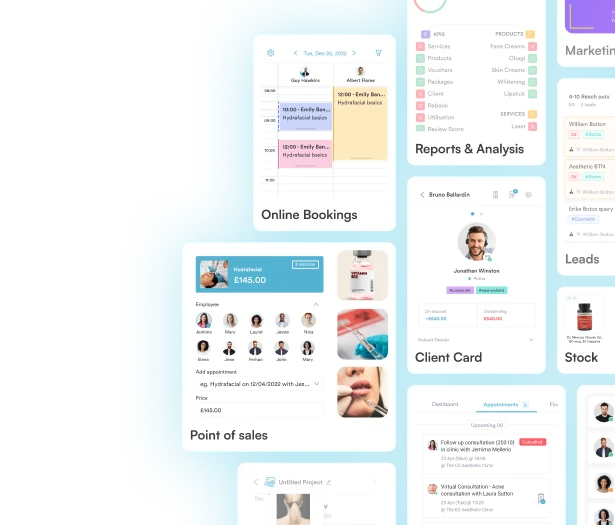
Pabau is built for businesses where clinical and operational workflows intersect. Rather than layering clinical tools onto a wellness platform, Pabau integrates them from the ground up. Digital consent forms and intake questionnaires are embedded directly into the booking journey – patients complete them before arriving, and the data flows into their clinical record without manual re-entry. Treatment notes, before-and-after photography, injection plotting, and prescription management are all available within the same platform used for scheduling and billing.
For multi-specialty and medically-directed practices, this unification has measurable operational value. A practice manager can view room utilisation, staff performance, and revenue analytics alongside clinical documentation completeness – without switching systems. Pabau’s online booking includes deposit collection, cancellation policy enforcement, and pre-treatment questionnaire triggers, removing the administrative overhead that typically falls on front-of-house staff.
According to Capterra reviewers, Pabau holds a 4.5 out of 5 rating across more than 370 verified reviews. Positive themes centre on clinical documentation depth, onboarding support quality, and the platform’s suitability for aesthetic and medical practices specifically – feedback that reflects the clinical-first design philosophy that distinguishes Pabau from both Zenoti and Mindbody.
Pabau’s depth creates an onboarding curve. Practices moving from simpler tools report that configuring clinical forms, treatment protocols, and automated workflows takes time – though dedicated onboarding support reduces this friction significantly. Some users note that the mobile app, while functional, could offer greater feature parity with the desktop interface. As with any comprehensive platform, teams that invest in setup and training get materially better outcomes than those who approach it as a plug-and-play tool.
Pricing is one of the most searched dimensions of the Zenoti vs Mindbody comparison, and also one of the least transparent. Zenoti does not publish pricing publicly. Based on information from review platforms and industry sources, Zenoti is priced at the enterprise tier and requires a custom quote – making it financially inaccessible for single-location businesses or those early in their growth trajectory. Businesses should contact Zenoti directly for current pricing details.
Mindbody has historically published tiered subscription plans at a lower entry price point, though users on multiple review platforms report that the cost grows substantially once add-ons, marketing tools, and higher-tier features are factored in. Frequent price increases are a consistent user complaint. For current Mindbody pricing, visiting their official website is advised – rates change regularly and any figures cited in third-party sources may be out of date. For a deeper breakdown, the Mindbody pricing guide covers the plan structure in more detail.
Pabau offers transparent pricing tiers designed for growing clinics, with no per-booking fees. For practices that need to budget predictably – particularly those running clinical services alongside wellness offerings – the absence of variable transaction costs matters. Pricing details are available at pabau.com/pricing. For a direct comparison of how Pabau positions against Zenoti, the Pabau vs Zenoti comparison page provides a structured breakdown.
Zenoti’s review profile reflects its enterprise positioning. Capterra reviewers give Zenoti 4.3 out of 5, with positive themes centred on reporting depth, multi-location management, and integration breadth. G2 reviewers rate Zenoti at 4.4 out of 5. The gap between high feature ratings and lower satisfaction scores on some dimensions tracks the most common negative theme: complexity. Users in smaller businesses or those without dedicated implementation support report that the platform’s depth becomes a liability during setup, and that support response times do not always match the investment level.
Mindbody’s review picture is more divided. On Capterra, Mindbody holds 4.0 out of 5 – reasonable for a widely-used platform, with positive feedback focused on ease of use for class-based scheduling. The G2 rating of 3.9 out of 5 and the Trustpilot score of 2.5 out of 5 suggest a different experience at the support and billing level. The Trustpilot profile in particular reflects years of complaints about unexpected price increases, difficult contract terms, and customer service that many users describe as unresponsive. For any business evaluating long-term platform commitment, the support track record warrants serious consideration.
Pabau holds a 4.5 out of 5 rating on Capterra across more than 370 verified reviews – the highest of the three platforms in this comparison. Positive themes include clinical documentation completeness, onboarding support quality, and effectiveness for medical and aesthetic clinic operations. Critical feedback mentions an initial learning curve and occasional software updates requiring workflow adjustment. On G2, Pabau earns a 4.5 out of 5 rating, consistent with the Capterra profile.
Before committing to any platform in the Zenoti vs Mindbody shortlist, map your current and planned service menu. If any services involve prescriptions, clinical assessments, or regulated treatments, test whether the platform can document those workflows compliantly – not just schedule the appointment. A gap discovered post-migration costs significantly more than one identified during evaluation.
Integration depth shapes long-term platform value, particularly for businesses that rely on third-party tools for accounting, marketing, or payment processing. Zenoti offers a broad integration marketplace covering POS hardware, payroll systems, hotel property management tools, and business intelligence platforms – a range that reflects its enterprise hospitality customer base. Mindbody has an open API and integrates with fitness-adjacent platforms, though the depth of those integrations varies.
Neither platform addresses healthcare interoperability standards such as HL7 or FHIR, which matter for clinics that exchange data with other healthcare providers or require structured clinical data export. For businesses with Xero or Stripe in their current stack, Pabau’s native integrations with both cover the most common financial workflows in UK and Australian private practice without additional middleware. The Pabau integrations page lists current supported tools. For practices where HIPAA compliance for clinic software is a requirement, the interoperability architecture of any platform under consideration warrants specific technical review before a decision is made.
The honest answer to the Zenoti vs Mindbody question depends on what your business actually does – not what category it sits in.
Choose Zenoti if you operate a multi-location spa or salon chain where enterprise reporting, centralised inventory management, and standardised service delivery across sites are the operational priorities. Zenoti’s feature depth justifies its complexity and cost at that scale. Single-location businesses or those with tighter budgets will likely find better value elsewhere.
Choose Mindbody if you run a fitness studio, yoga practice, or consumer wellness business where client acquisition through the Mindbody marketplace is a meaningful channel. Its class scheduling and membership management are well-suited to subscription-based fitness models. Be prepared for the support limitations and monitor pricing changes closely.
Choose Pabau if your business involves any clinical services – injectables, prescriptions, medical-grade treatments, or regulated clinical assessments. Pabau combines the scheduling, billing, and marketing tools found in wellness platforms with native clinical documentation, consent management, and compliance-aware workflows. It supports aesthetic clinics, wellness clinics, medical spas, and multi-specialty practices across the same platform. For a direct comparison with Mindbody specifically, the Pabau vs Mindbody comparison page covers the key differentiators in detail.

Running a medical spa and need a clinical-grade platform? Best Medical Spa Software covers the leading platforms for medically-directed aesthetic practices, including feature breakdowns and clinical documentation capabilities.
Need to understand what to look for before switching platforms? Clinic Management Software Buyer’s Guide provides a structured evaluation checklist covering clinical, operational, and compliance requirements.
Exploring all alternatives beyond these two platforms? Best Software for Spas evaluates the leading spa and wellness management platforms with use-case-specific recommendations.
Concerned about compliance as your service menu evolves? Medical Spa Compliance Checklist outlines the regulatory requirements that change when a wellness business introduces clinical services.
The Zenoti vs Mindbody comparison is genuinely useful if your business fits the wellness, spa, or fitness category cleanly. Zenoti wins on enterprise feature depth and multi-location management. Mindbody wins on consumer discovery and fitness-focused simplicity. Both are credible platforms within their intended markets.
The comparison becomes less useful – and potentially misleading – once clinical services enter the picture. Neither platform was built to manage treatment records, prescriptions, consent documentation, or compliance-aware clinical workflows. For the growing number of businesses operating at the intersection of wellness and regulated healthcare, the relevant question is not Zenoti vs Mindbody, but whether either platform can actually support the clinical obligations the business is taking on.
Pabau was built for that intersection. It supports aesthetic clinics, medical spas, physical therapy practices, and multi-specialty healthcare businesses with a unified platform covering clinical documentation, scheduling, billing, and patient engagement. For operators who have outgrown pure wellness tools, it represents a materially different category of solution. Reviewed against current clinical practice management and data compliance guidance, Pabau’s clinical-first architecture addresses the operational gaps that define the limits of both Zenoti and Mindbody.
Zenoti is designed for enterprise spa and salon chains, with strengths in multi-location management, enterprise reporting, and retail operations. Mindbody targets fitness studios, yoga practices, and consumer wellness businesses, with a distinctive consumer marketplace for client discovery. Both are wellness-focused platforms without native clinical documentation capabilities.
For large, multi-location spa and salon chains, Zenoti’s enterprise reporting, inventory management, and centralised operations tools make it the stronger choice. For smaller, single-location spas or those dependent on consumer discovery for new clients, Mindbody may be more accessible. The decision depends on business scale and how significant the Mindbody marketplace is to your acquisition strategy.
Zenoti pricing is not publicly listed and requires a custom enterprise quote, positioning it at a higher price tier suited to larger businesses. Mindbody has historically published tiered subscription plans at lower entry price points, though users frequently report that costs increase significantly with add-ons and plan upgrades. Both platforms’ pricing should be verified directly with each vendor, as rates change regularly.
Mindbody can handle scheduling and payment processing for medical spas, but it lacks native clinical documentation, consent form management, and prescription workflows. Medical spas with prescribing practitioners or regulated clinical services typically find that Mindbody does not support the compliance requirements of their clinical operations, which is why many explore dedicated medical spa platforms as their service menu expands.
For businesses requiring clinical-grade functionality alongside wellness management, Pabau is a strong alternative. It combines appointment scheduling, digital consent forms, clinical treatment notes, prescription management, and billing in a single platform designed for aesthetic clinics, medical spas, and multi-specialty healthcare practices. Other alternatives depend on the specific clinical specialty and geographic market.