








2026 Med Spa Compliance for Owners: Importance, Advice & More
Avoid med spa compliance headaches! Learn the key rules for med spa licensing, p...

December 1, 2025

Buy now, pay later is now available in Pabau
Blog / 2026 Med Spa Compliance for Owners: Importance, Advice & More
Med spa compliance covers licensing, staffing, patient safety, HIPAA, and marketing regulations.
Physician ownership is required in most states; non-physicians must follow specific rules.
Accurate documentation and consent forms reduce risk and protect patients.
Med spa software like Pabau simplifies compliance, staff management, and multi-location operations.
Compliance is crucial for med spa owners because it protects their business, staff, and clients.
And as the standards are evolving constantly, staying up to date with med spa compliance can feel like juggling a dozen moving parts at once.
So let’s simplify it.
In this guide, we’ll break down:
Med spa compliance means following all the legal, ethical, and safety rules that govern your medical spa. It covers everything from:
Compliance ensures your med spa operates legally, protects patients, and avoids costly penalties.
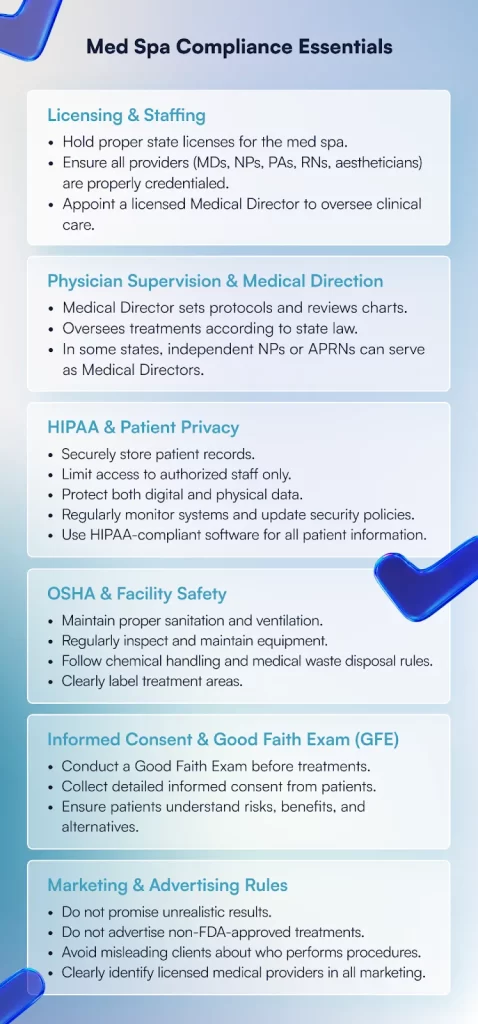
Being med spa compliant means keeping your med spa clean, safe, and legit by:
So let’s break down the key compliance areas you should focus on.
| License / Permit | Who Issues It |
|---|---|
| Medical Practice License | State Medical Board |
| Business / Corporate License | State or Local Business Authority |
| Medical Director License | State Medical Board |
| NP / PA / RN License | State Nursing Board / Medical Board |
| Laser / Energy-Based Device Registration | State Health Department or Board of Medicine |
| Cosmetology / Esthetician License | State Cosmetology Board |
| Tanning Facility License | State Health Department |
| Controlled Substances Registration | DEA & State Pharmacy Board |
| OSHA / Workplace Safety Compliance | OSHA / State Health & Safety Agencies |
| HIPAA Compliance | Federal & State HIPAA Regulations |
Every med spa must follow the licensing rules set by state medical boards or health departments. This ensures that the facility and its staff are legally authorized to perform medical procedures.
If you are specifically interested in starting a laser hair removal business, understanding these local permit requirements is the first critical step to a successful launch.
Almost every state requires a licensed Medical Director (typically an MD or DO) to oversee all medical procedures.
This includes having formal, written protocols, ensuring the Medical Director is actively involved, regularly reviewing patient charts, and being available for emergencies, as required by state law.
HIPAA compliance requires following a clear checklist:
This also means that any software you use to store patient information or communications must be HIPAA-compliant.
Want a deeper breakdown of policies, PHI, and the 5 HIPAA rules? Start here: HIPAA compliance for medical offices.
Not sure how to stay HIPAA-compliant?
Our all-in-one med spa management software Pabau is HIPAA compliant. It maintains detailed audit trails and logs all user activity within the platform, which will help you keep your patient data secure.
Your med spa needs to follow health and safety standards. This includes:
OSHA guidelines usually apply to chemical peels, lasers, and other risky procedures for staff or clients.
However, clear signage, proper disposal of medical waste, and labeled treatment areas keep the facility professional and compliant.
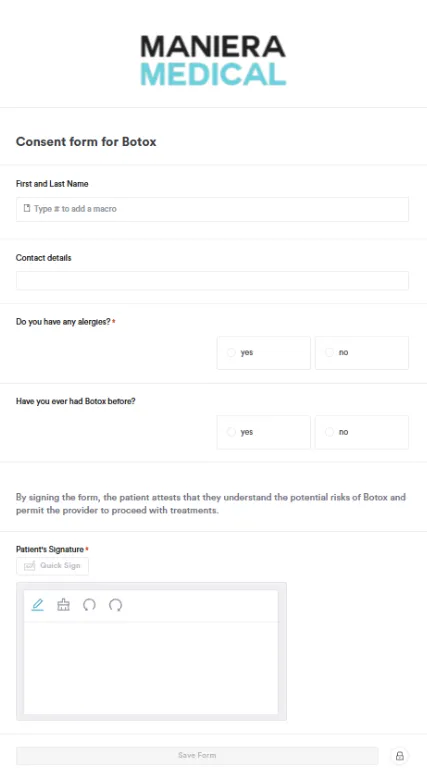
Before starting any medical treatment, a qualified practitioner must:
If you don’t ask them for a signed consent, they may have grounds for a malpractice lawsuit.
For injectable treatments specifically, using a standardized dermal filler consent form template helps ensure every client provides proper informed consent before dermal filler procedures.
If you are in charge of marketing your med spa, you need to know that you can’t:
Also, any promotions, social media posts, and testimonials must be accurate and truthful. Staff should not exaggerate treatment outcomes. The same principle applies to your med spa cancellation policy, which should be clearly communicated upfront so clients understand fees, notice periods, and booking terms.
Many states also require the licensed medical professionals who provided the service to be mentioned.
Here’s an example from Chin Up! Aesthetics.
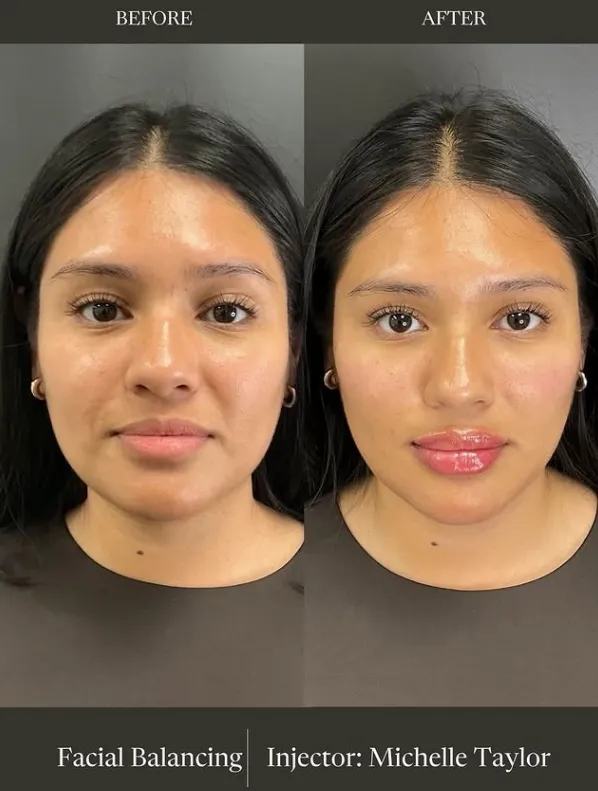
The client’s photo was taken in steady lighting, showing the changes clearly. The injector who did the treatment is also clearly noted.
They also explain the procedure without exaggerating the treatment outcomes: “Our patient received facial balancing with dermal fillers to enhance harmony in her chin, midface, and lips, creating a naturally refreshed, beautifully proportioned look.”
In contrast, if the social media post promises “wrinkle-free results in just one visit!” with a dramatic before-and-after photo without disclaimers about individual results or documented patient consent, this type of ad would likely be considered misleading and could violate advertising regulations.
This depends heavily on state laws.
| Role | Can open and own? | Independent practice? |
|---|---|---|
| Physician (MD/DO) | Yes | Yes |
| Nurse Practitioner (NP) | Some states allow ownership, others require a physician partner | Autonomy depends on state law and collaborative agreements |
| Registered Nurse (RN) | Ownership usually requires a partnership with a physician | No, must work under physician supervision |
| Physician Assistant (PA) | Generally can’t independently own | No, must operate under physician supervision at all times |
| Dentist or Chiropractor | May be permitted within their scope of practice | Limited to procedures within their professional license and training |
Most U.S. states require physicians to own a med spa. However, some let non-physicians, like nurse practitioners or business owners, have ownership—but there’s a catch.
They must either team up with a licensed physician who will partly own and handle the medical side of the practice or partner with a Management Services Organization (MSO).
This makes understanding ownership rules a key part of staying compliant, so let’s dive into the details.
In all 50 states, a licensed physician (MD or DO) can fully own and operate a med spa, supervise medical procedures, and oversee clinical staff.
Statistics: According to the American Medical Association, as of 2022, just 37% of med spas had a physician owner. This shows that more non-physicians are starting medical spas.
In some states, NPs and PAs can own a med spa, either fully or partially. They must stay within their license scope and work with or be supervised by a physician.
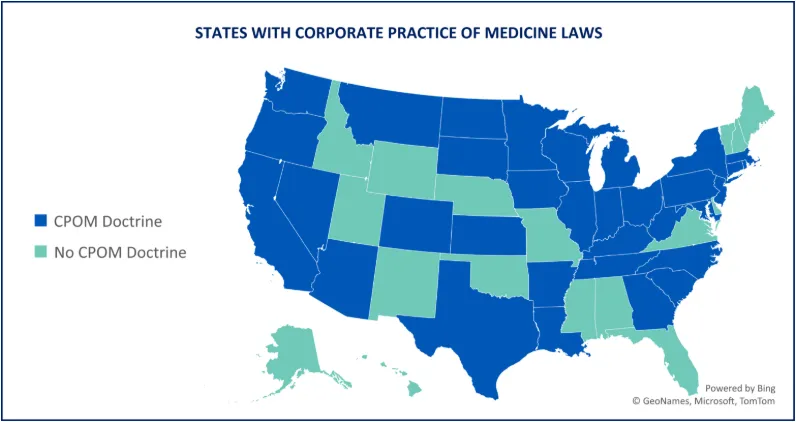
In states that don’t enforce the CPOM doctrine, such as Florida and Delaware, non-medical professionals can own the business’s administrative and non-medical parts. This includes business owners, RNs, and estheticians.
However, they must always hire licensed medical professionals to oversee all procedures.
What is MSO? Learn more about it by reading this detailed MSO guide.
| State | Ownership | Licenses/Permits |
|---|---|---|
| New York | Physicians or groups; NPs via PC/PLLC | State professional license |
| Massachusetts | Physicians and certain NPs; non-physicians partner with physician | DPH med spa license |
| Florida | Anyone (non-medical can’t control services) | State med spa license |
| Georgia | Only physicians; others co-own admin only | Board of Health license |
| Illinois | Only physicians | IDFPR license |
| Ohio | Only physicians; others can partner | Health Department permit |
| California | Physicians ≥51%; NPs/PAs ≤49%; MSO for non-physicians | California Medical Board registration |
| Washington | Physicians and NPs; MSO for non-physicians | State Board of Health license |
| Texas | Physicians ≥51%; non-physicians minority | State Board of Health license |
| Arizona | Licensed and non-licensed individuals | Arizona Department of Health Services license |
Even though a trip to the med spa is more about pampering than treating a medical condition, these businesses are still considered medical providers.
So, if you plan to own a med spa, you need to follow strict rules, including:
Below, we’ve broken down the key med spa regulations for 10 different states.
Important: Laws vary across states and can change quickly. So for the most accurate and up-to-date information, it’s always best to consult the American Med Spa Association (AMSPA) and your state’s regulating board, even if your state is listed below.
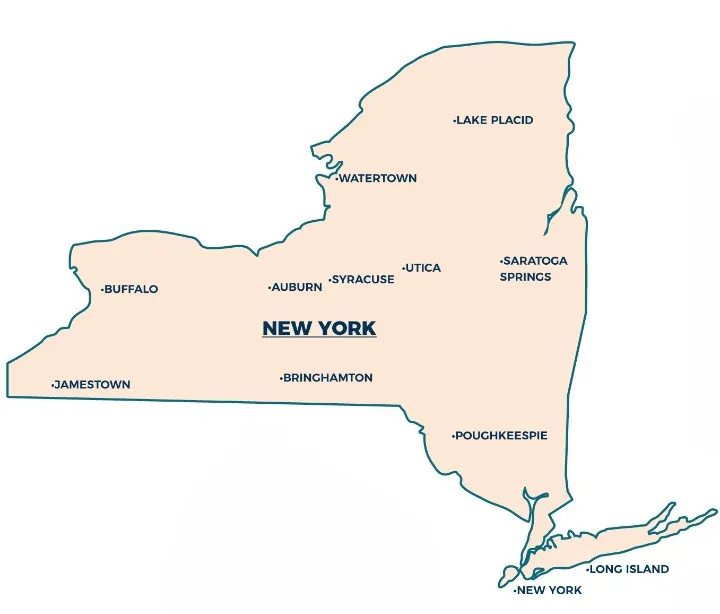
Ownership: In New York, only licensed physicians or physician groups can legally own a medical spa.
Certified Nurse Practitioners (NPs) may also own a medical spa, but they must form a Professional Corporation (PC) or Professional Limited Liability Company (PLLC) to do so.
Licensing and other requirements:
Who can perform treatments:
Important: In New York, there are still no regulations on who can provide laser hair removal treatments. This means that anyone can perform the procedure without supervision. However, medical supervision is recommended when non-licensed individuals provide the service.
Ownership: In Massachusetts, medical spas can be owned by licensed physicians and certain Nurse Practitioners (NPs).
However, non-physician entrepreneurs who want to open a med spa in Massachusetts must partner with a Massachusetts-licensed physician or qualified medical professional, who will oversee all medical aspects and own the clinical side of the practice.
Licensing and other requirements:
Who can perform treatments:
| Physicians and independent NPs | All |
| Board-certified dermatologists, plastic surgeons, dentists | Services within their specialty |
| NPs, PAs, RNs | Under physician supervision |
| Licensed estheticians and cosmetologists | Photofacial treatments, TCA peels (under supervision) |
| Licensed electrologists | Laser hair removal license |
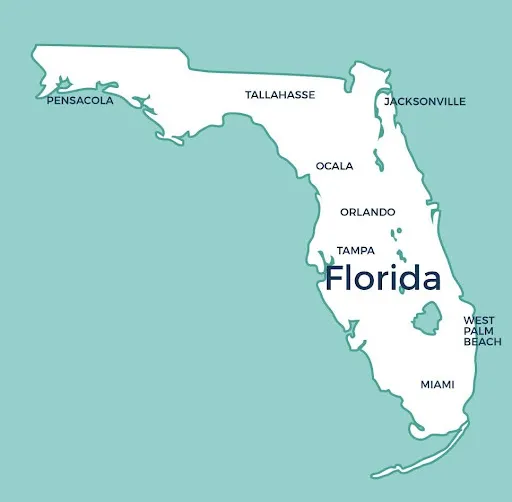
Ownership: Florida offers a unique model—anyone can own a medical spa as long as non-medical personnel have no input into what services are provided, how they are offered, or which clients receive what treatments.
This, though, creates opportunities for those without medical backgrounds to enter the industry.
Important: While ownership is open to all, non-physicians can’t receive compensation or profits directly connected to the use of equipment or services performed by licensed medical professionals. This aims to prevent undue influence over medical decisions.
Licensing and other requirements:
Important: In Florida, the medical director must have hands-on experience in aesthetic and non-surgical procedures, such as injectables and laser treatments.
Who can perform treatments:
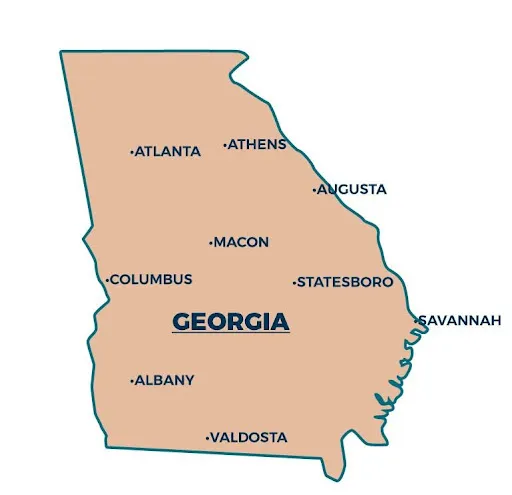
Ownership: In Georgia, only a physician can be the sole owner of a medical spa. Other licensed professionals or non-medical entrepreneurs may own the business, but all medical decision-making and ultimate clinical responsibility must remain with a physician.
Licensing and other requirements:
Who can perform treatments:
Ownership: In Illinois, medical spas must be owned by a licensed physician.
So, if you are looking to open a med spa in Illinois, you must ensure that the business is structured under a physician-owned entity and that all medical services are performed by properly licensed professionals.
Licensing and other requirements:
Who can perform treatments:
Important: Although Advanced Practice Registered Nurses (APRNs) can obtain full practice authority to work independently without a physician’s collaborative agreement, this does not allow them to legally own a med spa.
Ownership: In Ohio, only licensed physicians may own or operate a medical spa.
Other licensed professionals and entrepreneurs cannot directly own the medical practice side of a med spa, but may partner with a licensed physician who assumes responsibility for all medical decisions and clinical oversight.
Licensing and other requirements:
Who can perform treatments:
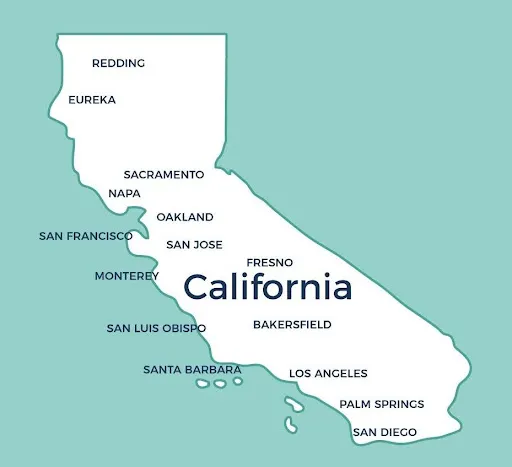
Ownership: In California, only licensed physicians can own a medical spa. If the med spa is set up as a medical corporation, the physician has to hold the controlling share, usually at least 51%.
Other licensed health professionals, like NPs and PAs, can own a med spa in California, but only a minority share of up to 49%.
Non-physicians can’t own one directly, but they can still be involved by partnering through an MSO.
Important: California law doesn’t allow regular corporations or LLCs to provide medical services because of the state’s corporate practice of medicine (CPOM) rules. This means med spas must be owned by licensed physicians or set up in a way that keeps medical control in the hands of a physician.
Licensing and other requirements:
Who can perform treatments:
| Physicians | All procedures within their scope of practice |
| Nurse Practitioners (NPs) | Some procedures independently (depending on scope) or under physician supervision |
| PAs and RNs | Under physician supervision |
| Licensed aestheticians | Non-medical procedures |
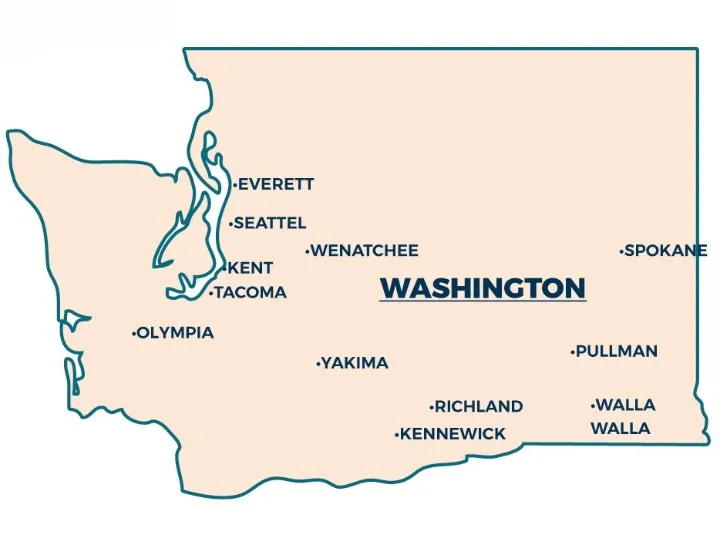
Ownership: Washington is a “full practice authority” state, which means that aside from physicians, Nurse Practitioners can also own and operate independent practices, including med spas.
Important: For a nurse practitioner to independently own a med spa, they should hold a master’s degree in a relevant specialty and complete additional advanced training in aesthetic or medical spa procedures.
Non-physicians can own or co-own a med spa through an MSO.
Licensing and other requirements:
Who can perform treatments:
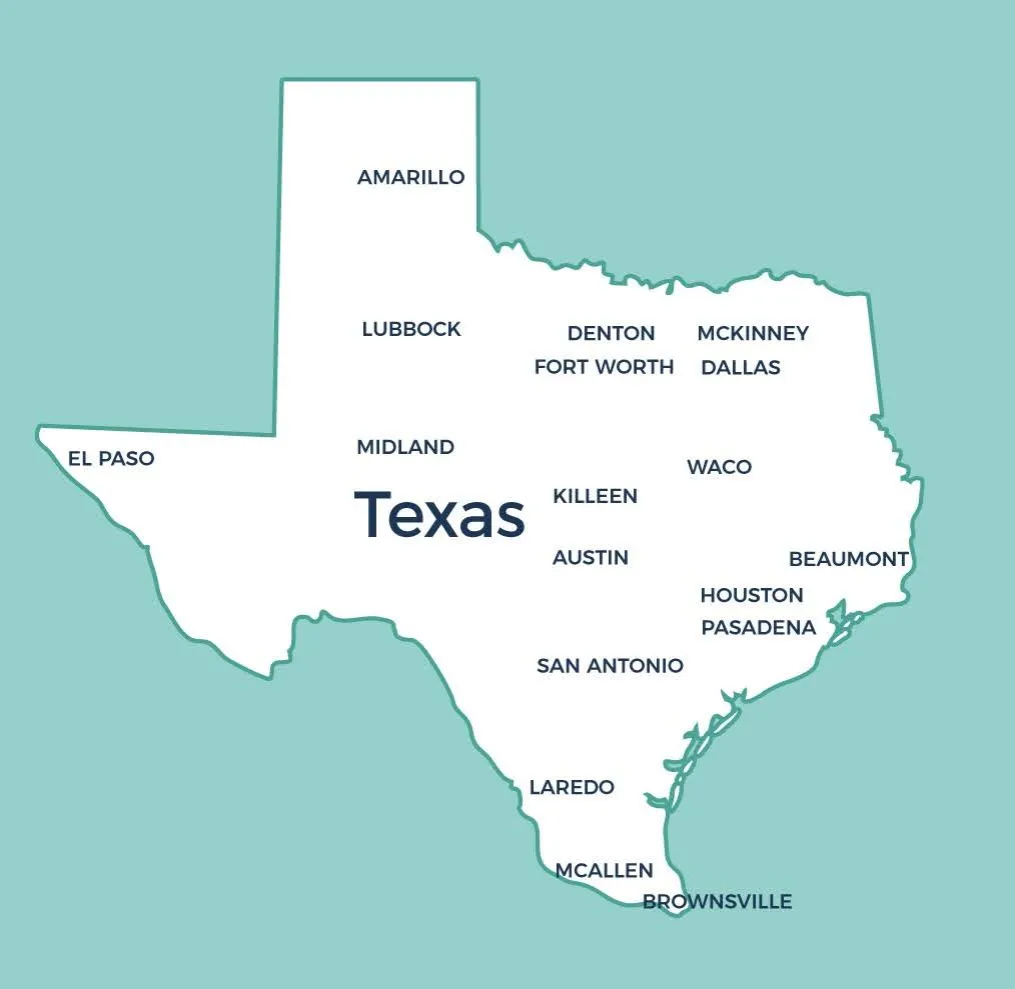
Ownership: In Texas, the majority ownership of the medical spa (at least 51%) must be held by a licensed physician due to the state’s corporate practice of medicine rules.
Non-physicians, such as physician assistants or nurse practitioners, may have a minority ownership stake, but they cannot control the business.
Licensing and other requirements:
Who can perform treatments:
Ownership: Both licensed and non-licensed individuals can own a med spa in Arizona. However, non-physicians, such as NPs and PAs, must appoint a licensed medical director.
Important: If you are a non-licensed healthcare provider planning to open a med spa in Arizona, you must obtain the proper license from the Arizona Department of Health Services to legally operate. Additionally, the facility must have a licensed medical director who oversees all medical procedures and ensures compliance with state regulations.
Licensing and other requirements:
Who can perform treatments:
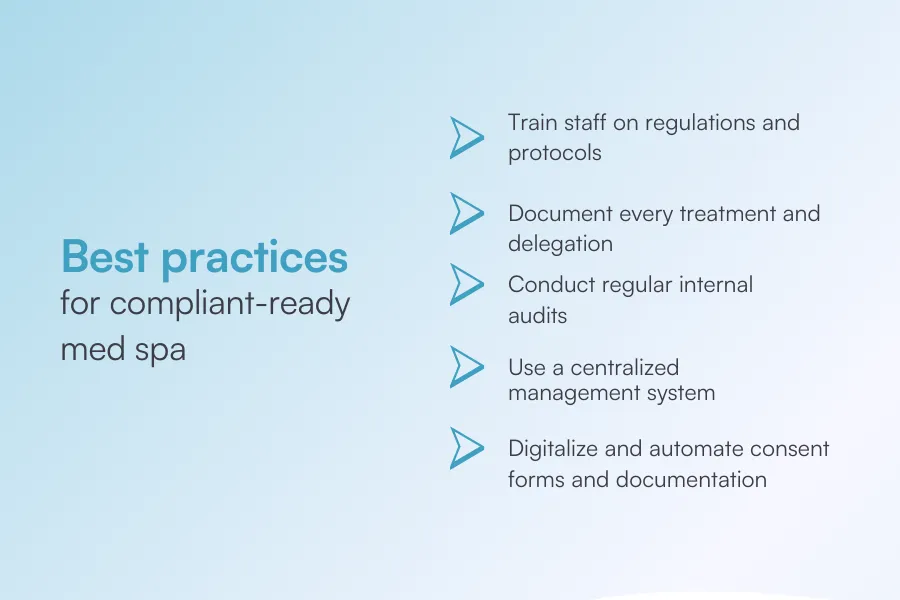
Creating a compliance-ready med spa should be more about building systems that prevent problems before they happen, rather than reacting to issues as they arise.
In other words, always be prepared for inspection so your business stays safe, professional, and fully compliant.
Conduct regular mandatory training workshop sessions for your med spa staff on:
This will ensure your team fully understands the laws, safety procedures, and company policies.
Be sure to document every session, including attendance and the material covered, so nothing is overlooked and you have a clear compliance record.
Every patient interaction should be documented, including:
This is important not only for future visits but for provider and patient protection in case of a potential lawsuit.
All these details should be properly stored in one place and easily accessible. And in this case, a med spa practice management software can be of huge help.
“Pabau [the all-in-one practice management software] is storing your patient information and saving that for future visits, lawsuits, patient and provider protection.”
Liz Riley, the owner and director of Ageless enhancements
Conduct monthly or quarterly internal audits of:
These audits will give you a chance to catch small errors before they turn into major liabilities (or a regulatory inspection to detect them.)
A centralized management system is essential for managing the complexity of med spa compliance. Even better if the system is all-in-one, just like Pabau.
With Pabau, for example, you’ll get centralized scheduling, charting, communication, and documentation, so nothing goes unmissed.

This will help you keep every part of your med spa organized, compliant, and protected with features like:
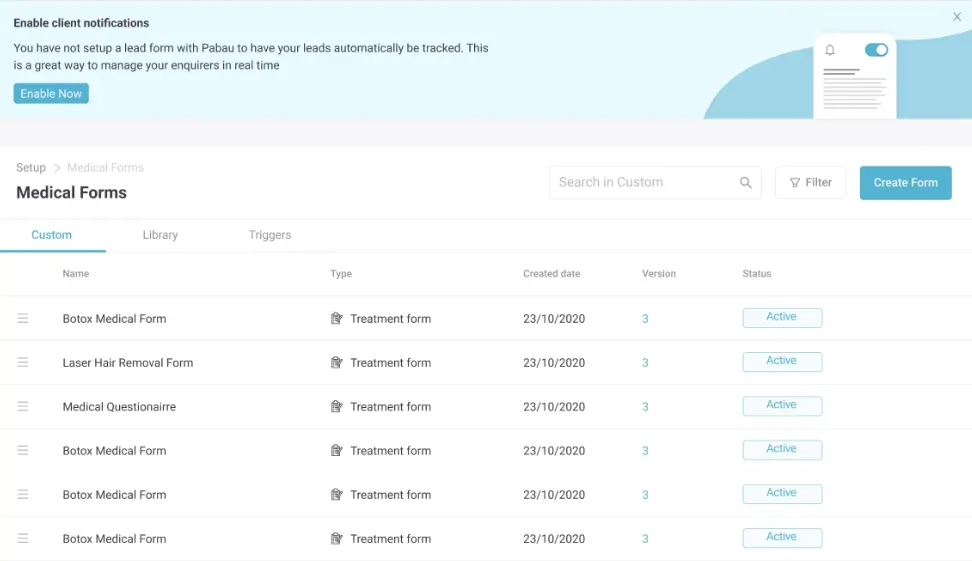
Digital consent forms can be tailored to specific procedures and automatically sent when someone schedules a treatment.
This way, patients can sign them electronically before their visit.
“Whatever treatment clients book, Pabau automatically sends them that specific online consent form and that specific pre-care, things they need to do ahead of time before their appointments. I wasn’t able to do that on other platforms.”
Beatrice Moorfield, Skin With Bea Esthetics
Also, digital forms, unlike paper ones, are immediately logged, dated, and stored securely in the system, which makes them instantly auditable.
With compliance software, all of your documentation lives in one secure place. You have access to everything exactly when you need it.
No more wondering which binder holds your esthetician’s license or where the health department permit ended up—everything is organized, searchable, and stored digitally.
Pabau falls under the category of robust med spa compliance software, and those who use it benefit from:


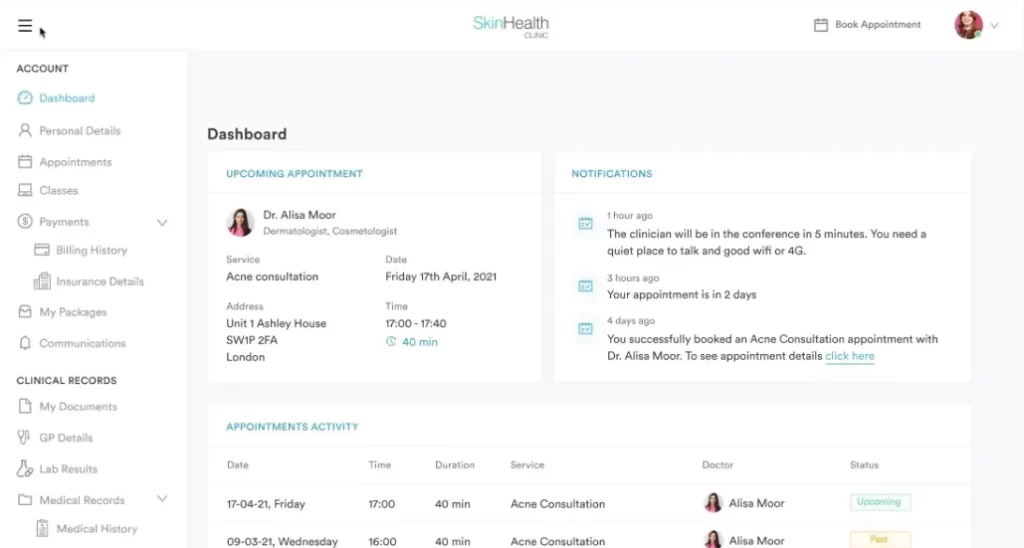
Mistakes often happen when protocols are overlooked, documentation is inconsistent, or systems aren’t updated as the business grows.
Let’s find out which are common compliance mistakes and how you can avoid them:
Missing consent forms, unclear treatment notes, or scattered patient records can lead to misunderstandings, mistakes in patient care, and regulatory penalties.
For example, if a patient has a reaction to a treatment and there’s no documented consent or treatment history, your liability increases significantly.

Delegating procedures to staff outside their licensed scope or failing to provide proper supervision can lead to serious legal consequences, including:
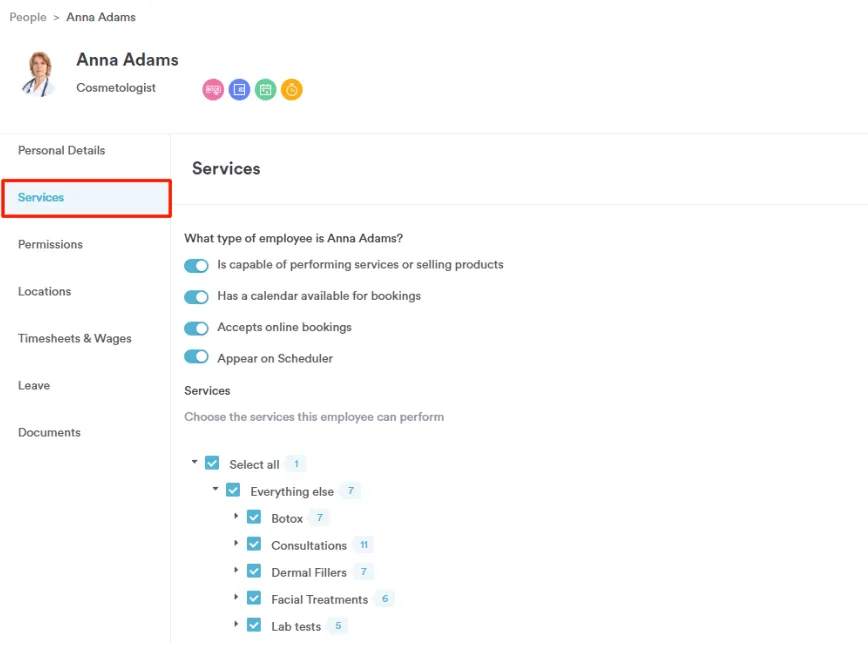
Using unsecured devices, storing before-and-after photos on personal phones, or allowing broad access to patient charts can all lead to HIPAA violations.
Additionally, data breaches can harm patients and result in fines or lawsuits.
As your business grows and you add new services, staff, or even open additional locations, your med spa compliance requirements need to be updated.
For example, franchising your med spa into a new state means you’ll need to follow that state’s regulations, and a system that doesn’t have multi-location management features won’t meet your needs.

Pabau will help your med spa stay compliant by securely managing patient records, tracking staff licenses, storing consent forms, and maintaining detailed audit logs.
But the good thing about Pabau is that it’s an all-in-one med spa management software, and not only a compliance tool. It also helps you streamline day-to-day operations with features like:
Still worried about compliance? Check out this ultimate med spa compliance checklist and see if you’ve missed anything.