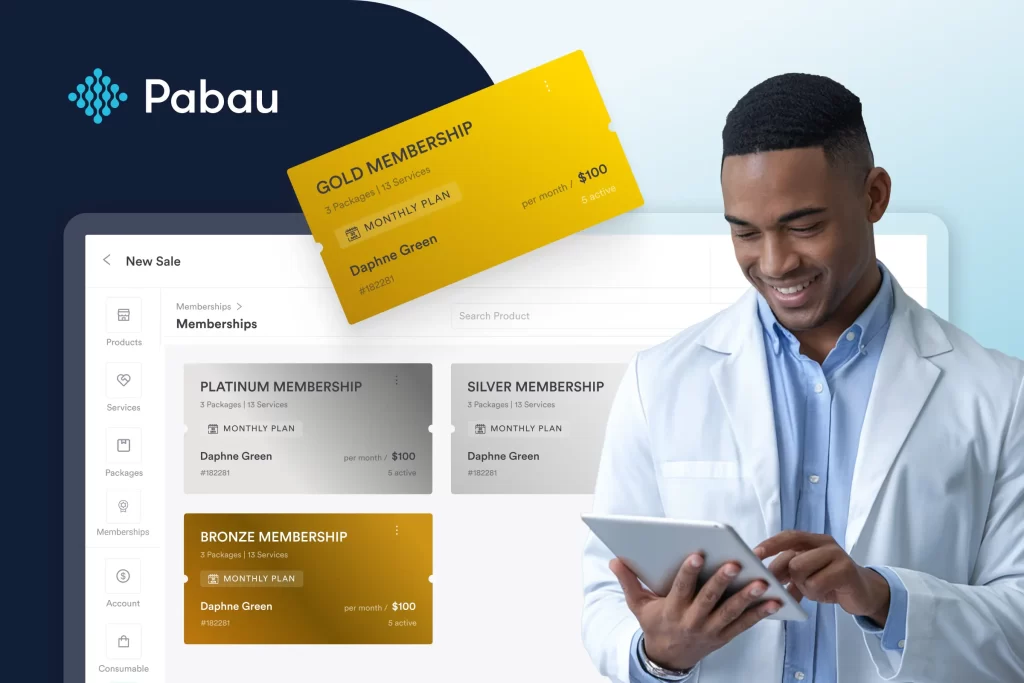
Most med spas aren’t short on clients. They’re short on strategy. 📈
Yield management changes that. Instead of cramming in more appointments, it helps you run your schedule with purpose. You’ll be able to:
✔️ Prioritise high-value treatments when demand is highest
✔️ Keep low-margin services out of peak hours
✔️ Use staff and rooms more effectively without overloading your team
Think of it as taking control of your calendar instead of letting it control you.
In this guide, we’ll break down how yield management works in a med spa setting and why it’s so effective for increasing revenue. You’ll also see how to apply it without spreadsheets, consultants, or extra hands on deck.
What is yield management and why it matters for med spas
If you’ve ever flown on a plane where everyone paid a different price for the same seat, you’ve seen yield management in action. Airlines use it to get the most from limited inventory, adjusting based on timing, demand, and availability.
Now apply that to a medical spa. You’ve got a limited number of slots per day. Different services bring in different revenue. Demand fluctuates.
A slot is going to be booked either way — it’s up to you to make it count for your revenue and bottom line.
Yield management vs. revenue management: what’s the difference?
Revenue management handles the strategy — pricing, promotions, service mix, and client acquisition.
Yield management is the execution. It focuses on how time and resources are used daily to optimize bookings and get the most value from your schedule.
This is how they compare side by side. ⬇️
Yield management
Revenue management
Main focus
Maximize revenue from booked time and resources
Drive overall income across the business
Scope
Appointment-level adjustments
Full-practice financial and marketing strategies
What it controls
Booking rules, availability, service timing
Pricing, service mix, promotional offers
Approach
Tactical and responsive
Strategic and long-term
Example in action
Reserve peak hours for injectables
Raise prices for high-demand services
Why med spas struggle with utilization and profitability
Being busy doesn’t guarantee profitability. A packed calendar and a hardworking team can still leave you with underwhelming results.
Here’s where things usually go off track:
Peak times filled with low-margin services. Great for keeping staff occupied, not so great for cash flow.
Gaps from no-shows and last-minute cancellations. They quietly drain your potential, especially when nothing fills the space.
Staffing that doesn’t reflect real booking patterns. Too much cover when it’s quiet, not enough when it’s hectic.
In most cases, the demand exists. It’s just not being channelled in a way that supports sustainable growth. Without the right systems in place, even a fully booked day can underdeliver.
How yield management works in a med spa setting
You’re probably already applying bits of yield management without realizing it.
Maybe you save prime slots for injectables or give your top provider some breathing room. Smart moves like these become even more powerful when applied consistently.
This is what it looks like in practice. ⬇️
Maximizing provider time and room usage
The average med spa sees around 245 patient visits per month. That’s steady demand, but it doesn’t mean your rooms or staff are being used well.
Without smart scheduling, rooms sit empty and providers lose hours to awkward gaps.
Forecasting lets you align staff availability with actual booking trends, so you’re not over-covered on quiet days or scrambling during busy ones.
Prioritizing high-margin services during peak times
Not every treatment deserves a Saturday morning slot.
If your prime-time hours are going to $70 facials instead of $400 injectable sessions, you’re not getting full value from your calendar.
Use those high-demand windows for high-revenue services:
Mid-mornings, lunch hours, and early evenings
Tuesdays and Wednesdays, when bookings often spike
Weekends, when clients are more flexible and more likely to spend
Lower-margin services can wait. Save your peak hours for what actually moves the needle — think fillers and Botox, not basic facials and enzyme masks.
Minimizing gaps and no-shows
Cancellations are a given. The problem is letting that time go unused.
With online booking and automated waitlists, clients can jump on earlier slots as soon as they open. At Mayo Clinic, 24.6% of waitlisted appointments were successfully rescheduled, with an average move-up time of 22.6 days.
You stay booked, your schedule runs tighter, and nobody’s chasing last-minute confirmations.
Common mistakes to avoid with yield management
Skip the data or lean on quick fixes, and yield management can backfire.
Here are the mistakes that hold clinics back from getting the results they want.
Relying too heavily on discounts
Discounts might fill the calendar, but they can drag down your margins fast. If every busy week relies on a 20% promo, you’re teaching clients to wait for the next deal instead of booking when they need treatment.
Instead of lowering prices, shift demand. Use bundles, value-added perks, or smart scheduling to make off-peak hours more appealing, without cutting into your profit margins.
Not tracking performance metrics
Changing prices or reshuffling availability without knowing what actually works is a fast way to stall growth.
To run a profitable med spa business, you need clear visibility into which treatments bring in the most revenue, when demand truly peaks, and how provider time is being used across the week.
Simple yield management strategies you can start today
No need to overhaul your entire operation. A few smart tweaks can start paying off by next week.
Let’s walk through a few low-lift moves that tighten your schedule and increase revenue.
Limit service variety during high-demand hours
Choice sounds great on paper, but too many options slow down your front desk and lead to lower-margin bookings at the busiest times.
Stick to a lean, high-revenue service menu when demand peaks and save longer, lower-profit spa treatments for quieter periods. This approach streamlines your booking process, keeps treatment rooms busy, and makes your revenue streams more predictable.
Introduce off-peak incentives tied to loyalty or referrals
Instead of defaulting to across-the-board discounts, reward smart booking behavior.
Offer off-peak perks through membership plans or tie them to your referral program. This boosts client retention without undercutting your pricing and turns slower periods into an opportunity to attract new clients.
Align staff shifts with actual booking patterns
Your providers are your most valuable resource, but staffing often follows habit, not demand.
Use spa management software to review when clients actually book. Then adjust shift timing, service menus, and room assignments to reflect those patterns.
This improves productivity without keeping operational costs under control.
How technology like Pabau makes yield management easy
Everything we’ve covered so far works best when it’s backed by the right tools.
Pabau, an all-in-one practice management software, simplifies applying yield management. Automation, real-time reporting, and smart scheduling come built-in, so you can act on the data instead of chasing it.
Let’s take a closer look at how that plays out. 👇
Smart scheduling to fill gaps automatically
Idle time eats into your revenue. No-shows, short-notice cancellations, and scattered gaps between treatments add up.
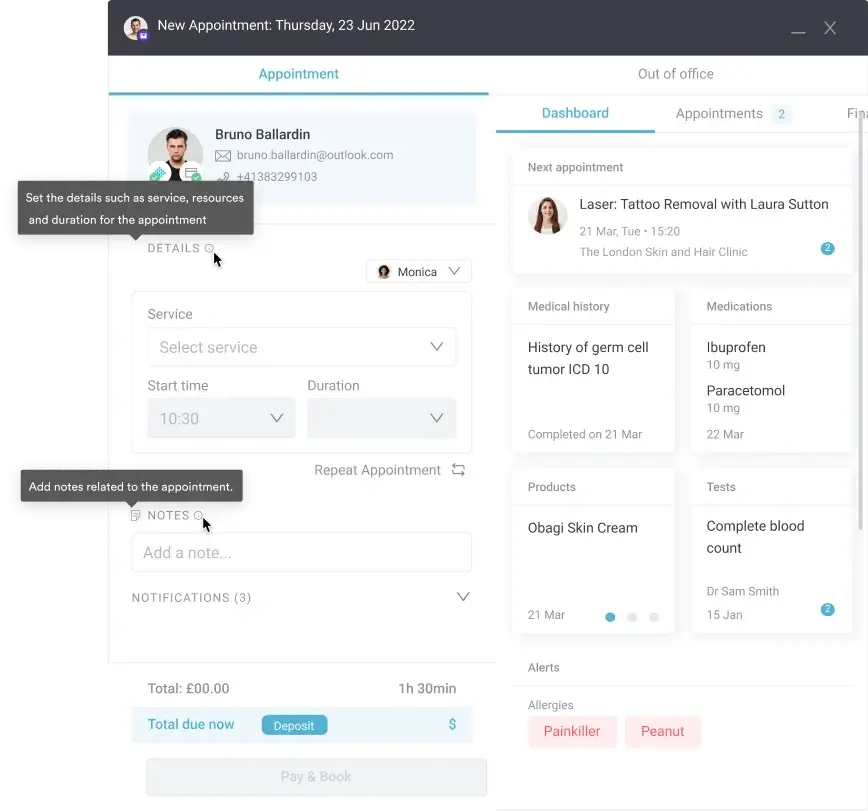
Pabau assigns each booking to the right provider, room, and time, keeping your team in sync and appointments flowing.
Check out what that looks like inside the dashboard. 👀
24/7 self-service booking via your website, social media, or Google
Digital intake forms and medical questionnaires
Automated pre- and post-care instructions
Deposits to reduce no-shows and secure commitment
Service-specific links to guide clients to high-value treatments
👉 You can have the same smart scheduling in your clinic. Book a demo to see how Pabau makes it effortless.
Data insights to identify your most profitable services and times
Want instant visibility into how your med spa performs?
With built-in reporting, Pabau helps you track revenue by treatment, provider, and location. You’ll know which aesthetic treatments drive results and which ones just take up space. Booking trends, client demographics, and rebooking rates are easy to identify and act on.
Metrics worth tracking include:
Hourly revenue by treatment
Staff productivity and appointment volume
No-shows, cancellations, and rebook rates
Client retention, referrals, and top spenders
See it for yourself — this is Pabau’s reporting in action. 👇
Everything updates in real time, so you’re not working off old numbers or making calls in the dark.
Automated reminders, waitlists, and rebooking
Pabau handles the follow-up so your team doesn’t have to.
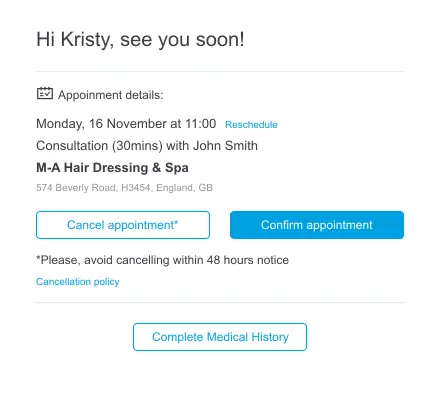
Reminders, treatment forms, care instructions — they all go out on time, automatically. Clients show up informed, ready, and a lot less likely to disappear last minute.
Here’s how those reminders land in your clients’ inbox:
If someone cancels, the waitlist steps in. That open slot gets filled fast with someone who’s already keen to book.
Rebooking’s just as smooth. Before the client even leaves the room, their next appointment is locked in, no back-and-forth needed.
Wrapping up
Yield management isn’t about squeezing more into the day. It’s about making every hour count.
The med spa owners who do it well aren’t necessarily busier. They’re just sharper with how they use time, space, and staff. They know:
Which treatments belong in peak hours
Which slots get filled (and which don’t)
Which services pull weight, and which ones quietly drain revenue
With the right management software, that level of control fits naturally into how your clinic already runs. It’s how your schedule starts working for your business instead of just filling time.













![Medical Aesthetics Marketing: 8 Strategies to Grow Your Practice [Updated 2026]](https://teststaging.pabau.com/wp-content/uploads/2022/07/Medical-Aesthetics-Marketing-8-Strategies-to-Grow-Your-Practice-Updated-2026-1-1024x614.webp)