Revision Rhinoplasty
 By Ivana Karafiloska on January 13, 2026
 Fact checked by: Teodor Jurukovski


Read case studies from our satisfied clients

Compare Pabau with alternative systems
 Integrations

 Measure Pabau savings
 Our security commitment
 About us

Learn why this holistic care and aesthetic medicine clinic chose Pabau to power patient care and performance.
Read more By Ivana Karafiloska on January 13, 2026
Fact checked by: Teodor Jurukovski
By Ivana Karafiloska on January 13, 2026
Fact checked by: Teodor Jurukovski
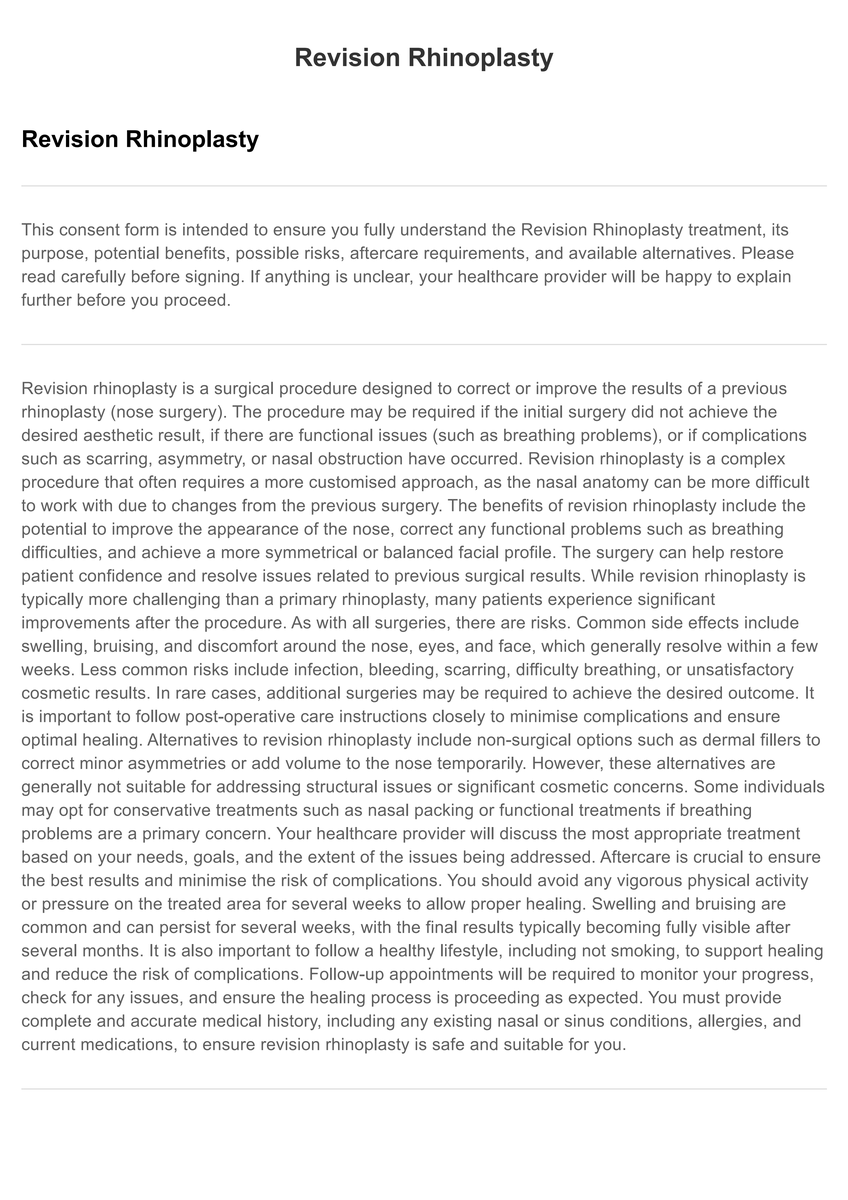
Specialised documentation captures comprehensive details for patients requiring corrective nasal surgery after previous rhinoplasty procedures.
Thorough assessment includes detailed analysis of previous surgical outcomes, current anatomical concerns, and patient expectations.
Enhanced safety protocols ensure comprehensive evaluation of scar tissue, structural integrity, and healing capacity before proceeding.
Structured planning facilitates clear communication between surgeon and patient whilst maintaining detailed records for optimal outcomes.
A revision rhinoplasty template is a comprehensive documentation tool specifically designed for patients considering secondary nasal surgery following an unsatisfactory or complicated primary rhinoplasty. This specialised form captures crucial information about the patient's previous surgical experience, current anatomical concerns, functional limitations, and aesthetic goals.
The template serves as an essential clinical tool for plastic surgeons and facial specialists, ensuring thorough evaluation of complex cases where patients seek correction or improvement after their initial nasal surgery. Unlike primary rhinoplasty consultations, revision cases require extensive documentation of previous surgical techniques, healing patterns, and anatomical changes that may influence the success of subsequent procedures.
Furthermore, this template provides a structured framework for assessing the viability of revision surgery, documenting realistic expectations, and establishing clear treatment objectives. The comprehensive nature of the form ensures that both surgeon and patient have a complete understanding of the challenges and possibilities associated with secondary rhinoplasty procedures.
First, access the revision rhinoplasty PDF document by downloading it from Pabau below. The template is designed to be printer-friendly and can be completed either digitally or by hand during consultation. Ensure you have the latest version of the template, as revision rhinoplasty protocols may be updated to reflect current best practices in secondary nasal surgery.
Begin by thoroughly documenting the patient's previous rhinoplasty experience, including the date of surgery, surgeon details, surgical technique employed, and any complications encountered. This section requires careful attention to detail, as understanding the previous surgical approach is crucial for planning revision procedures safely and effectively.
Document the patient's specific concerns regarding their current nasal appearance and function. This includes aesthetic dissatisfaction, breathing difficulties, structural asymmetries, or any persistent symptoms since the original surgery. Use clear, objective language to describe both patient-reported symptoms and clinical observations during examination.
Perform and record a detailed physical examination of the nasal structures, including external appearance, internal nasal anatomy, and functional assessment. Pay particular attention to scar tissue formation, structural integrity, and any anatomical changes resulting from the previous surgery that may impact revision planning.
Clearly document the patient's expectations and desired outcomes from revision surgery. This section should include realistic goal-setting discussions, potential limitations due to previous surgery, and comprehensive informed consent regarding the increased complexity and risks associated with revision rhinoplasty procedures.
The revision rhinoplasty template proves invaluable for plastic surgeons, facial plastic surgeons, and ENT specialists who regularly perform secondary nasal procedures. These healthcare professionals benefit from the structured approach to documenting complex revision cases, ensuring comprehensive evaluation and appropriate risk assessment before proceeding with challenging secondary surgeries.
Patients seeking revision rhinoplasty also benefit significantly from this thorough documentation process. The template ensures their previous surgical experience, current concerns, and future expectations are comprehensively recorded, facilitating better communication with their surgeon and more informed decision-making regarding potential revision procedures.
Additionally, the template serves medical practices and surgical centres by providing standardised documentation for revision rhinoplasty consultations. This consistency enhances quality assurance, supports clinical audit processes, and ensures compliance with professional standards for complex aesthetic surgical procedures.
The structured documentation approach offered by this template provides numerous advantages for both healthcare providers and patients:
This systematic approach to revision rhinoplasty consultation ensures that all critical factors are carefully evaluated before proceeding with secondary surgery. The comprehensive documentation supports optimal surgical planning whilst maintaining the highest standards of patient care and safety in complex aesthetic procedures.
Effective revision rhinoplasty requires meticulous risk assessment and surgical planning, particularly given the increased complexity associated with operating on previously altered nasal anatomy. The template facilitates systematic evaluation of factors that may influence surgical outcomes, including the extent of previous tissue manipulation, presence of scar tissue, and structural integrity of remaining cartilage and bone.
The documentation process includes assessment of healing capacity, patient expectations versus realistic achievable outcomes, and potential complications specific to revision procedures. This comprehensive approach enables surgeons to make informed decisions about surgical timing, technique selection, and the need for additional procedures such as cartilage grafting or structural reconstruction.
Revision rhinoplasty cases require extensive patient education regarding the increased complexity, extended recovery periods, and potential limitations compared to primary procedures. The template provides a structured framework for documenting these important discussions, ensuring patients understand the challenges associated with secondary nasal surgery.
The informed consent process for revision rhinoplasty must address specific risks including prolonged swelling, potential for further revision, limitations in achievable results, and the possibility of functional compromise. Thorough documentation of these discussions protects both patient and surgeon whilst ensuring realistic expectations are established from the outset of the consultation process.