Patient Health Questionnaire and General Anxiety Disorder (PHQ-9 and GAD7)
 By Maja Muzhdeka on January 12, 2026
 Fact checked by: Teodor Jurukovski

Discover free eBooks, guides and med spa templates on our new resources page


Read case studies from our satisfied clients

Compare Pabau with alternative systems
 Integrations

 Measure Pabau savings
 Our security commitment
 About us

Learn why this holistic care and aesthetic medicine clinic chose Pabau to power patient care and performance.
Read more By Maja Muzhdeka on January 12, 2026
Fact checked by: Teodor Jurukovski
By Maja Muzhdeka on January 12, 2026
Fact checked by: Teodor Jurukovski
Validated Screening Tools The PHQ-9 and GAD-7 are internationally recognised, evidence-based instruments for assessing depression and anxiety severity in clinical settings.
Standardised Scoring Both questionnaires use clear scoring systems that help clinicians categorise symptom severity and guide treatment decisions.
Treatment Monitoring These tools can be administered repeatedly to track patient progress and adjust therapeutic interventions accordingly.
Clinical Integration Easy to implement in various healthcare settings, from primary care to specialist mental health services.
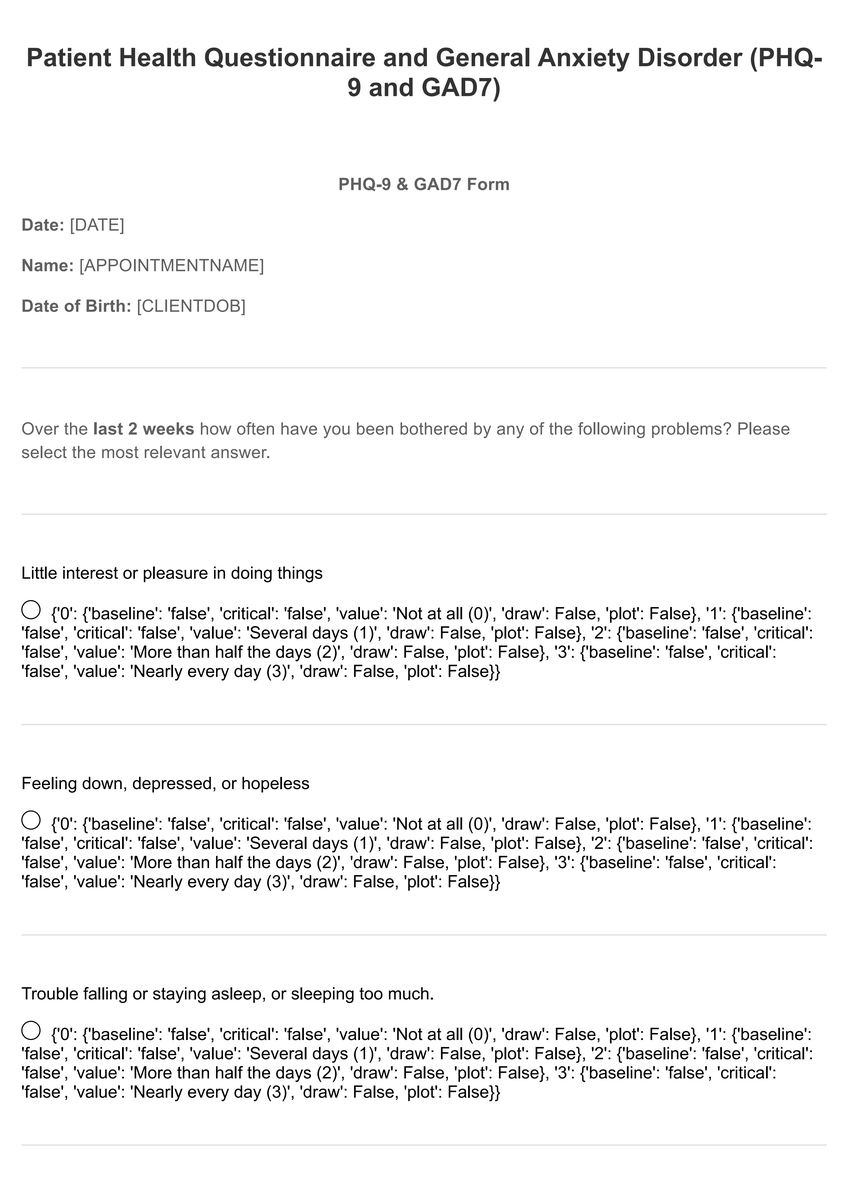
The Patient Health Questionnaire (PHQ-9) and Generalised Anxiety Disorder Scale (GAD-7) are comprehensive screening instruments designed to assess mental health symptoms in clinical practice. The PHQ-9 specifically evaluates depression symptoms over the past two weeks, whilst the GAD-7 focuses on anxiety-related concerns during the same timeframe.
These evidence-based tools have been extensively validated across diverse populations and healthcare settings. The PHQ-9 consists of nine questions that directly correspond to the diagnostic criteria for major depressive disorder as outlined in clinical guidelines. Similarly, the GAD-7 comprises seven questions that assess the core symptoms of generalised anxiety disorder.
Both questionnaires utilise a simple scoring system where patients rate their symptoms on a scale from 'not at all' to 'nearly every day'. This standardised approach enables healthcare professionals to obtain reliable, quantifiable data about their patients' mental health status, facilitating more accurate diagnoses and treatment planning.
First, access the PHQ-9 and GAD-7 assessment forms by downloading them from Pabau below. These standardised documents are available as PDF files and can be printed for in-person consultations or shared electronically for remote assessments. Ensure you have both questionnaires readily available, as they are often administered together to provide a comprehensive mental health screening.
Explain to the patient that these questionnaires are routine screening tools used to better understand their current mental health status. Emphasise that their honest responses will help you provide the most appropriate care. Ensure the patient understands that the questions relate to their experiences over the past two weeks and that there are no right or wrong answers.
Allow the patient sufficient time to complete both assessments without feeling rushed. The PHQ-9 and GAD-7 each take approximately 2-3 minutes to complete. Patients can fill these out in a quiet, private area of your practice or during a telehealth consultation. Be available to clarify any questions they may have about specific items.
Calculate the total scores for each questionnaire. The PHQ-9 scores range from 0-27, with higher scores indicating more severe depressive symptoms. The GAD-7 scores range from 0-21, with higher scores suggesting more significant anxiety symptoms. Use the established cut-off points to categorise symptom severity levels.
Review the results with the patient, explaining what their scores indicate about their current mental health status. Discuss how these findings will inform your treatment recommendations and next steps in their care plan. Document the scores in the patient's medical record for future reference and treatment monitoring.
The PHQ-9 and GAD-7 assessments are valuable tools for a wide range of healthcare professionals working across various clinical settings. Primary care physicians find these questionnaires particularly useful for identifying mental health concerns during routine consultations, as they provide objective data to support clinical decision-making.
Mental health specialists, including psychiatrists, psychologists, and counsellors, regularly employ these instruments to establish baseline measurements and monitor treatment progress over time. The standardised nature of these assessments enables consistent evaluation across different practitioners and treatment phases.
These tools are equally beneficial for patients themselves, as they provide a structured way to communicate their symptoms and concerns. Many individuals find it easier to express their mental health experiences through written questionnaires rather than verbal discussion alone, particularly during initial consultations when rapport is still being established.
These validated screening tools enhance clinical practice by providing reliable, quantifiable data that supports evidence-based treatment decisions. Furthermore, regular use of these assessments helps establish a comprehensive record of patient progress, enabling healthcare providers to adjust treatment approaches as needed and demonstrate outcomes to both patients and healthcare organisations.
Modern healthcare delivery increasingly relies on seamless integration between assessment tools and electronic health record systems. The PHQ-9 and GAD-7 questionnaires can be easily incorporated into digital platforms, allowing for automated scoring and trend analysis over time.
Electronic administration offers additional advantages, including reduced paper waste, improved legibility of responses, and the ability to generate instant reports for clinical review. Many healthcare providers find that digital versions of these assessments streamline their workflow whilst maintaining the clinical integrity of the screening process.
Integration with patient portals also enables individuals to complete these questionnaires before their appointments, maximising valuable consultation time for discussion of results and treatment planning. This approach often leads to more productive clinical encounters and improved patient satisfaction with their healthcare experience.
Successful implementation of the PHQ-9 and GAD-7 assessments requires appropriate staff training to ensure consistent administration and interpretation. Healthcare teams should understand the clinical significance of different score ranges and how to respond appropriately to concerning results.
Regular calibration sessions help maintain inter-rater reliability when multiple staff members are involved in the assessment process. Additionally, establishing clear protocols for follow-up actions based on screening results ensures that patients receive timely and appropriate interventions when mental health concerns are identified.
Consider developing practice-specific guidelines that outline when these assessments should be administered, how results should be documented, and what steps should be taken for different severity levels. This systematic approach helps ensure that no patients fall through the cracks and that your practice provides consistently high-quality mental health screening services.