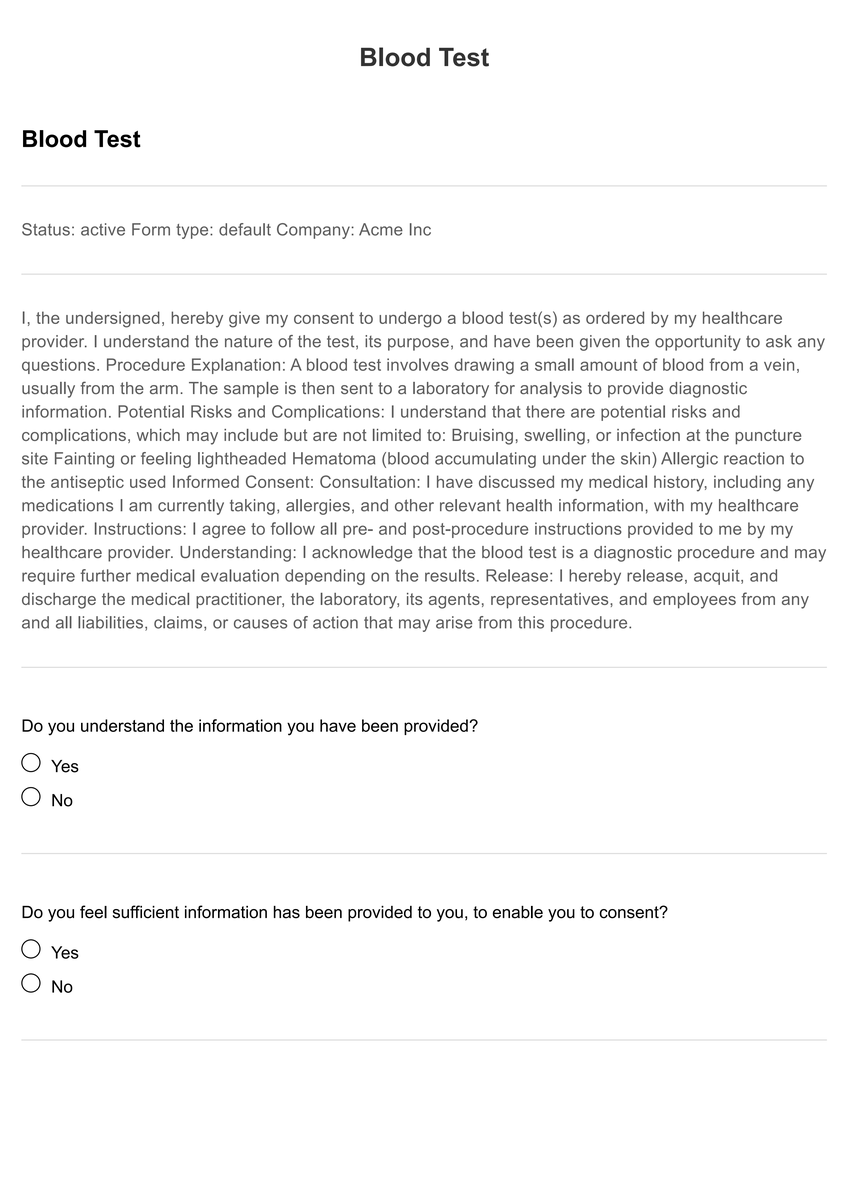
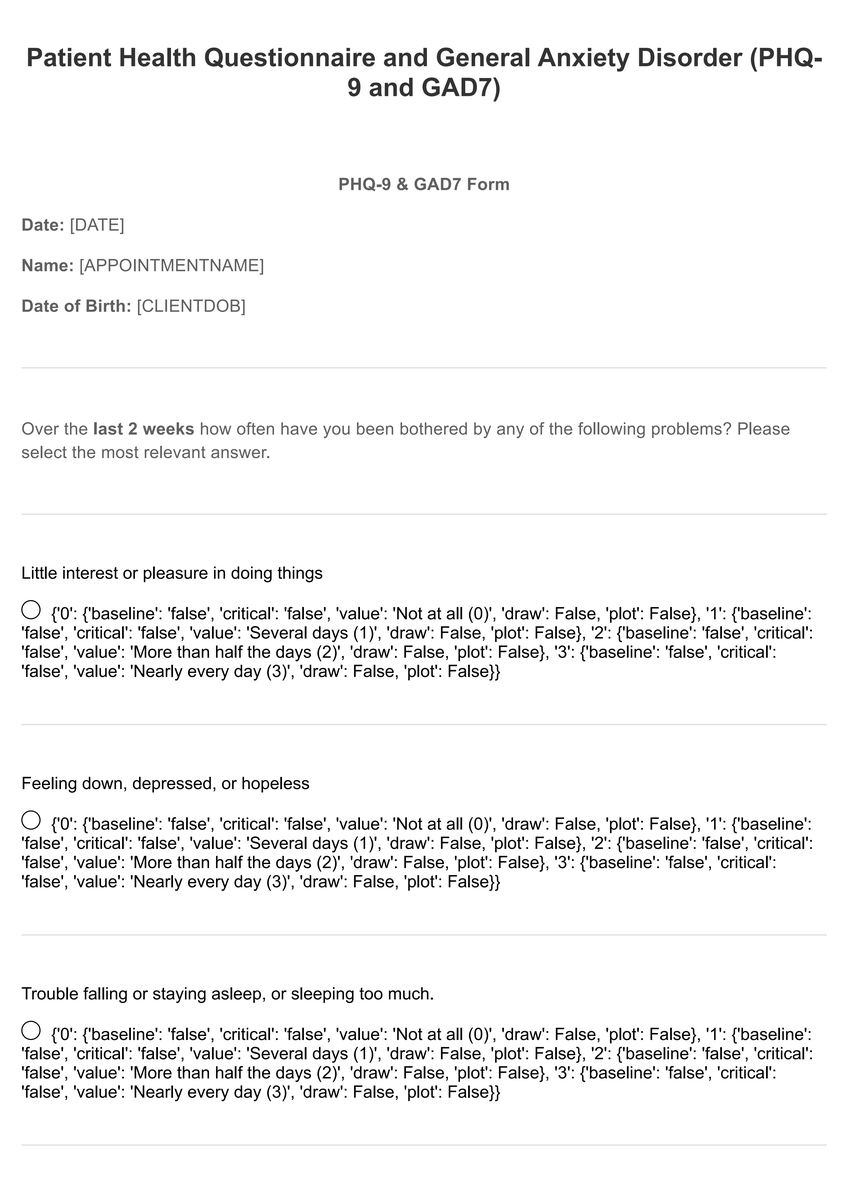
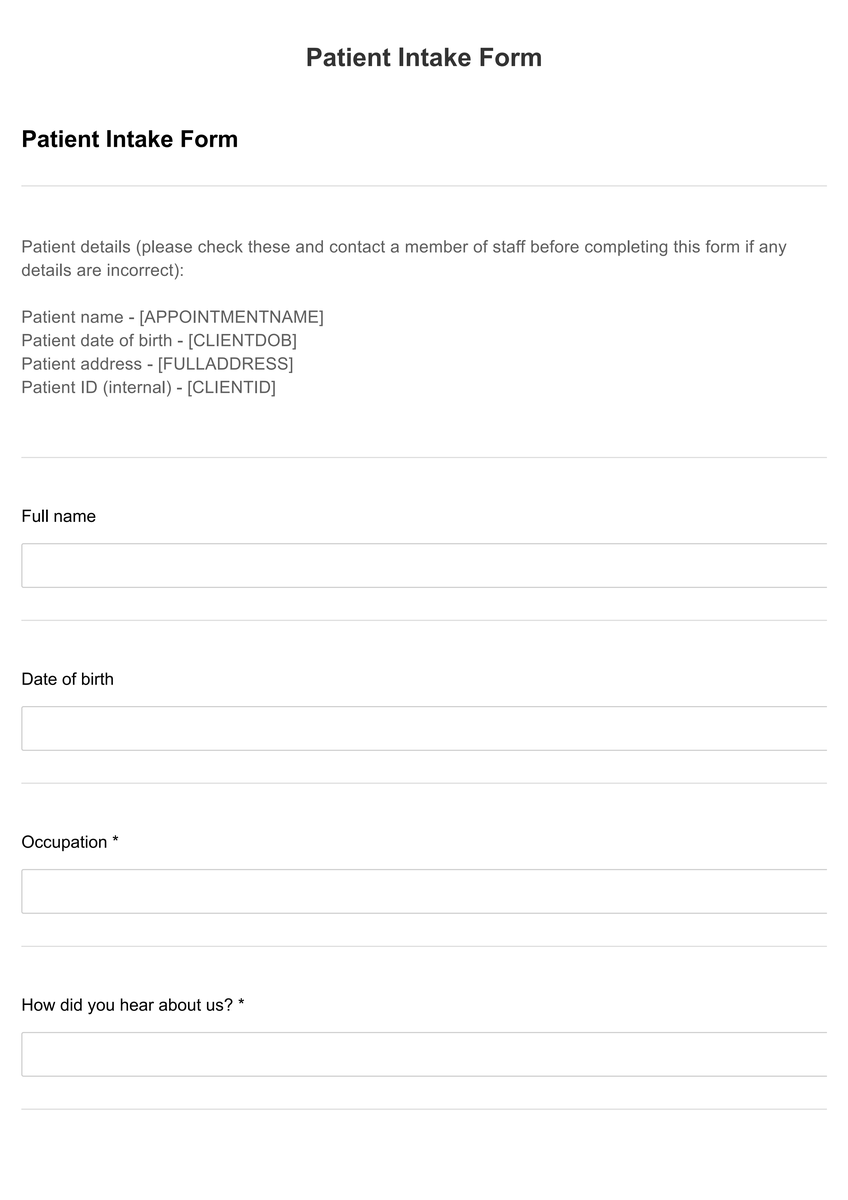
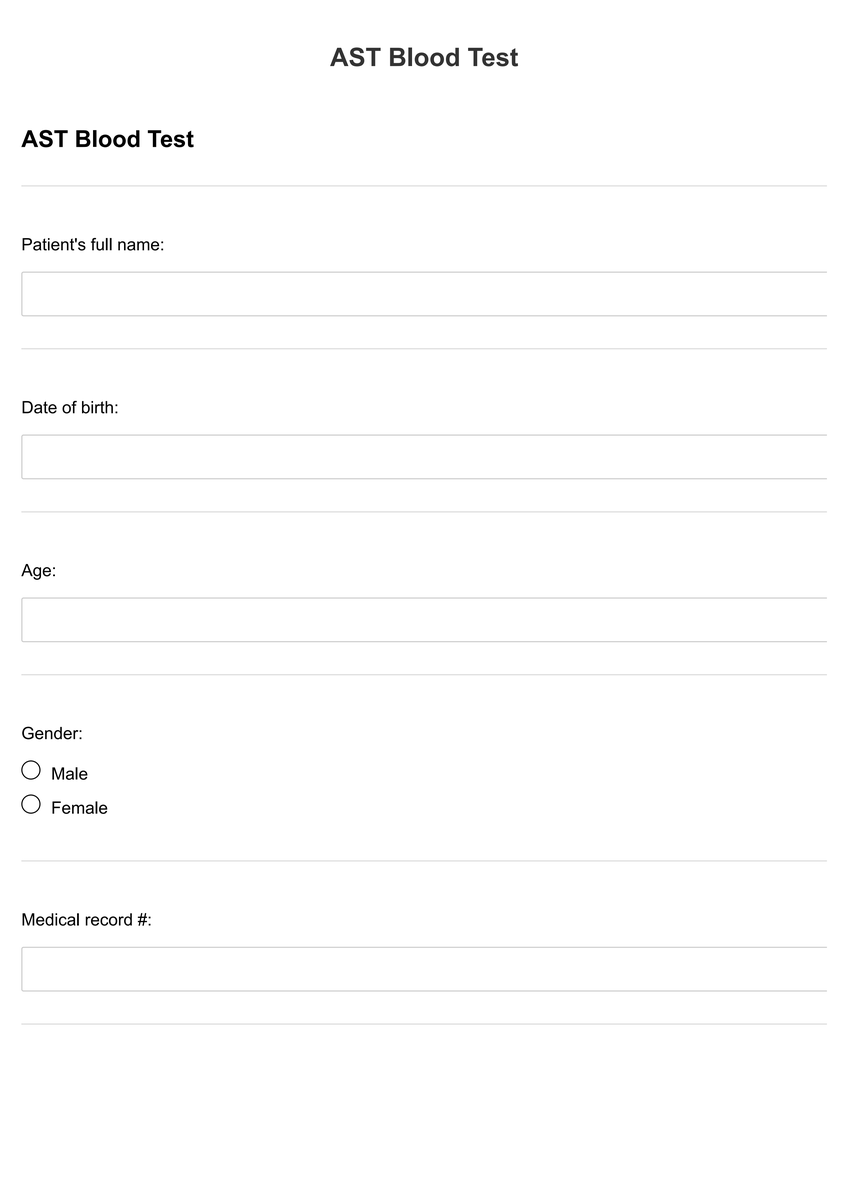
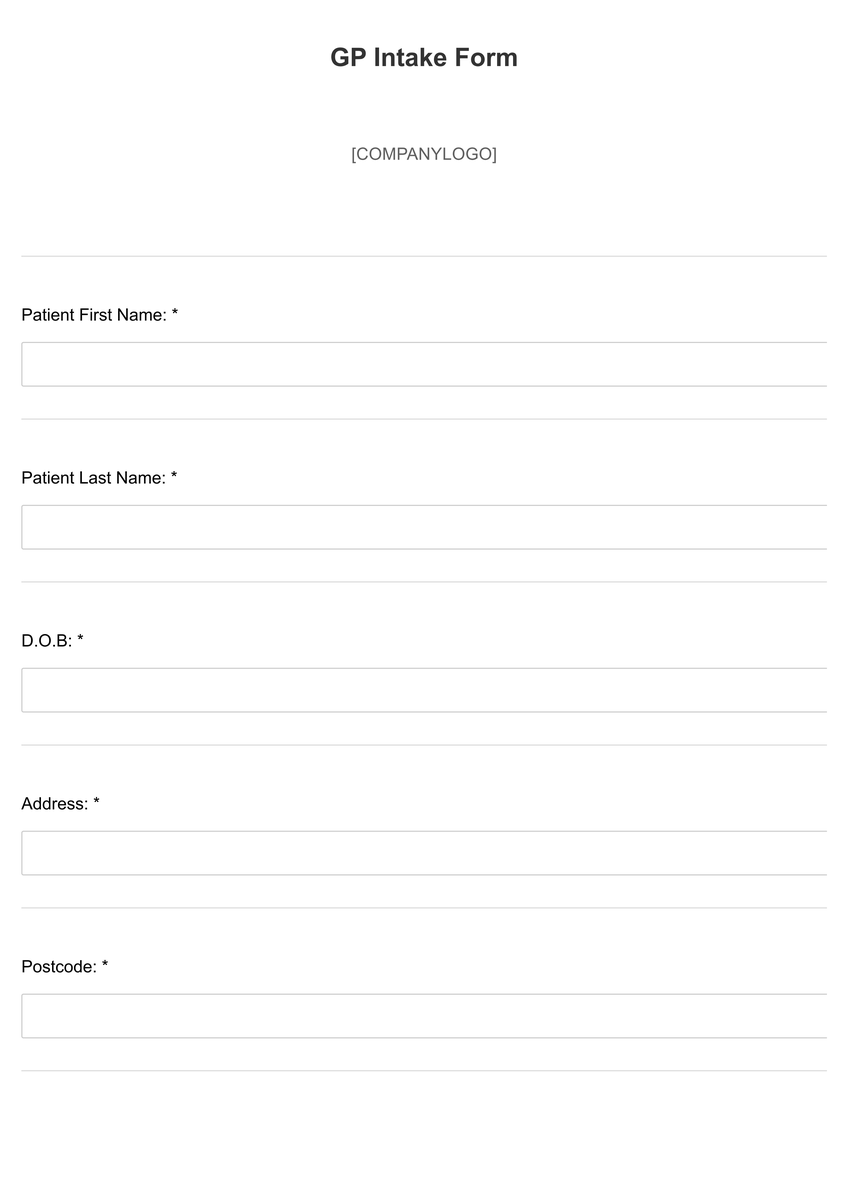
Standardised Documentation Blood test templates ensure consistent recording of laboratory requests, results, and clinical interpretations across all patient encounters.
→
Clinical Decision Support Structured templates help clinicians select appropriate tests based on patient presentation and track results over time for better treatment outcomes.
→
Quality Assurance Templates reduce errors by providing clear sections for patient information, test selection, and result interpretation with appropriate reference ranges.
→
Regulatory Compliance Proper documentation through standardised templates supports clinical governance and meets healthcare regulatory requirements for laboratory testing.
What is a Blood Test Template?
A blood test template is a structured clinical document that provides a systematic framework for ordering, documenting, and interpreting laboratory blood investigations. This essential healthcare tool serves as both a request form for laboratory services and a record-keeping system for patient results. The template ensures that all relevant patient information, clinical indications, and test specifications are clearly documented, facilitating accurate laboratory processing and meaningful result interpretation.
Modern blood test templates incorporate evidence-based testing protocols and can be customised to suit different clinical scenarios, from routine health screenings to specialised investigations for complex conditions. They serve as a bridge between clinical suspicion and laboratory confirmation, helping healthcare practitioners make informed decisions about patient care based on objective biochemical data.
How to Use Blood Test Template?
Step 1: Download Blood Test Template
First, access the blood test template PDF document by downloading it from Pabau below. The template is designed to be compatible with standard clinical practice management systems and can be easily integrated into your existing workflow. Once downloaded, you can either print physical copies for immediate use or save the digital version to your secure clinical documentation system for electronic completion.
Step 2: Complete Patient Demographics
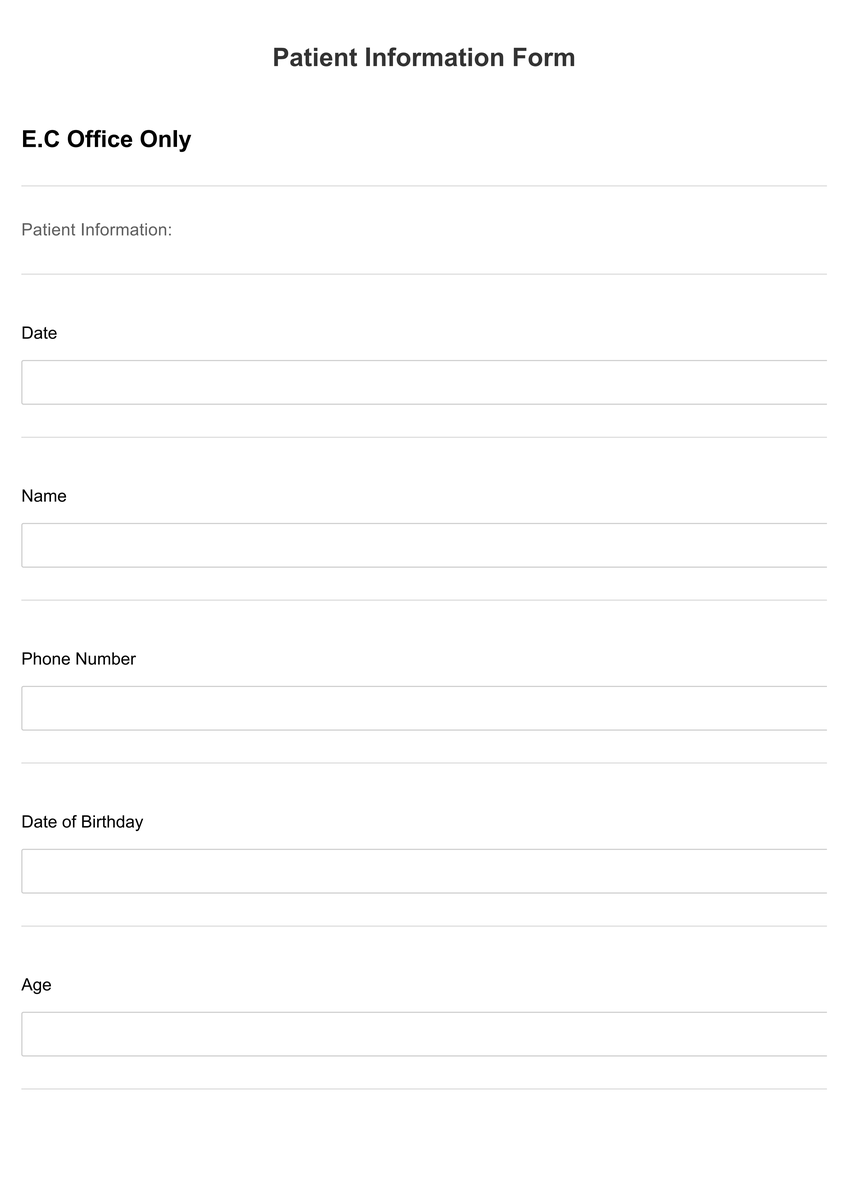
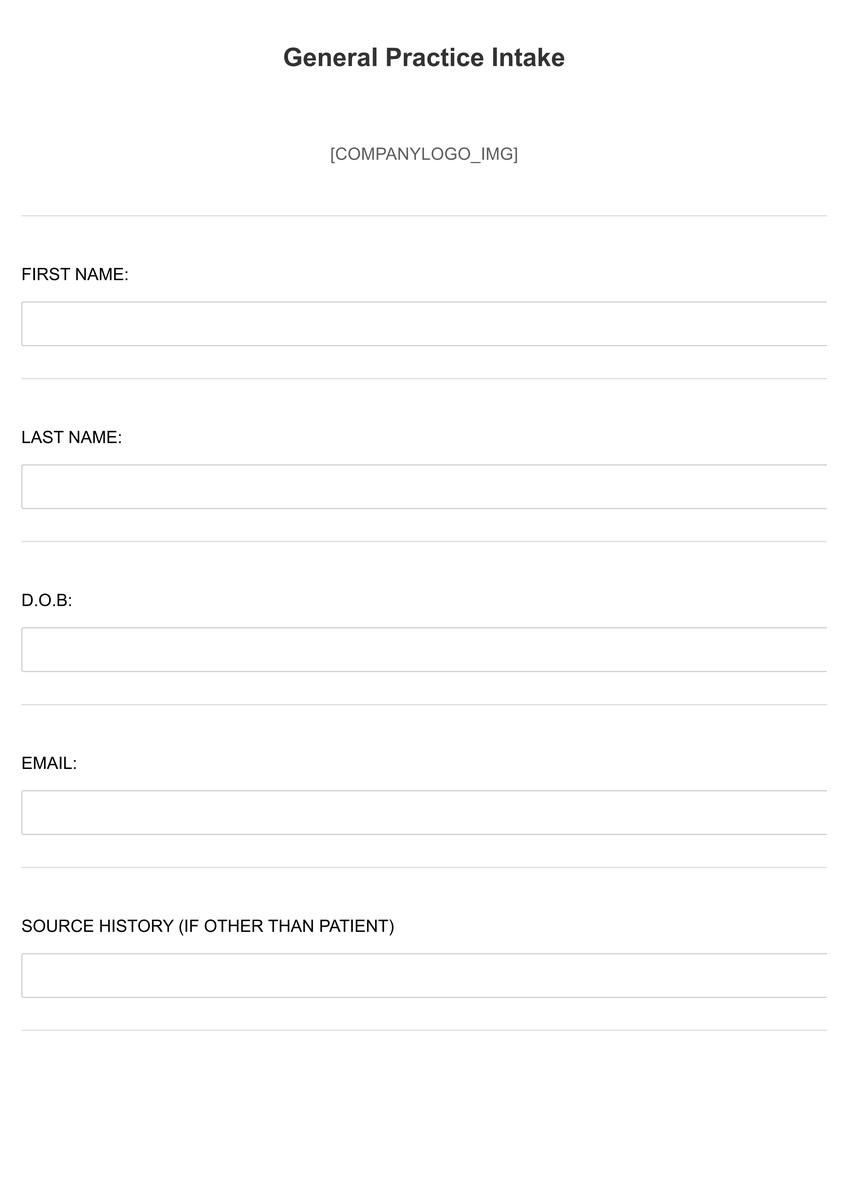
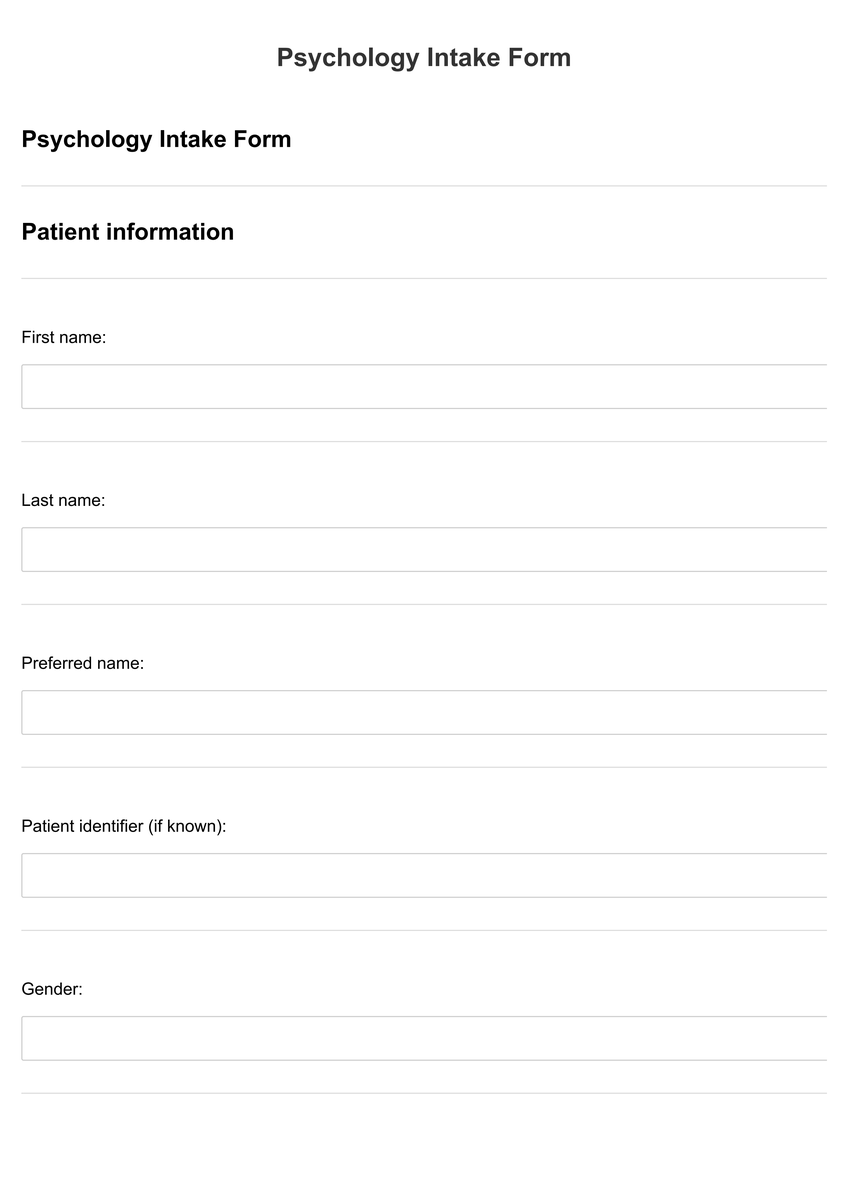
Begin by accurately recording all essential patient information including full name, date of birth, NHS number or patient ID, contact details, and relevant medical record numbers. Ensure all demographic data matches your patient management system to prevent any administrative errors that could compromise test results or patient safety.
Step 3: Document Clinical History
Provide a concise but comprehensive clinical history that justifies the blood test request. Include relevant symptoms, physical examination findings, current medications, and any previous test results that inform the current investigation. This clinical context helps laboratory staff prioritise samples and assists in result interpretation.
Step 4: Select Appropriate Tests
Choose the specific blood tests required based on your clinical assessment and differential diagnosis. Consider both routine screening parameters and targeted investigations that align with the patient's presentation. Ensure you understand the clinical utility of each test selected and how the results will influence patient management.
Step 5: Review and Authorise
Carefully review all completed sections of the template before authorisation. Verify that patient details are correct, clinical indications are clear, and all necessary tests are included. Sign and date the form according to your practice protocols, ensuring it meets regulatory requirements for laboratory requests.
Who is it Helpful For?
Blood test templates are invaluable for general practitioners, hospital doctors, practice nurses, and healthcare assistants involved in patient assessment and monitoring. They prove particularly beneficial for busy clinical environments where standardised processes improve efficiency and reduce errors. The templates support both experienced clinicians who appreciate streamlined documentation and junior staff who benefit from structured guidance on appropriate test selection.
Furthermore, these templates serve patients by ensuring comprehensive and systematic evaluation of their health concerns. Healthcare administrators and quality assurance teams also find them useful for audit purposes, clinical governance, and maintaining consistent standards across different practitioners within an organisation.
Benefits of Using Blood Test Template
Ensures comprehensive documentation of all relevant patient information and clinical indicators
Reduces administrative errors and improves accuracy of laboratory requests
Streamlines workflow efficiency for busy clinical practices
Supports clinical decision-making through structured test selection guidance
Facilitates audit trails and quality assurance processes for regulatory compliance
Blood test templates fundamentally transform laboratory medicine from an ad hoc process into a systematic, evidence-based approach. By standardising documentation and test selection, these templates enhance patient safety, improve clinical outcomes, and support healthcare practitioners in delivering consistent, high-quality care across diverse clinical scenarios and patient populations.
Blood Test Interpretation Guidelines
Understanding blood test results requires knowledge of reference ranges, clinical context, and potential interfering factors. Results should always be interpreted in conjunction with the patient's clinical presentation, as laboratory values can be influenced by factors such as age, gender, medications, timing of sample collection, and underlying health conditions. Abnormal results may indicate disease processes, but they require clinical correlation rather than standalone interpretation.
Healthcare practitioners should be aware that reference ranges may vary between laboratories and testing methodologies. Critical values requiring immediate attention should be clearly identified and acted upon promptly. Serial monitoring often provides more valuable information than single test results, particularly for chronic conditions or treatment monitoring.
Quality Control and Sample Management
Proper sample collection, handling, and transportation are crucial for accurate blood test results. The template should include clear instructions for pre-analytical requirements such as fasting status, timing of collection, and specific sample tubes required for different tests. Healthcare staff must understand the importance of correct patient identification, appropriate sample labelling, and maintaining the cold chain where necessary.
Quality control measures include verification of patient identity at the time of sample collection, ensuring appropriate sample volume and quality, and documenting any factors that might affect test results. Understanding when to repeat tests due to sample quality issues or unexpected results is essential for maintaining diagnostic accuracy and patient safety.
What information should be included when completing a blood test template?
A comprehensive blood test template should include complete patient demographics, relevant clinical history, current symptoms, medications, previous test results, and clear clinical indications for each test requested. This information helps laboratories process samples appropriately and supports accurate result interpretation.
How do I select the most appropriate blood tests for my patient's presentation?
Test selection should be guided by clinical presentation, differential diagnosis, and evidence-based guidelines. Consider both screening tests for general health assessment and targeted investigations that will directly influence patient management decisions. Avoid unnecessary testing that doesn't contribute to clinical decision-making.
What are the key quality control measures when using blood test templates?
Essential quality control measures include accurate patient identification, proper sample labelling, appropriate sample collection techniques, correct storage and transportation conditions, and documentation of any factors that might affect results. Regular review of protocols ensures consistent standards.
How should I handle unexpected or critical blood test results?
Unexpected results should be verified by checking for pre-analytical errors, considering clinical context, and potentially repeating the test if indicated. Critical values require immediate clinical attention and should trigger established protocols for urgent patient contact and appropriate clinical intervention.
What documentation is required for regulatory compliance when using blood test templates?
Regulatory compliance requires complete patient identification, clear clinical justification for tests, appropriate clinician authorisation, secure storage of results, and maintenance of audit trails. Documentation should meet local healthcare governance standards and professional body requirements.
How can blood test templates improve practice efficiency and patient outcomes?
Templates standardise processes, reduce administrative errors, ensure comprehensive test ordering, support clinical decision-making, and facilitate audit processes. This systematic approach leads to more consistent patient care, improved diagnostic accuracy, and better resource utilisation within the practice.
By entering your email address, you are opting-in to receive emails from Pabau on its various products, solutions, and/or offerings. Unsubscribe anytime.







 By Maja Muzhdeka on January 23, 2026
 Fact checked by: Teodor Jurukovski