AST Blood Test
 By Tanja Lepcheska on January 20, 2026
 Fact checked by: Teodor Jurukovski

Discover free eBooks, guides and med spa templates on our new resources page


Read case studies from our satisfied clients

Compare Pabau with alternative systems
 Integrations

 Measure Pabau savings
 Our security commitment
 About us

Learn why this holistic care and aesthetic medicine clinic chose Pabau to power patient care and performance.
Read more By Tanja Lepcheska on January 20, 2026
Fact checked by: Teodor Jurukovski
By Tanja Lepcheska on January 20, 2026
Fact checked by: Teodor Jurukovski
AST measurement provides crucial insights into liver health and cellular damage throughout the body.
Diagnostic accuracy is enhanced when AST results are interpreted alongside other liver function markers.
Clinical applications extend beyond liver assessment to include cardiac and muscle health evaluation.
Patient preparation requirements are minimal, making this test highly accessible for routine screening.
Aspartate aminotransferase (AST) is a vital enzyme found primarily in liver cells, heart muscle, and skeletal muscle tissue. The ast blood test measures the concentration of this enzyme in the bloodstream, serving as a key biomarker for cellular damage and organ function assessment. When cells containing AST are damaged or destroyed, the enzyme is released into the blood, making it an invaluable diagnostic indicator.
Healthcare practitioners use AST testing as part of comprehensive liver function panels to evaluate hepatic health, monitor disease progression, and assess treatment effectiveness. The test provides essential information about liver integrity and helps identify various conditions ranging from viral hepatitis to medication-induced liver injury. Furthermore, elevated AST levels can indicate damage to other tissues, including cardiac muscle following myocardial infarction.
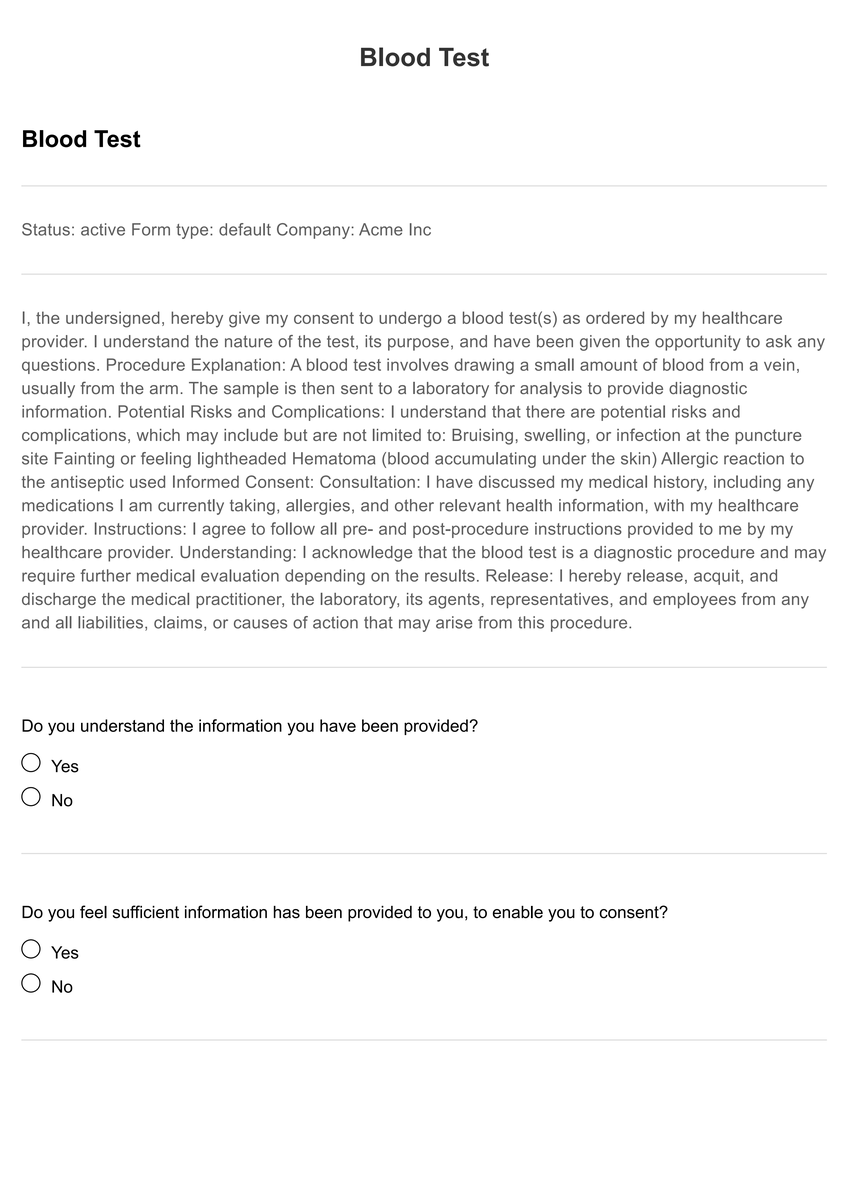
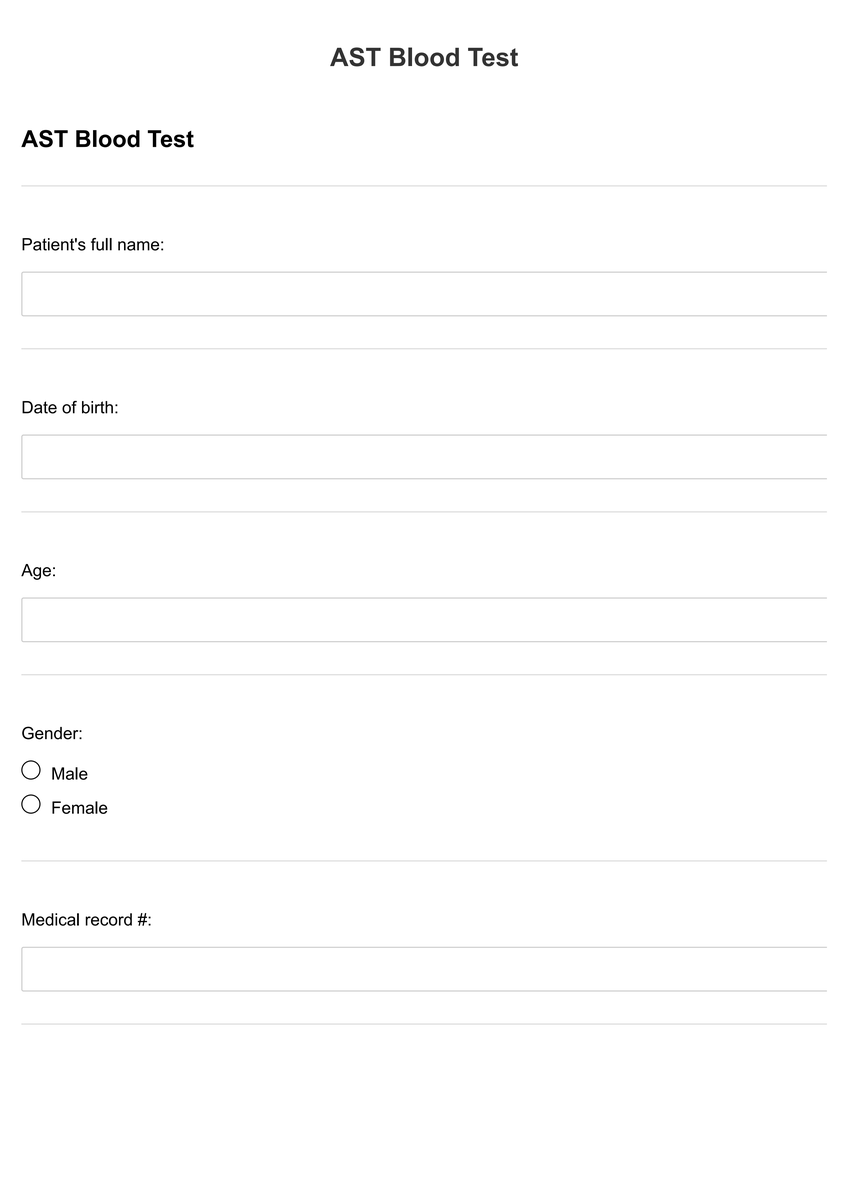
First access the ast blood test PDF document by downloading it from Pabau below. The template includes comprehensive sections for patient demographics, clinical history, test requisition details, and result interpretation guidelines. This standardised format ensures consistent documentation across your practice and facilitates seamless integration with laboratory services.
Document all relevant patient details including full name, date of birth, contact information, and unique patient identifier. Record current medications, particularly those known to affect liver function, and note any recent alcohol consumption or exposure to hepatotoxic substances. Include relevant medical history such as previous liver disease, cardiovascular conditions, or muscle disorders.
Clearly indicate the clinical reason for requesting the AST test, whether for routine screening, monitoring known liver disease, or investigating symptoms suggestive of hepatic dysfunction. Document any presenting symptoms such as fatigue, abdominal pain, jaundice, or unexplained weight loss that may correlate with liver function abnormalities.
Submit the completed requisition form to your preferred laboratory partner along with the patient's blood sample. Ensure proper sample labelling and chain of custody documentation. Most laboratories process AST tests within 24-48 hours, providing results electronically through secure portals or integrated practice management systems.
The ast blood test template serves multiple healthcare professionals and clinical scenarios. Primary care physicians use this test for routine health assessments and annual check-ups, particularly in patients with risk factors for liver disease. Gastroenterologists rely on AST measurements for diagnosing and monitoring various hepatic conditions, whilst cardiologists may order the test when evaluating suspected myocardial damage.
Patients undergoing treatment with potentially hepatotoxic medications benefit from regular AST monitoring to detect early signs of drug-induced liver injury. Additionally, individuals with known liver disease require periodic AST testing to track disease progression and treatment response. The test is equally valuable for emergency medicine practitioners evaluating patients with acute abdominal pain or suspected liver dysfunction.
The ast blood test represents an indispensable diagnostic tool that empowers healthcare practitioners to make informed clinical decisions. By providing reliable insights into cellular health and organ function, this test enhances patient care quality whilst supporting evidence-based treatment approaches across diverse medical specialties.
Normal AST levels vary between laboratories but generally range from 8-40 units per litre in adults. However, reference ranges may differ based on age, gender, and individual patient factors. Mild elevations (1-2 times normal) may indicate early liver dysfunction or muscle injury, whilst moderate increases (2-5 times normal) suggest more significant hepatocellular damage. Marked elevations exceeding five times the upper limit of normal often indicate acute liver injury requiring immediate clinical attention.
When interpreting AST results, practitioners should consider the AST to ALT ratio, which provides valuable diagnostic information. A ratio greater than 2:1 may suggest alcoholic liver disease, whilst ratios closer to 1:1 are more consistent with viral hepatitis or drug-induced liver injury. Additionally, concurrent evaluation of other liver function markers enhances diagnostic accuracy and clinical decision-making.
Whilst the ast blood test provides valuable diagnostic information, practitioners should be aware of its limitations and potential confounding factors. Strenuous exercise, intramuscular injections, and certain medications can cause transient AST elevations unrelated to liver dysfunction. Therefore, clinical correlation with patient history and physical examination findings is essential for accurate interpretation.
The test's sensitivity for detecting mild liver dysfunction may be limited, and normal AST levels do not completely exclude liver disease. Advanced liver cirrhosis, for example, may present with normal or only mildly elevated AST levels due to reduced hepatocyte mass. Consequently, comprehensive liver assessment often requires additional testing including albumin, bilirubin, and coagulation studies to provide a complete clinical picture.