Botox® Hyperhidrosis Consent Form
 By Tanja Lepcheska on January 12, 2026
 Fact checked by: Teodor Jurukovski

Discover free eBooks, guides and med spa templates on our new resources page


Read case studies from our satisfied clients

Compare Pabau with alternative systems
 Integrations

 Measure Pabau savings
 Our security commitment
 About us

Learn why this holistic care and aesthetic medicine clinic chose Pabau to power patient care and performance.
Read more By Tanja Lepcheska on January 12, 2026
Fact checked by: Teodor Jurukovski
By Tanja Lepcheska on January 12, 2026
Fact checked by: Teodor Jurukovski
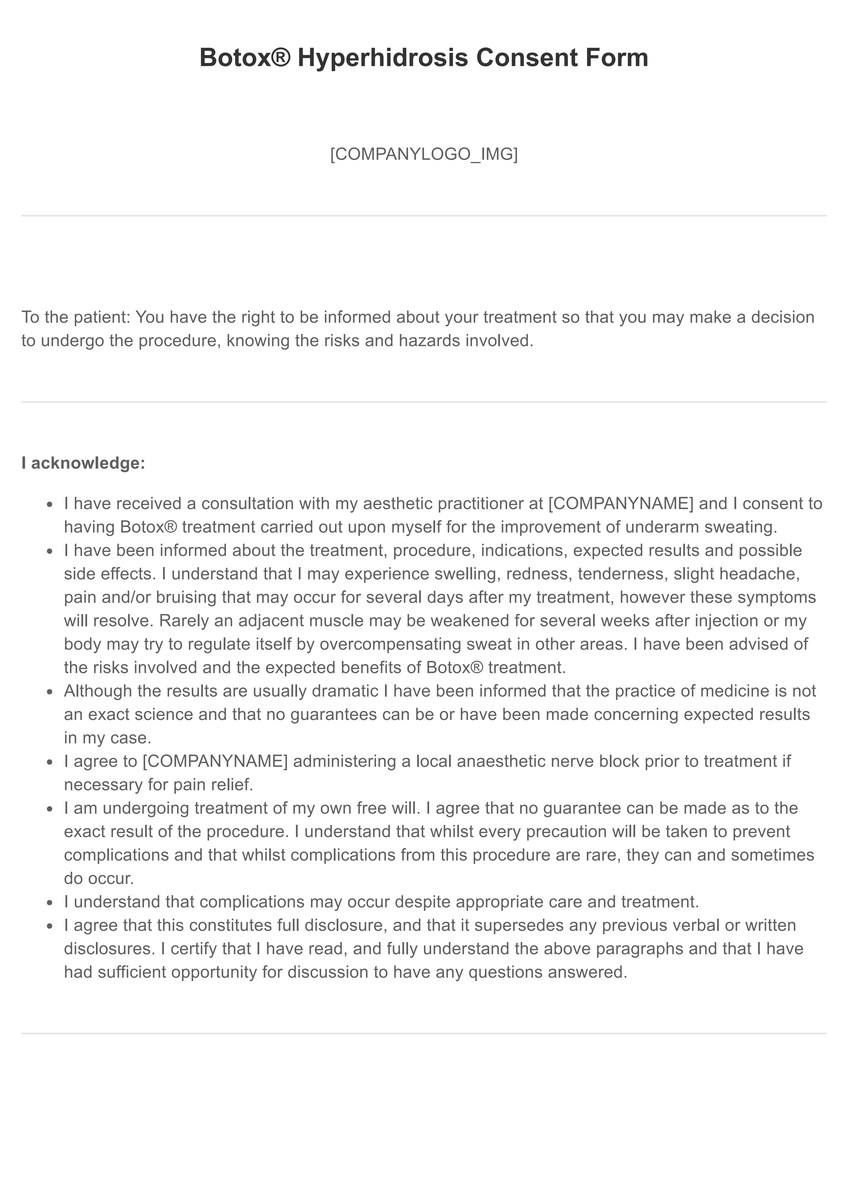
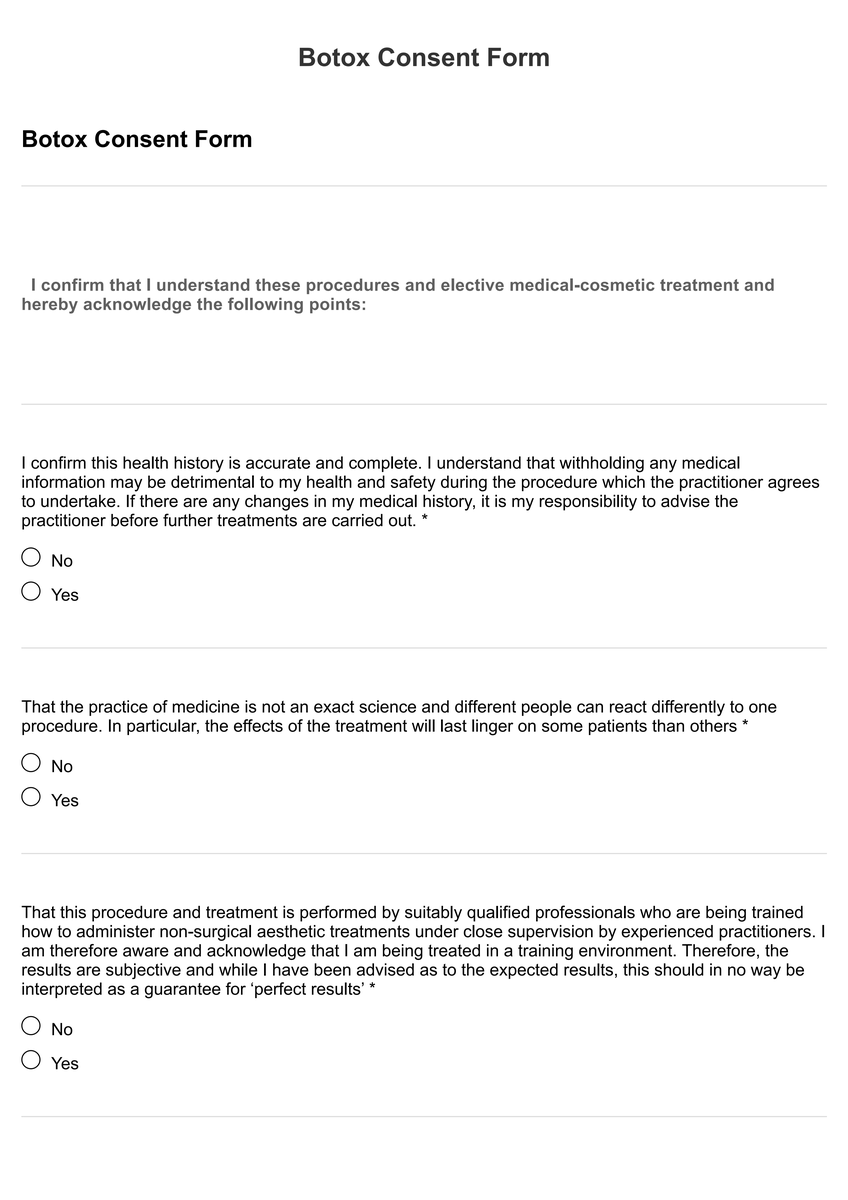
Informed consent ensures patients understand the procedure, risks, and expected outcomes before Botox® hyperhidrosis treatment.
Treatment effectiveness can reduce excessive sweating by up to 87% in treated areas for 4-12 months.
Risk documentation covers potential side effects including temporary weakness, bruising, and infection at injection sites.
Legal protection provides comprehensive documentation for both patient safety and practitioner liability coverage.
A Botox® hyperhidrosis consent form is a vital medical document that establishes informed consent between healthcare practitioners and patients seeking botulinum toxin treatment for excessive sweating. This comprehensive form outlines the medical procedure, explains how Botox® works to temporarily block nerve signals that trigger sweat glands, and details the expected outcomes of treatment.
The consent form serves as both an educational tool and legal safeguard, ensuring patients fully understand what hyperhidrosis treatment involves. It covers essential information about the injection process, treatment areas such as underarms, palms, feet, or face, and the mechanism by which Botox® reduces sweat production. Furthermore, the document addresses contraindications, potential complications, and alternative treatment options available for managing excessive sweating.
Healthcare providers use this consent form to demonstrate due diligence in patient care, whilst patients benefit from having detailed information about their treatment clearly documented. The form establishes realistic expectations about treatment duration, effectiveness rates, and the need for repeat treatments to maintain results.
First, access the Botox® hyperhidrosis consent form PDF document by downloading it from Pabau below. The form should be readily available in your practice management system or downloaded directly to your device. Ensure you have the most current version of the form to maintain compliance with updated medical guidelines and regulatory requirements.
Conduct a thorough consultation to assess the patient's hyperhidrosis severity and medical history. Review their symptoms, previous treatments attempted, and evaluate whether they are a suitable candidate for Botox® injections. Document any contraindications such as pregnancy, neuromuscular disorders, or allergies to botulinum toxin.
Walk the patient through each section of the consent form, explaining how Botox® works to reduce excessive sweating. Discuss the injection process, number of injections required, and expected timeline for results. Address any questions or concerns the patient may have about the treatment.
Carefully review all potential risks, side effects, and complications listed in the consent form. Explain the likelihood of various outcomes and discuss alternative treatments. Ensure the patient understands both the benefits and limitations of Botox® for hyperhidrosis treatment.
Have the patient complete all relevant sections of the form, including medical history and consent acknowledgements. Both patient and practitioner should sign and date the document. Provide the patient with a copy and retain the original in their medical records.
The Botox® hyperhidrosis consent form is essential for aesthetic practitioners, dermatologists, and medical professionals offering botulinum toxin treatments for excessive sweating. It serves patients suffering from primary focal hyperhidrosis who have not responded adequately to topical treatments or oral medications.
This consent form is particularly valuable for busy practices treating multiple hyperhidrosis patients, as it streamlines the consultation process whilst ensuring comprehensive risk disclosure. Medical spas, private clinics, and dermatology practices benefit from having standardised documentation that meets regulatory requirements and professional standards.
The form is also helpful for patients who want to fully understand their treatment options and make informed decisions about managing their hyperhidrosis. It provides them with detailed information they can review at home and discuss with family members if needed.
Implementing a thorough Botox® hyperhidrosis consent form demonstrates commitment to patient safety and professional excellence. This documentation not only protects practitioners legally but also builds patient confidence through transparent communication about treatment expectations and potential outcomes.
Understanding realistic treatment expectations is crucial for patient satisfaction with Botox® hyperhidrosis therapy. The consent form should clearly outline that results become noticeable within 2-4 weeks following injection, with peak effectiveness achieved around 4-6 weeks post-treatment. Most patients experience significant sweat reduction lasting 4-12 months, though individual responses may vary.
Clinical studies demonstrate that Botox® can reduce underarm sweating by up to 87% in treated patients. However, the consent form must emphasise that results are temporary and repeat treatments are necessary to maintain effectiveness. Patients should understand that the procedure may need to be repeated 2-3 times per year depending on their individual response and sweat gland activity.
The form should also address potential variations in treatment response between different body areas. Whilst underarm hyperhidrosis responds excellent to Botox® injections, palmar and plantar hyperhidrosis may require different injection techniques and carry additional considerations regarding temporary weakness in treated areas.
Comprehensive post-treatment instructions form an integral part of the Botox® hyperhidrosis consent process. The form should detail specific aftercare requirements, including avoiding vigorous exercise for 24 hours, refraining from massaging injection sites, and monitoring for any adverse reactions.
Patients must understand the importance of follow-up appointments to assess treatment effectiveness and address any concerns. The consent form should establish clear communication channels for patients to report unexpected side effects or inadequate sweat reduction. Additionally, it should outline when patients can expect to schedule their next treatment session.
Emergency contact information and guidance on when to seek immediate medical attention should be clearly stated in the consent documentation. This includes signs of serious allergic reactions, unusual muscle weakness, or spreading of botulinum toxin effects beyond the intended treatment area.