Couples Counseling Initial Intake Form
 By Ivana Karafiloska on January 12, 2026
 Fact checked by: Teodor Jurukovski

Discover free eBooks, guides and med spa templates on our new resources page


Read case studies from our satisfied clients

Compare Pabau with alternative systems
 Integrations

 Measure Pabau savings
 Our security commitment
 About us

Learn why this holistic care and aesthetic medicine clinic chose Pabau to power patient care and performance.
Read more By Ivana Karafiloska on January 12, 2026
Fact checked by: Teodor Jurukovski
By Ivana Karafiloska on January 12, 2026
Fact checked by: Teodor Jurukovski
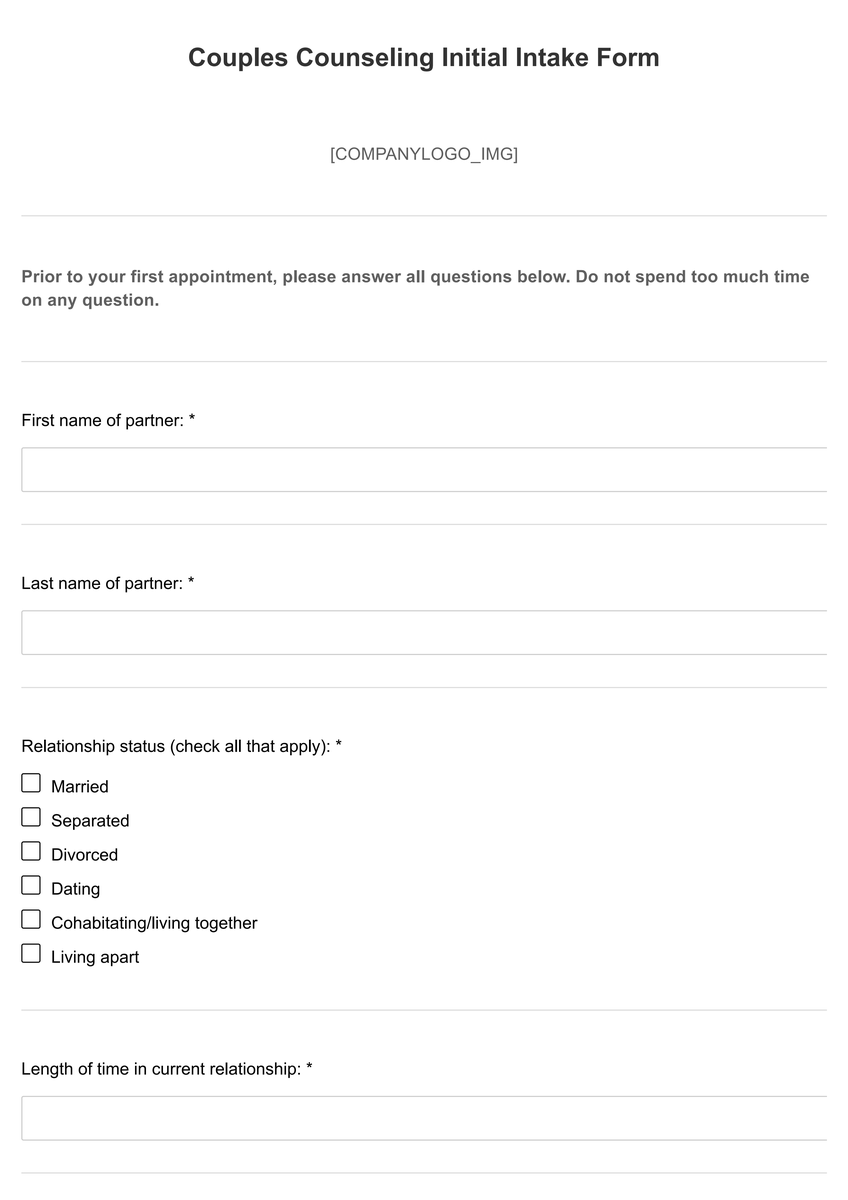
Comprehensive Assessment This intake form captures essential relationship history, individual backgrounds, and current concerns to inform effective therapy planning.
Confidential Process Both partners complete sections independently, ensuring honest disclosure whilst maintaining therapeutic boundaries.
Treatment Focus The form identifies specific areas of concern including communication patterns, conflict resolution, and relationship goals.
Therapeutic Foundation Information gathered establishes the groundwork for personalised interventions and measurable progress tracking.
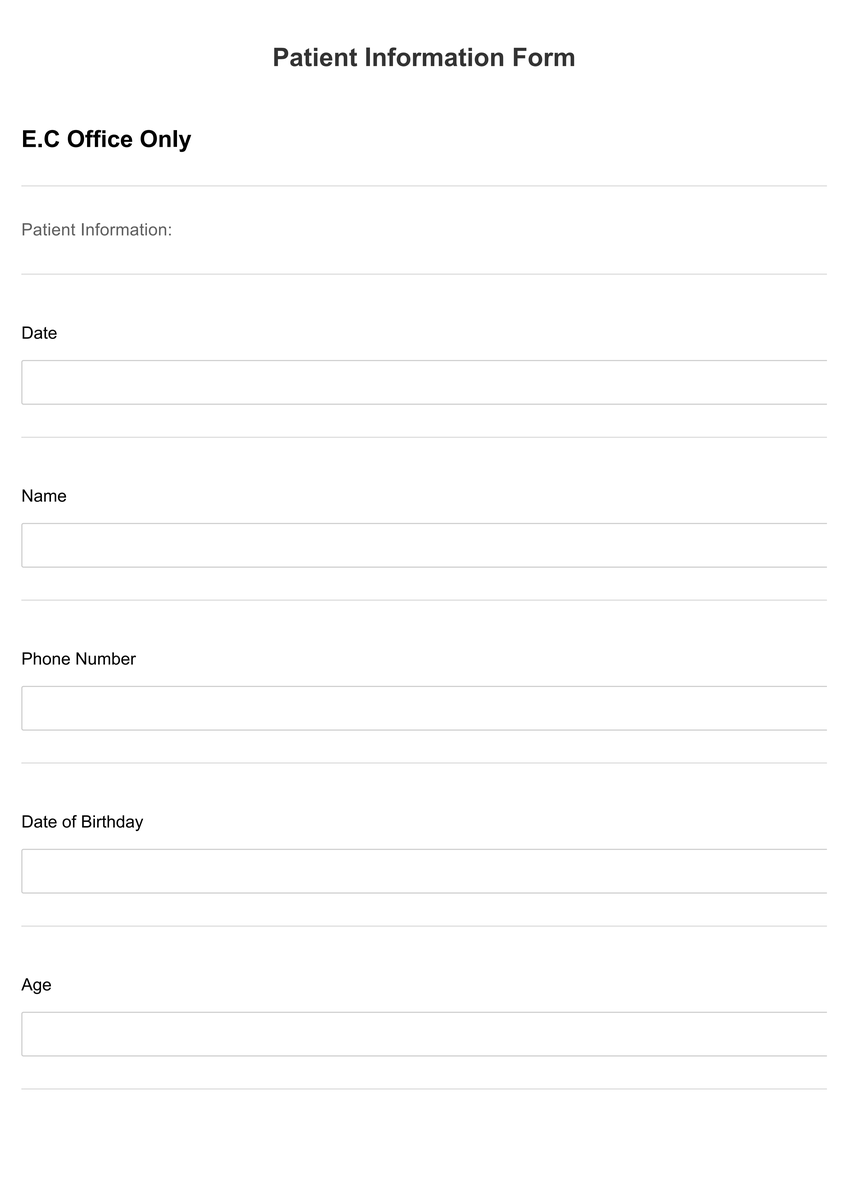
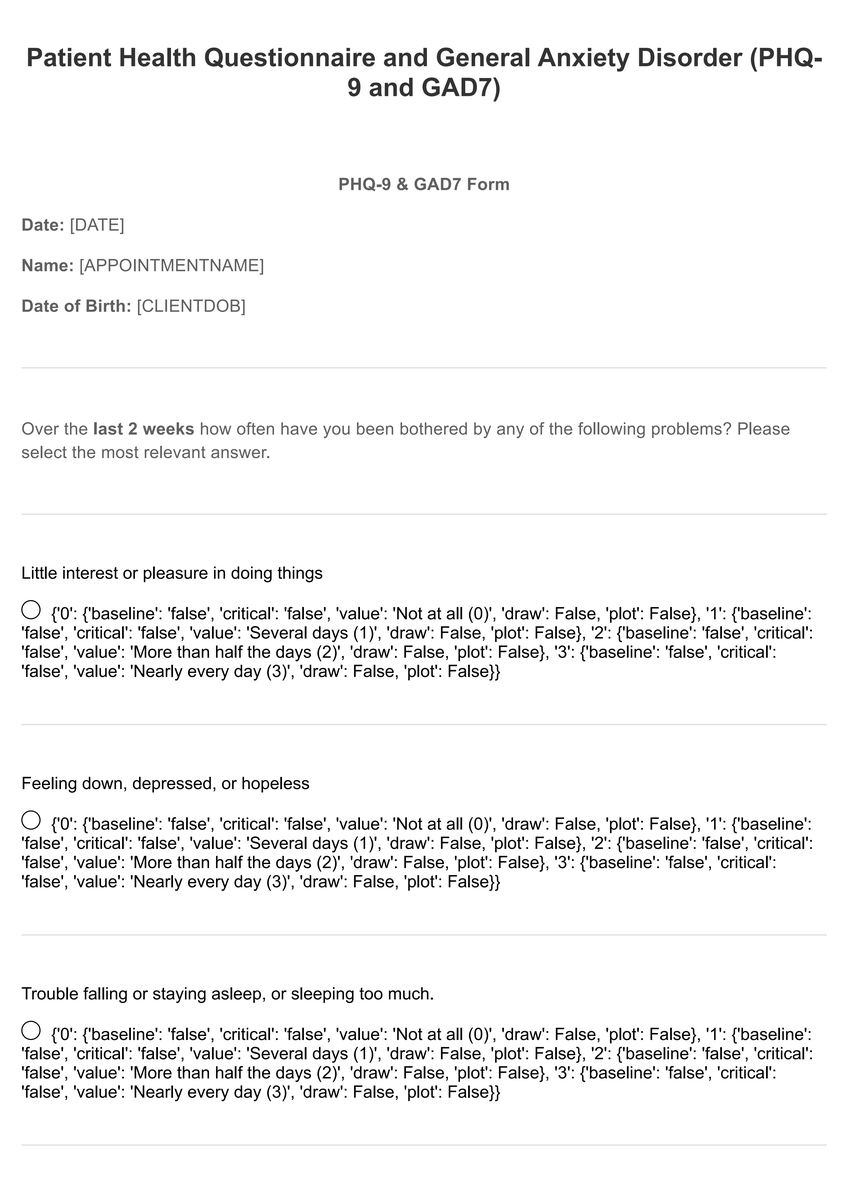
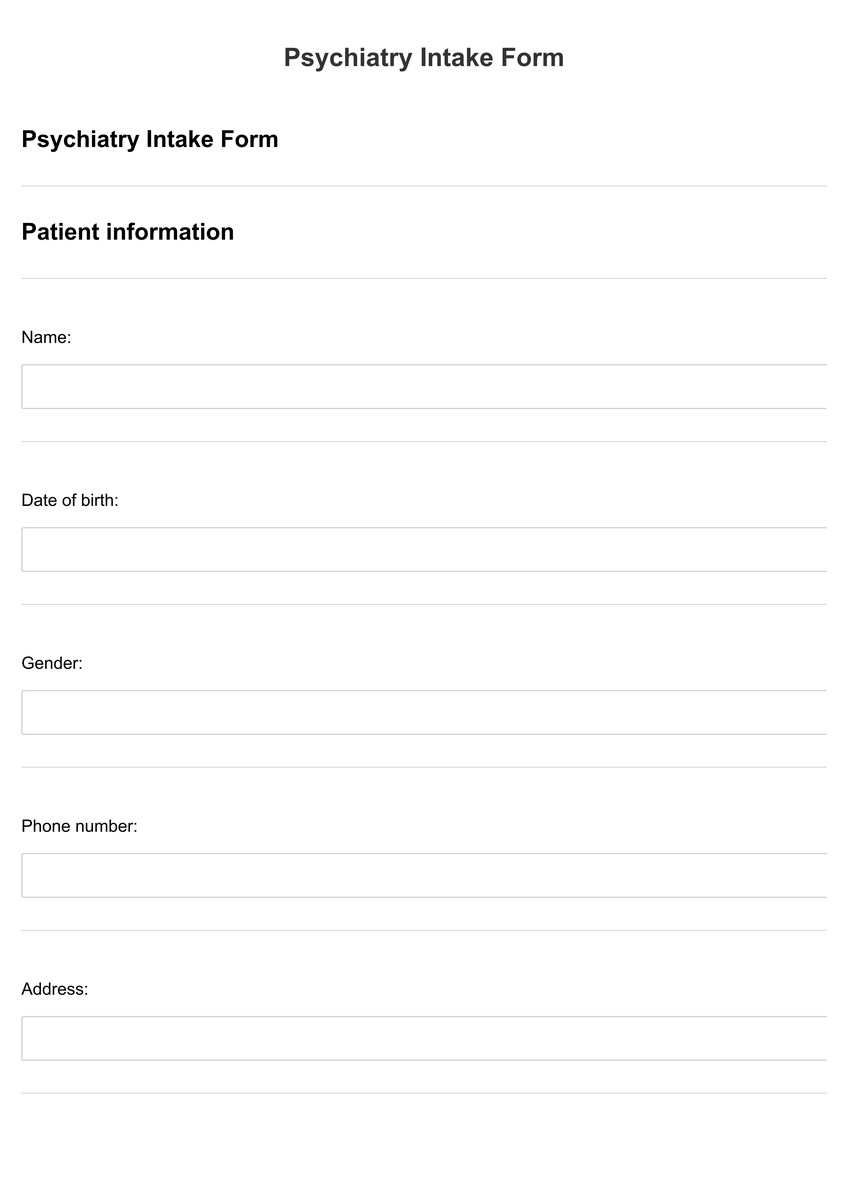
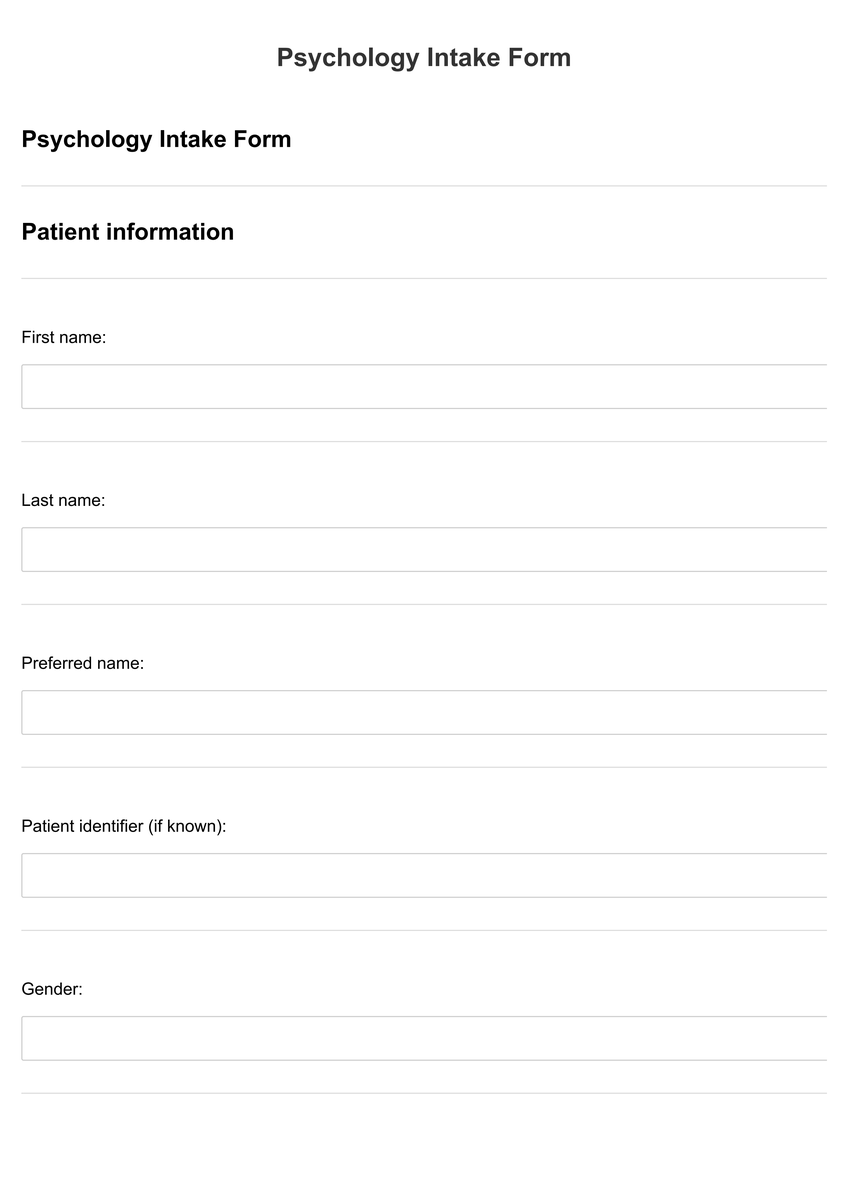
A couples counseling initial intake form is a structured assessment document that enables mental health professionals to gather comprehensive information about both partners before beginning therapeutic work. This essential tool captures relationship history, individual backgrounds, current challenges, and therapeutic goals from both perspectives. The form serves as the foundation for developing an effective treatment plan that addresses the specific needs and dynamics of each couple.
The intake process allows therapists to understand the complexity of the relationship, identify patterns of interaction, and recognise areas requiring immediate attention. By collecting this information beforehand, therapists can utilise the first session more effectively, moving beyond basic information gathering to begin meaningful therapeutic work.
First access the couples counseling initial intake form PDF document by downloading it from Pabau below. The form is designed to be completed digitally or printed for handwritten completion. Ensure you have a secure, private environment for completion, as the information requested is sensitive and personal. Both partners should plan to complete their respective sections independently to encourage honest and thorough responses.
Each partner should complete their designated sections of the form separately, without consulting the other. This independent completion ensures authentic responses and prevents one partner from unduly influencing the other's answers. Include detailed information about personal history, previous relationships, mental health background, and individual perspectives on current relationship challenges.
Both partners should provide comprehensive responses regarding current relationship issues, communication patterns, and specific areas of conflict. Be specific about behaviours, frequency of problems, and the impact these issues have on daily life and relationship satisfaction. This section helps therapists understand the urgency and severity of different concerns.
Clearly articulate what each partner hopes to achieve through couples counseling. These goals should be specific, measurable, and realistic. Consider both short-term objectives for immediate relief and long-term aspirations for relationship growth and stability.
Return the completed form to the therapy practice at least 24-48 hours before the first appointment. This allows the therapist adequate time to review responses, identify key themes, and prepare for the initial session. Some practices may require digital submission through secure patient portals.
The couples counseling initial intake form benefits various types of couples seeking therapeutic support. Married couples experiencing communication breakdowns, trust issues, or major life transitions find this comprehensive assessment invaluable for establishing therapeutic direction. Couples in long-term partnerships dealing with intimacy concerns, financial disagreements, or parenting challenges can use this form to articulate complex issues clearly.
Engaged couples preparing for marriage benefit from using this form to address pre-marital concerns and establish healthy communication patterns. Additionally, couples considering separation or divorce may find the intake process helpful for exploring whether their relationship can be salvaged through professional intervention. Same-sex couples, blended families, and couples from different cultural backgrounds all benefit from the inclusive nature of comprehensive intake assessment.
The structured approach of the couples counseling initial intake form creates a solid foundation for therapeutic work, ensuring that valuable session time is maximised for healing and growth rather than basic information gathering.
Through comprehensive intake assessment, therapists can identify recurring relationship patterns that may require specific therapeutic approaches. Common patterns include pursuer-distancer dynamics, where one partner seeks closeness whilst the other withdraws, and parent-child dynamics where one partner assumes a controlling role whilst the other becomes passive or rebellious.
The intake form often reveals communication patterns such as criticism, defensiveness, contempt, and stonewalling - known as the "Four Horsemen" of relationship deterioration. Understanding these patterns early allows therapists to address destructive cycles before they become more entrenched and difficult to change.
After completing the couples counseling initial intake form, couples should prepare mentally and emotionally for their first therapy session. This preparation includes discussing logistics such as session frequency, duration, and cost, as well as establishing ground rules for therapy participation. Both partners should approach the process with openness to feedback and commitment to active participation.
Consider practical arrangements such as childcare during sessions and scheduling that accommodates both partners' work commitments. Mental preparation involves acknowledging that therapy may initially feel uncomfortable as difficult topics are addressed, but this discomfort is often necessary for meaningful change and relationship improvement.