SOAP Note for Mental Health
 By Maja Muzhdeka on January 12, 2026
 Fact checked by: Teodor Jurukovski

Discover free eBooks, guides and med spa templates on our new resources page


Read case studies from our satisfied clients

Compare Pabau with alternative systems
 Integrations

 Measure Pabau savings
 Our security commitment
 About us
Learn why this holistic care and aesthetic medicine clinic chose Pabau to power patient care and performance.
Read more By Maja Muzhdeka on January 12, 2026
Fact checked by: Teodor Jurukovski
By Maja Muzhdeka on January 12, 2026
Fact checked by: Teodor Jurukovski
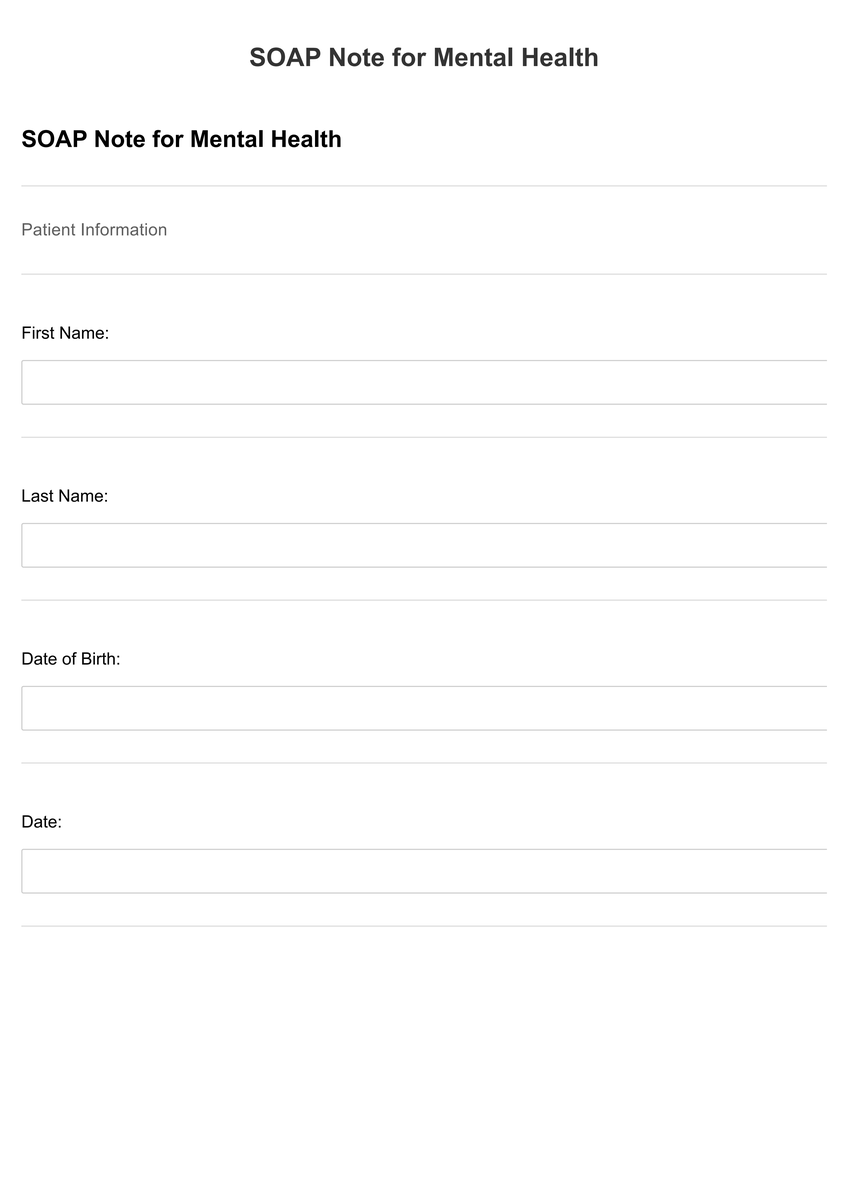
Structured Documentation SOAP notes provide a standardised framework for recording mental health assessments, ensuring comprehensive and consistent clinical documentation.
Clinical Continuity These templates facilitate seamless communication between healthcare providers and support treatment planning across multiple sessions.
Legal Protection Proper SOAP documentation serves as essential legal protection and supports clinical decision-making with clear rationale for interventions.
Professional Standards Mental health SOAP notes ensure compliance with clinical documentation standards and regulatory requirements across various therapeutic settings.
A SOAP Note for Mental Health is a comprehensive clinical documentation template specifically designed for mental health practitioners to systematically record patient encounters and therapeutic sessions. The acronym SOAP stands for Subjective, Objective, Assessment, and Plan, representing the four core components that structure each clinical entry.
In the mental health context, this documentation method provides a standardised approach to recording patient presentations, clinical observations, diagnostic impressions, and treatment interventions. The template ensures that mental health professionals capture essential information consistently across sessions, facilitating continuity of care and supporting evidence-based treatment decisions.
Mental health SOAP notes serve as crucial communication tools between practitioners, particularly in multidisciplinary teams where patients may receive care from various specialists. Furthermore, these structured notes support clinical supervision, treatment planning reviews, and quality assurance processes within mental health services.
First access the SOAP Note for Mental Health PDF document by downloading it from Pabau below. Once downloaded, you can either print the template for handwritten notes or open it digitally on your preferred device. Many practitioners prefer to save the template to their desktop or clinical documentation folder for quick access during patient sessions. Consider creating multiple copies if you anticipate high patient volume or prefer to complete notes immediately after each session.
Begin by documenting the patient's subjective report, including their current concerns, symptoms, mood descriptions, and personal perspectives on their mental state. Record the patient's own words when possible, noting any significant changes since the last session. Include relevant psychosocial factors, life events, medication compliance, and the patient's goals for treatment.
Record your clinical observations of the patient's appearance, behaviour, mood, affect, speech patterns, thought processes, and cognitive functioning. Note any observable changes from previous sessions, including improvements or deterioration in presentation. Document mental status examination findings, risk assessments, and any standardised assessment scores or measurements used during the session.
Provide your clinical impression based on the subjective and objective information gathered. Include diagnostic considerations, progress towards treatment goals, and any changes to working diagnoses. Address risk factors, protective factors, and the patient's current level of functioning across various domains of life.
Outline specific interventions, therapeutic techniques employed during the session, homework assignments, and plans for future sessions. Include any referrals made, medication recommendations, or collaborative care coordination required. Set clear, measurable goals for the next session and document the planned frequency of future appointments.
SOAP Note for Mental Health templates are invaluable for a wide range of mental health professionals working across diverse clinical settings. Clinical psychologists benefit significantly from this structured approach when conducting psychological assessments, therapy sessions, and treatment reviews. The template ensures comprehensive documentation of therapeutic interventions and patient progress tracking.
Psychiatrists find these notes particularly useful for documenting medication management sessions, psychiatric evaluations, and monitoring treatment response. The structured format supports clinical decision-making regarding medication adjustments and diagnostic clarifications. Additionally, psychiatric nurses and nurse practitioners use these templates to document patient interactions and coordinate care with multidisciplinary teams.
Licensed clinical social workers and counsellors utilise mental health SOAP notes to maintain detailed records of therapeutic sessions, crisis interventions, and case management activities. The template supports their documentation requirements while ensuring continuity of care across different service providers. Mental health facilities, community mental health centres, and private practice clinicians all benefit from the standardised documentation approach that SOAP notes provide.
Mental health professionals who implement SOAP documentation consistently report improved clinical outcomes and enhanced professional confidence. The structured approach reduces documentation time whilst ensuring comprehensive coverage of essential clinical elements, ultimately supporting both practitioner efficiency and patient safety.
Mental health SOAP notes must adhere to professional documentation standards and regulatory requirements across different healthcare systems. The template supports compliance with clinical governance frameworks, ensuring that all essential elements of patient care are recorded systematically. This includes risk assessments, safeguarding considerations, and evidence-based treatment rationale.
Professional bodies and regulatory authorities recognise SOAP documentation as best practice for mental health record-keeping. The structured format demonstrates clinical reasoning, supports audit processes, and facilitates peer review activities. Moreover, consistent use of SOAP notes enhances the quality of clinical supervision and supports professional development for early-career mental health practitioners.
The SOAP format seamlessly integrates with comprehensive treatment planning processes, allowing practitioners to track progress towards specific therapeutic goals over time. Each note builds upon previous entries, creating a detailed narrative of the patient's therapeutic journey. This longitudinal perspective supports treatment reviews, outcome measurements, and evidence-based adjustments to therapeutic interventions.
Mental health teams can use SOAP notes to coordinate care effectively, ensuring that all team members have access to consistent, up-to-date information about patient progress and treatment plans. The structured format facilitates handovers between shifts, supports discharge planning, and enables effective communication with external healthcare providers when referrals or collaborative care arrangements are required.