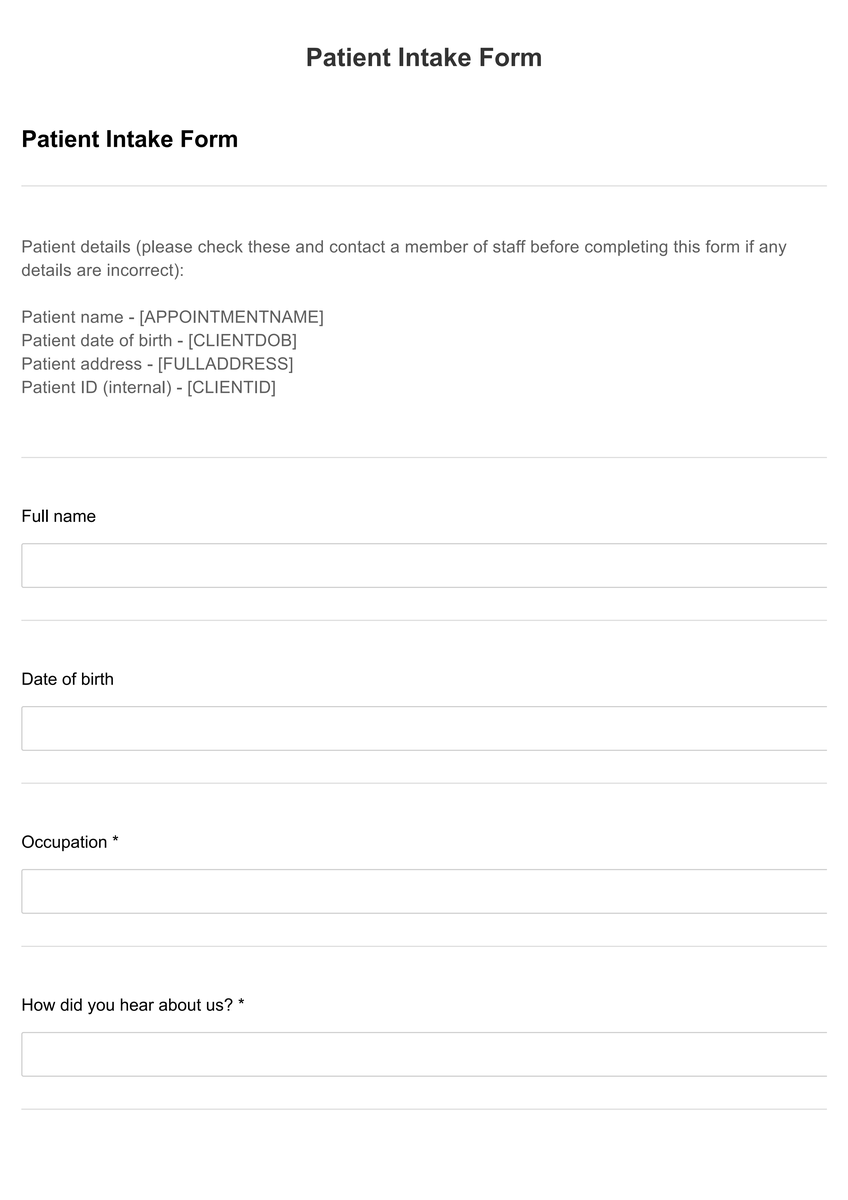
Food Allergy Form
 By Ivana Kotorchevikj on January 12, 2026
 Fact checked by: Teodor Jurukovski

Discover free eBooks, guides and med spa templates on our new resources page


Read case studies from our satisfied clients

Compare Pabau with alternative systems
 Integrations

 Measure Pabau savings
 Our security commitment
 About us

Learn why this holistic care and aesthetic medicine clinic chose Pabau to power patient care and performance.
Read more By Ivana Kotorchevikj on January 12, 2026
Fact checked by: Teodor Jurukovski
By Ivana Kotorchevikj on January 12, 2026
Fact checked by: Teodor Jurukovski
Patient Safety: Food allergy forms create essential documentation to prevent potentially life-threatening allergic reactions during treatment.
Clinical Assessment: Comprehensive questionnaires capture detailed allergy histories, severity levels, and previous reaction patterns.
Treatment Planning: Accurate allergy documentation enables clinicians to modify treatment protocols and avoid contraindicated procedures.
Emergency Preparedness: Forms help identify high-risk patients who may require emergency action plans and specialised monitoring during procedures.
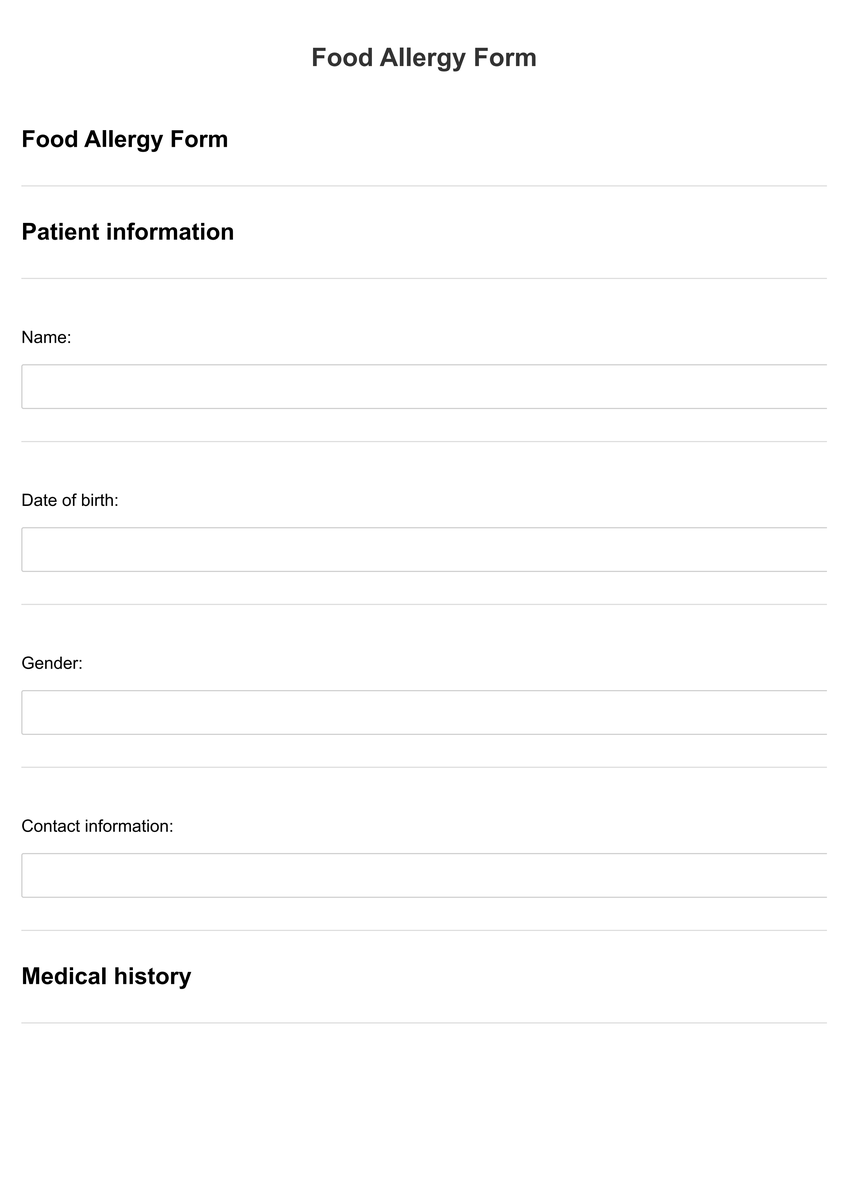
A food allergy form is a structured medical document that captures comprehensive information about a patient's food allergies, sensitivities, and adverse food reactions. This clinical questionnaire serves as a vital component of patient assessment, providing healthcare professionals with detailed insights into allergic triggers, reaction patterns, and severity levels that may impact treatment decisions and patient safety protocols.
The form systematically documents various types of food-related adverse reactions, including immediate IgE-mediated allergies, delayed hypersensitivity reactions, and food intolerances. Furthermore, it captures essential clinical details such as onset timing, symptom severity, treatment history, and emergency interventions previously required. This comprehensive approach ensures that healthcare providers have access to critical safety information before implementing any treatment protocols.
First, access the food allergy form PDF document by downloading it from Pabau below. The form is available as a comprehensive digital template that can be customised according to your clinic's specific requirements and printed for patient completion. Ensure you have the most current version of the form to capture all relevant clinical parameters and maintain consistency with current allergy assessment standards.
Provide the form to patients during their initial consultation or as part of pre-treatment documentation. Instruct patients to complete all sections thoroughly, including details about known food allergies, previous reactions, family history of allergies, and any current medications or treatments they are receiving for allergic conditions.
Review the completed form with the patient to verify accuracy and clarify any unclear responses. Pay particular attention to severity indicators, emergency interventions previously required, and any medications the patient carries for allergic reactions, such as antihistamines or epinephrine auto-injectors.
Document all allergy information in the patient's electronic health record system, ensuring that alerts are properly configured for high-risk allergies. This integration enables all healthcare team members to access critical safety information throughout the patient's care journey.
Use the documented allergy information to modify treatment plans, select appropriate medications, and implement necessary safety precautions. Consider consultation with allergy specialists for complex cases or when treatment protocols may present increased allergic risks.
Food allergy forms are essential tools for a diverse range of healthcare professionals across multiple specialities. General practitioners benefit from comprehensive allergy documentation to ensure safe prescribing practices and appropriate treatment modifications. However, aesthetic practitioners and dermatologists find these forms particularly valuable when administering treatments that may contain allergenic ingredients or when patients have histories of contact allergies that could cross-react with topical preparations.
Mental health practitioners also utilise food allergy forms, as certain psychiatric medications can interact with allergic conditions, and some patients may experience anxiety or trauma related to severe allergic reactions. Additionally, wellness and functional medicine practitioners rely on detailed food allergy documentation to develop personalised nutrition plans and identify potential triggers that may contribute to systemic inflammatory conditions or digestive health issues.
By implementing food allergy forms in clinical practice, healthcare providers demonstrate their commitment to patient-centred care and evidence-based safety protocols. This systematic approach not only protects patients from potentially serious adverse reactions but also supports clinical decision-making through comprehensive allergy profiling that informs every aspect of treatment planning and delivery.
Food allergy forms play a crucial role in developing emergency response protocols for patients with severe allergic reactions. The detailed information captured enables healthcare teams to prepare appropriate emergency medications, establish clear action plans, and ensure staff members are aware of high-risk patients requiring additional monitoring during procedures.
Moreover, the documentation supports effective communication with emergency services if anaphylaxis or severe allergic reactions occur during treatment. The comprehensive allergy history assists paramedics and emergency department staff in making rapid treatment decisions, particularly when patients may be unable to communicate due to the severity of their reaction.
The information gathered through food allergy forms directly influences treatment selection and protocol modification across various healthcare specialities. For aesthetic procedures, understanding food allergies helps identify potential cross-reactivity with topical anaesthetics, preservatives, or other treatment components that may share similar molecular structures with known food allergens.
In addition, the forms support holistic patient care by identifying potential connections between food allergies and other health conditions. This comprehensive approach enables healthcare providers to address underlying inflammatory processes, develop appropriate dietary modifications, and coordinate care with other specialists when complex allergy management is required.