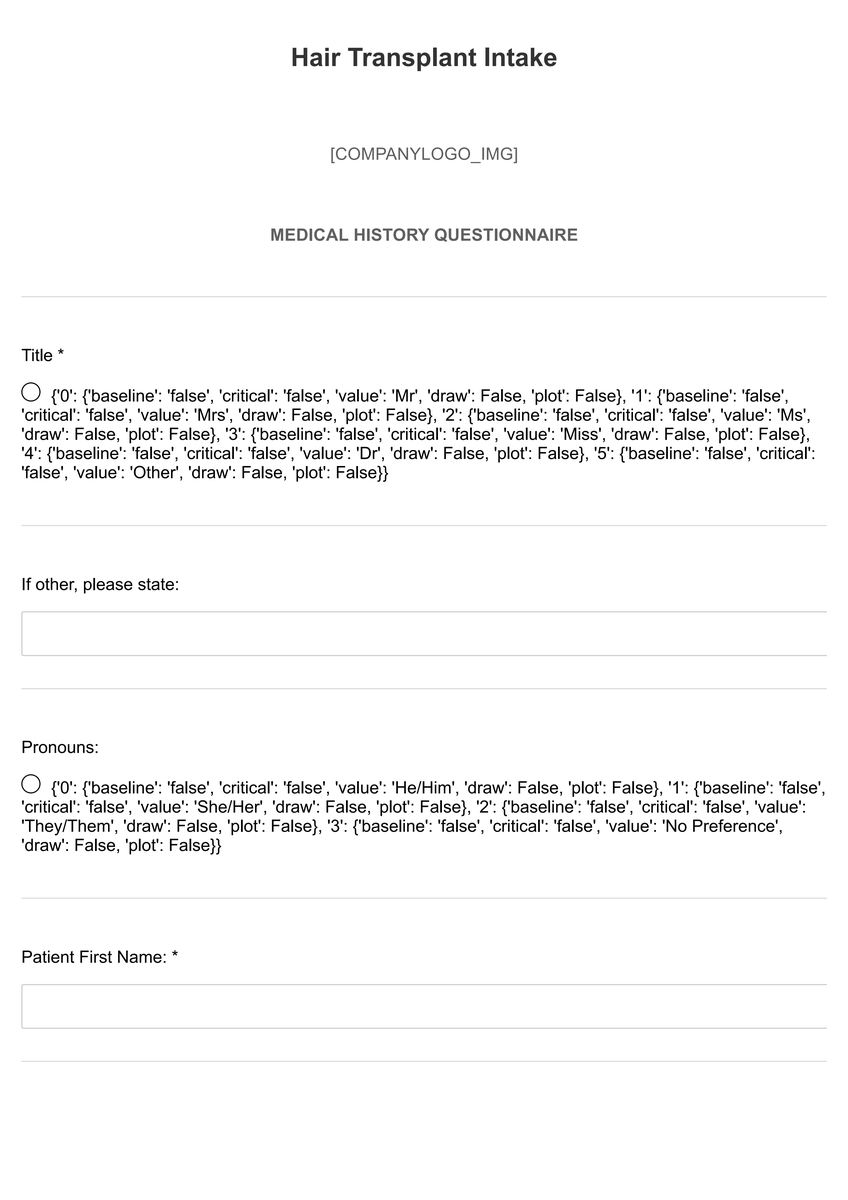
FUE Hair Transplant
 By Ivana Kotorchevikj on January 13, 2026
 Fact checked by: Teodor Jurukovski


Read case studies from our satisfied clients

Compare Pabau with alternative systems
 Integrations

 Measure Pabau savings
 Our security commitment
 About us
Learn why this holistic care and aesthetic medicine clinic chose Pabau to power patient care and performance.
Read more By Ivana Kotorchevikj on January 13, 2026
Fact checked by: Teodor Jurukovski
By Ivana Kotorchevikj on January 13, 2026
Fact checked by: Teodor Jurukovski
FUE Technique Follicular Unit Extraction is a minimally invasive hair transplant method that extracts individual hair follicles without requiring a linear incision.
Documentation Template This comprehensive template ensures systematic recording of all procedural aspects from initial assessment to post-operative care.
Patient Safety Proper documentation supports informed consent, procedural safety, and optimal patient outcomes throughout the hair restoration journey.
Clinical Excellence Structured record-keeping facilitates quality improvement, follow-up care coordination, and professional standards compliance.
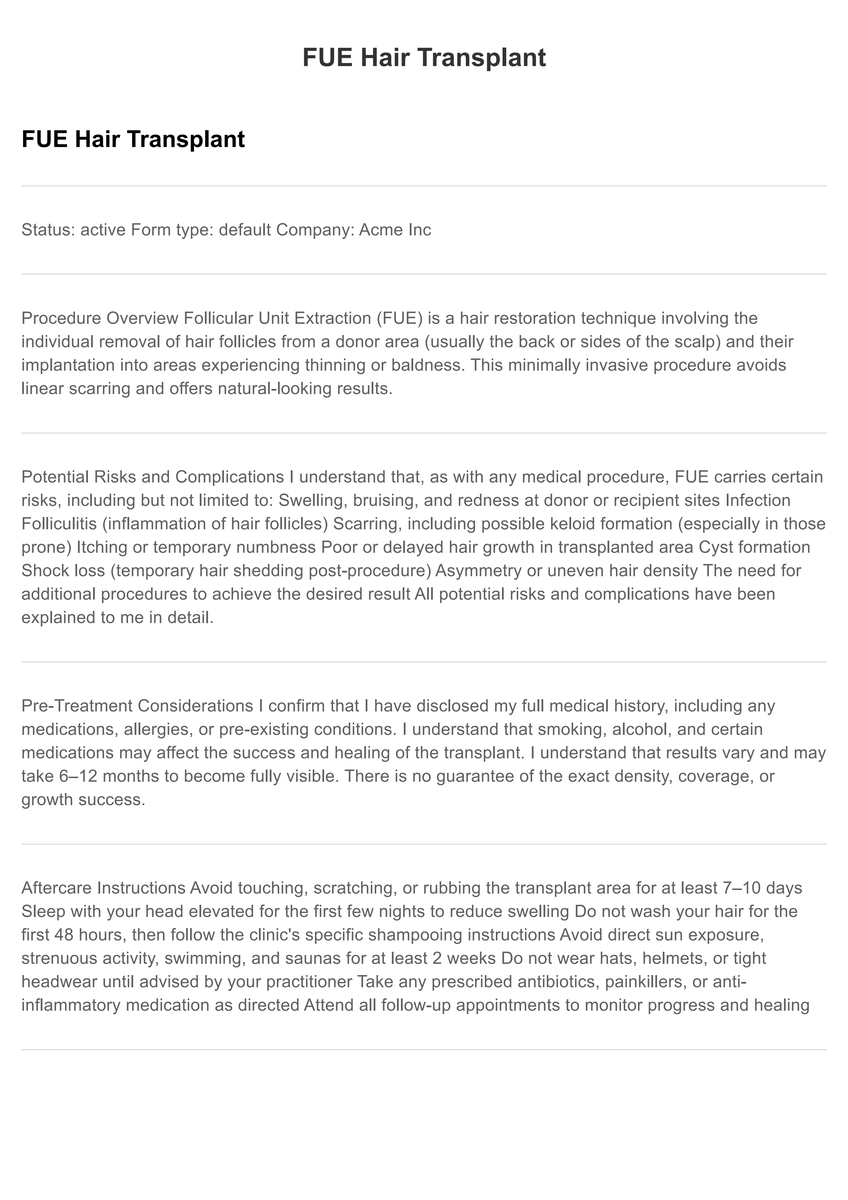
The FUE Hair Transplant template is a comprehensive clinical documentation tool designed specifically for Follicular Unit Extraction procedures. This template provides a structured framework for recording all essential aspects of hair transplant surgery, from initial patient consultation through to long-term follow-up care.
FUE represents one of the most sophisticated hair restoration techniques available today, involving the precise extraction of individual hair follicles from donor areas and their transplantation to areas experiencing hair loss. This minimally invasive approach differs significantly from traditional strip harvesting methods, as it leaves no linear scar and allows for faster recovery times.
The template encompasses critical documentation areas including patient medical history, hair loss assessment, donor area evaluation, graft planning, procedural notes, and post-operative care instructions. By providing standardised fields and prompts, it ensures clinicians capture all relevant information necessary for safe, effective treatment delivery and optimal aesthetic outcomes.
First, access the FUE hair transplant PDF document by downloading it from Pabau below. The template is designed to be user-friendly and can be completed digitally or printed for handwritten completion. Ensure you have the latest version to benefit from any recent updates or improvements to the documentation structure.
Begin by documenting comprehensive patient information including medical history, current medications, previous hair loss treatments, and family history of androgenetic alopecia. Record detailed measurements of hair loss patterns using the Norwood-Hamilton scale for men or Ludwig scale for women, along with photographic documentation of baseline appearance.
Systematically assess donor area characteristics including hair density, follicular unit composition, hair calibre, and scalp laxity. Document any scarring, previous surgical sites, or areas of concern that may affect graft harvesting. Calculate available donor supply and establish realistic graft numbers for the planned procedure.
Record the detailed treatment plan including target areas for transplantation, expected graft numbers, hairline design considerations, and aesthetic goals. Document the patient's expectations and ensure these align with realistic outcomes based on their individual circumstances and donor availability.
During the procedure, use the template to record real-time information including local anaesthesia administration, extraction techniques used, graft survival rates, placement patterns, and any complications or modifications to the planned approach. This creates a comprehensive procedural record for quality assurance and future reference.
Complete the post-operative section with specific care instructions, medication schedules, activity restrictions, and follow-up appointment scheduling. Provide clear guidance on washing protocols, sleeping positions, and signs that warrant immediate medical attention.
This template serves multiple healthcare professionals within the hair restoration field. Hair transplant surgeons benefit from its comprehensive structure for maintaining detailed procedural records and ensuring consistent documentation standards across their practice. The template supports both experienced practitioners seeking to standardise their documentation processes and newer surgeons establishing best practice protocols.
Dermatologists performing hair transplant procedures find the template invaluable for integrating hair restoration services into their broader practice framework. The systematic approach helps ensure all relevant factors are considered when evaluating candidates for FUE procedures, particularly when managing patients with underlying scalp conditions or complex hair loss patterns.
Aesthetic clinic teams, including nurse practitioners and clinical coordinators, utilise the template for patient education, consent processes, and care coordination. The structured format facilitates clear communication between team members and ensures continuity of care throughout the patient journey from consultation to final follow-up.
Practice administrators and quality assurance personnel rely on the template for maintaining clinical standards, supporting audit processes, and demonstrating compliance with professional guidelines. The comprehensive documentation structure provides essential data for practice improvement initiatives and outcome tracking.
The template ultimately enhances patient safety through systematic documentation whilst supporting clinical excellence and professional development. By providing a structured approach to FUE hair transplant documentation, it enables practitioners to deliver consistent, high-quality care whilst maintaining comprehensive records for optimal patient outcomes and practice management.
Successful FUE hair transplant outcomes depend heavily on thorough pre-operative assessment and appropriate patient selection. The template guides clinicians through essential evaluation criteria including patient age, hair loss progression stability, donor area quality, and realistic outcome expectations. Particular attention should be paid to patients with diffuse thinning patterns, as these cases may not be ideal candidates for FUE procedures.
Medical contraindications must be carefully assessed, including bleeding disorders, keloid formation tendency, and certain medications that may affect healing. The template provides systematic prompts for documenting these factors, ensuring comprehensive risk assessment before proceeding with surgery. Additionally, psychological readiness and understanding of the gradual nature of hair growth following transplantation are crucial factors that require careful documentation.
The FUE hair transplant template extends beyond the immediate procedural period to encompass comprehensive follow-up care protocols. Systematic monitoring of graft survival, hair growth progression, and patient satisfaction is essential for achieving optimal outcomes. The template provides structured frameworks for documenting growth milestones at 3, 6, 12, and 18-month intervals post-procedure.
Particular attention should be paid to identifying and managing potential complications such as folliculitis, ingrown hairs, or poor graft survival. The template includes specific sections for documenting any adverse events and the interventions implemented to address them. Long-term follow-up also provides valuable data for practice improvement and helps establish realistic expectations for future patients considering FUE procedures.