Full Skin Assessment
 By Teodor Jurkovski on January 12, 2026
 Fact checked by: Teodor Jurukovski

Discover free eBooks, guides and med spa templates on our new resources page


Read case studies from our satisfied clients

Compare Pabau with alternative systems
 Integrations

 Measure Pabau savings
 Our security commitment
 About us

Learn why this holistic care and aesthetic medicine clinic chose Pabau to power patient care and performance.
Read more By Teodor Jurkovski on January 12, 2026
Fact checked by: Teodor Jurukovski
By Teodor Jurkovski on January 12, 2026
Fact checked by: Teodor Jurukovski
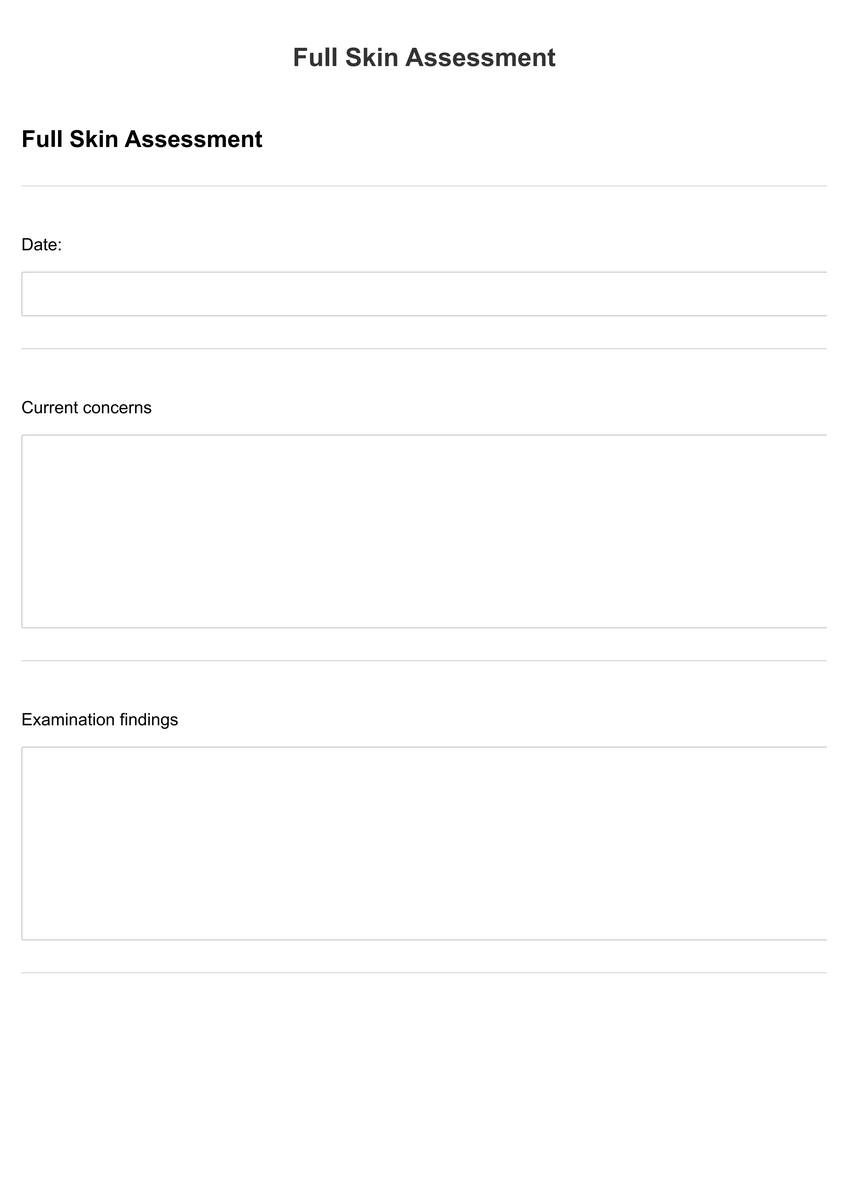
Comprehensive Assessment This form captures detailed skin history, current concerns, and treatment objectives for optimal patient care planning.
Risk Evaluation Systematic documentation of medical history, allergies, and contraindications ensures safe treatment delivery.
Personalised Planning Detailed skin analysis enables tailored treatment recommendations based on individual patient needs and goals.
Documentation Standards Structured format ensures consistent record-keeping and supports clinical decision-making across healthcare teams.
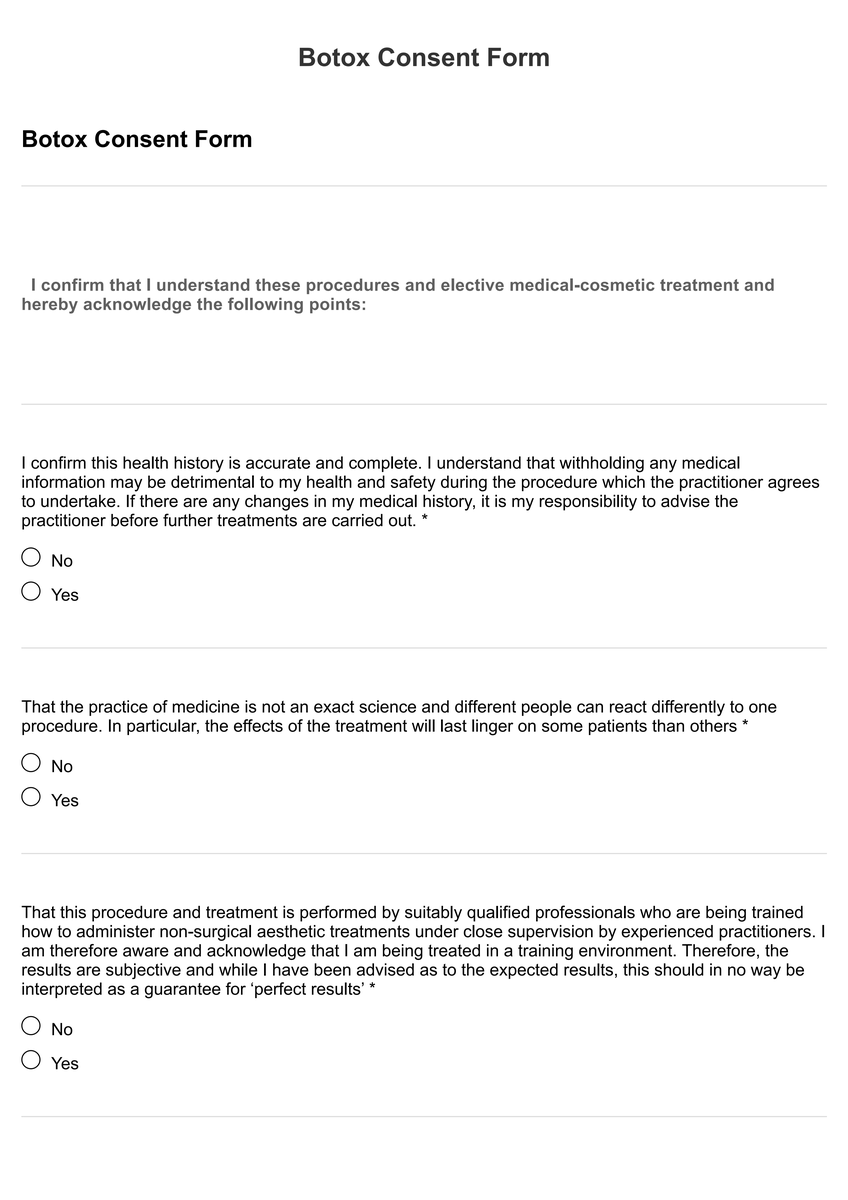
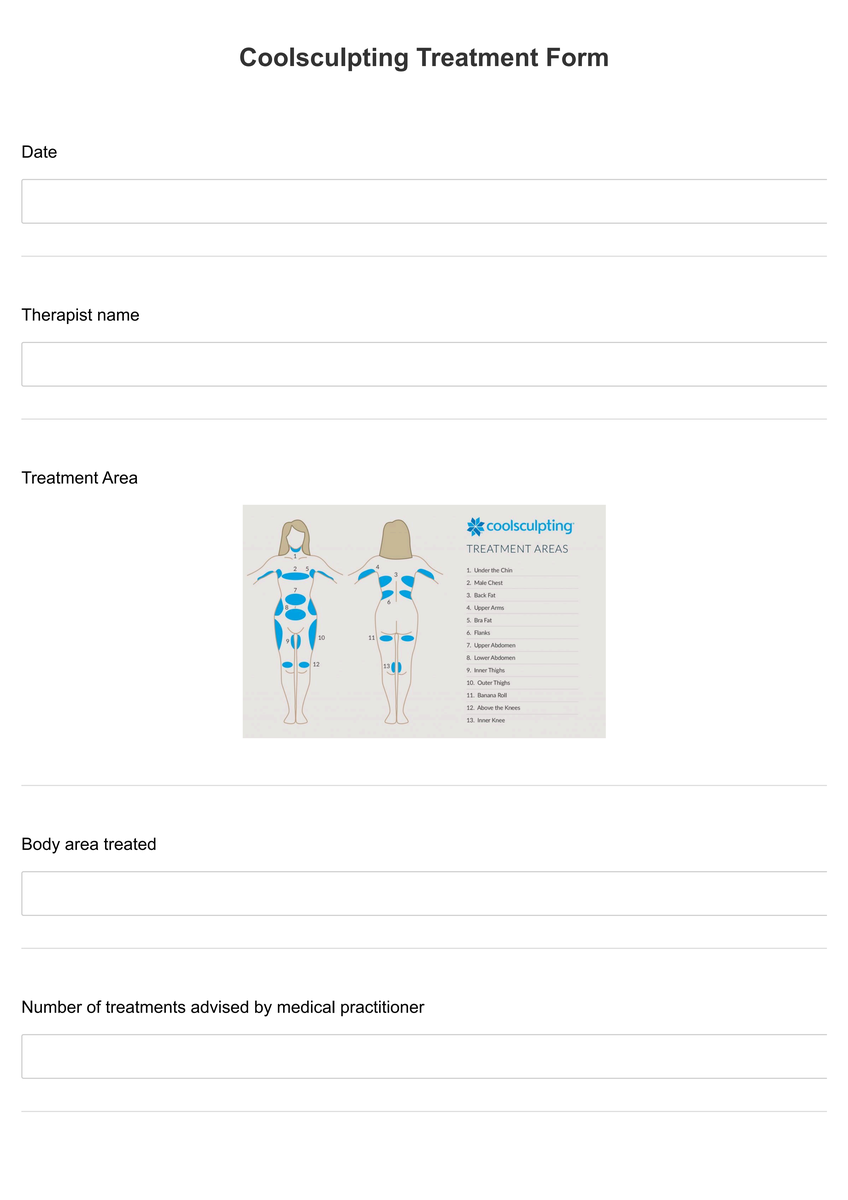
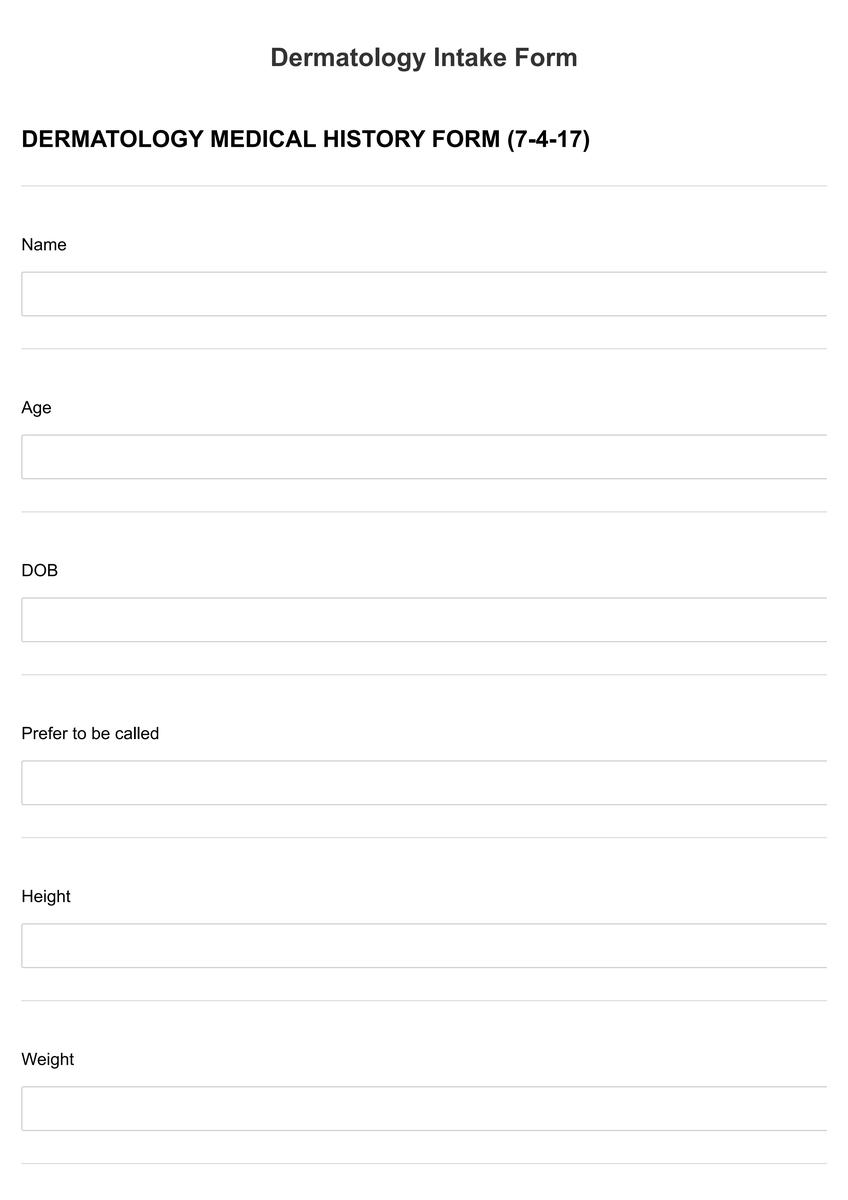
A full skin assessment is a comprehensive evaluation tool that enables healthcare practitioners to systematically document and analyse a patient's complete dermatological profile. This detailed assessment form captures essential information about skin health, medical history, current concerns, and aesthetic goals to ensure safe and effective treatment planning.
The assessment encompasses multiple dimensions of skin health, including previous skin conditions, current medications, lifestyle factors, and specific areas of concern. Furthermore, it provides a structured approach to evaluating skin type, sensitivity levels, and treatment tolerance, which are crucial for determining appropriate interventions and managing patient expectations.
In addition to medical considerations, the assessment addresses cosmetic concerns and desired outcomes, enabling practitioners to align treatment recommendations with patient goals. This comprehensive approach ensures that all relevant factors are considered before implementing any skincare regimen or aesthetic procedure.
First, access the full skin assessment PDF document by downloading it from Pabau below. The form is available in a standardised digital format that can be printed for in-clinic use or completed electronically during patient consultations. Ensure you have the most current version of the assessment to maintain consistency with best practice guidelines.
Schedule adequate time for the assessment, as a thorough skin evaluation requires detailed discussion and examination. Create a comfortable environment where patients feel at ease discussing their skin concerns and medical history. Have good lighting available for visual skin inspection and ensure privacy for sensitive discussions about medical conditions.
Begin by documenting the patient's complete medical history, including current medications, allergies, and previous skin treatments. Pay particular attention to hormonal factors, autoimmune conditions, and medications that may affect skin sensitivity or healing. Record any family history of skin conditions or adverse reactions to cosmetic treatments.
Perform a systematic visual and tactile examination of the skin, noting texture, tone, elasticity, and areas of concern. Document specific skin conditions such as acne, pigmentation, scarring, or signs of ageing. Assess skin type according to recognised classification systems and note any areas requiring special attention or contraindications.
Record the patient's specific concerns and desired outcomes from treatment. Discuss realistic expectations and document any limitations or considerations that may affect treatment planning. This section helps ensure patient satisfaction and provides a reference point for measuring treatment success.
Complete the assessment by reviewing all documented information with the patient and outlining recommended next steps. Store the completed assessment securely in the patient's medical record and schedule appropriate follow-up appointments or treatment sessions based on the findings.
The full skin assessment is invaluable for dermatologists, aesthetic practitioners, and skincare professionals who need to establish comprehensive baseline documentation before treatment. It serves medical professionals working in cosmetic clinics, medical spas, and private practices where detailed skin evaluation is essential for safe treatment delivery.
Patients benefit significantly from this systematic approach as it ensures their complete medical history and skin concerns are thoroughly understood before any interventions begin. The assessment is particularly valuable for individuals considering aesthetic treatments, those with complex skin conditions, or patients seeking comprehensive skincare management.
Clinical staff and practice managers also find this tool helpful for maintaining consistent documentation standards across their teams. The structured format ensures that all practitioners collect the same essential information, supporting quality assurance and continuity of care within healthcare organisations.
• Enhanced patient safety through comprehensive medical history documentation and contraindication identification
• Improved treatment outcomes via detailed skin analysis and personalised treatment planning
• Professional liability protection through thorough documentation of patient consultations and assessments
• Standardised clinical protocols ensuring consistent evaluation processes across all practitioners
• Better patient communication by addressing concerns systematically and setting realistic expectations
This comprehensive assessment framework establishes the foundation for successful patient relationships and optimal treatment outcomes. By documenting all relevant factors systematically, practitioners can deliver personalised care that addresses individual needs while maintaining the highest safety standards throughout the treatment journey.
Proper documentation during skin assessments ensures compliance with clinical governance requirements and supports evidence-based treatment decisions. The assessment form should be completed legibly and thoroughly, with particular attention paid to recording accurate measurements, photographic documentation where appropriate, and clear notation of any abnormal findings.
Healthcare practitioners should ensure that all sections of the assessment are completed, even if certain areas are not applicable to the individual patient. This comprehensive approach prevents oversight of potentially relevant factors and maintains consistency in clinical records. Regular updates to assessment forms help capture changes in skin condition and treatment response over time.
The full skin assessment serves as the cornerstone for developing comprehensive treatment protocols tailored to individual patient needs. Information gathered during the assessment directly informs treatment selection, product recommendations, and monitoring schedules to ensure optimal outcomes.
Treatment plans should reference specific findings from the skin assessment, demonstrating how clinical decisions are based on documented evidence rather than assumptions. This approach enhances treatment efficacy while providing clear rationale for chosen interventions, supporting both clinical outcomes and patient understanding of their care pathway.