Key Takeaways
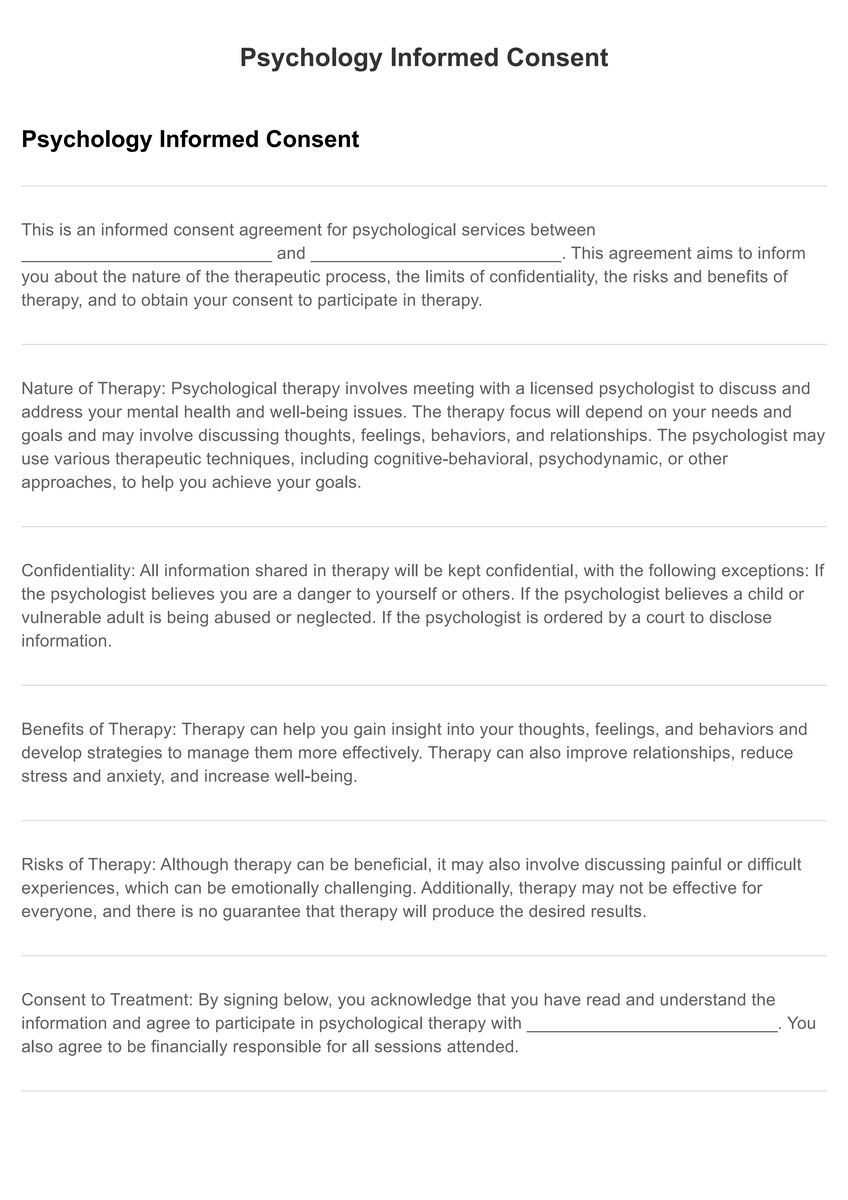
Informed Consent This document ensures clients fully understand the nature, risks, and benefits of psychological treatment before beginning therapy.
Professional Boundaries Clear guidelines establish therapeutic limits, confidentiality parameters, and appropriate client-therapist interactions.
Client Rights The form outlines important client protections including privacy rights, treatment alternatives, and the right to withdraw from therapy.
Ethical Compliance Documentation meets professional psychology standards and regulatory requirements for mental health practice.
What is a Psychology Informed Consent?
A psychology informed consent is a fundamental ethical document that establishes the foundation for any therapeutic relationship between a mental health professional and their client. This comprehensive form serves as both a legal requirement and an ethical cornerstone, ensuring that individuals seeking psychological services have complete understanding of what their treatment will involve.
The informed consent process goes beyond simple documentation. It represents a collaborative dialogue where practitioners explain their therapeutic approach, qualifications, and treatment methodologies in accessible language. Furthermore, the document addresses practical considerations such as session frequency, duration of treatment, fee structures, and cancellation policies, providing clients with transparency about all aspects of their psychological care.
In addition to outlining treatment parameters, the psychology informed consent form details confidentiality protections and their limitations. Clients learn about mandatory reporting requirements, circumstances under which information might be shared, and their rights regarding their psychological records. This transparency builds trust whilst ensuring compliance with professional standards and legal obligations.
How to use Psychology Informed Consent?
Step 1: Download Psychology Informed Consent
First access the psychology informed consent PDF document by downloading it from Pabau below. The downloadable template provides a professionally structured format that meets current psychological practice standards and regulatory requirements. Once downloaded, the document can be customised to reflect your specific practice policies, therapeutic approaches, and relevant local regulations.
Step 2: Customise Practice-Specific Information
Adapt the template to include your professional credentials, qualifications, and specific therapeutic modalities you employ. Insert your practice details including contact information, emergency procedures, and any specialised services you offer. Moreover, ensure that fee structures, payment policies, and cancellation procedures accurately reflect your current practice standards.
Step 3: Review Legal and Ethical Requirements
Verify that the consent form complies with your local jurisdiction's requirements for psychological practice. Check that confidentiality clauses align with current data protection legislation and professional body guidelines. Additionally, ensure that mandatory reporting obligations and their circumstances are clearly articulated according to your regional legal requirements.
Step 4: Present to Client Before Treatment
Schedule adequate time during the initial consultation to thoroughly review the informed consent with your client. Explain each section in accessible language, encouraging questions and ensuring genuine understanding rather than mere signature collection. Document that informed consent was obtained and that the client had opportunity to ask questions and receive clarification.
Step 5: Maintain Documentation and Review Regularly
Store completed consent forms securely according to professional record-keeping standards and data protection requirements. Establish a system for reviewing and updating consent forms regularly to ensure they remain current with evolving professional standards and legal requirements. Consider whether additional consent may be needed if treatment approaches significantly change during the therapeutic relationship.
Who it's helpful for?
The psychology informed consent form is essential for all mental health practitioners providing psychological services, regardless of their specific therapeutic orientation or client demographic. Clinical psychologists, counselling psychologists, psychotherapists, and other qualified mental health professionals require this documentation to establish ethical and legal foundations for their practice.
Private practice psychologists particularly benefit from comprehensive informed consent documentation as it provides clear professional boundaries and protects both practitioner and client interests. However, the form is equally valuable for psychologists working in multidisciplinary settings, community mental health centres, or healthcare institutions where clear consent processes ensure coordinated care and professional accountability.
Clients themselves are significant beneficiaries of thorough informed consent processes. The documentation empowers individuals to make educated decisions about their mental health treatment, understand their rights, and feel confident in their therapeutic relationship. This foundation of understanding often enhances therapeutic outcomes by establishing trust and clear expectations from the outset.
Benefits of using Psychology Informed Consent
- Establishes clear therapeutic boundaries and professional expectations
- Provides legal protection for both practitioner and client
- Enhances client autonomy and informed decision-making
- Demonstrates ethical compliance with professional psychology standards
- Creates foundation for trustworthy therapeutic relationship
The psychology informed consent process fundamentally strengthens the therapeutic alliance by fostering transparency and mutual understanding. When clients feel fully informed about their treatment journey, they often engage more actively in the therapeutic process, leading to improved outcomes and greater satisfaction with their mental health care experience.
Confidentiality and Privacy Considerations
Understanding confidentiality parameters is crucial for both practitioners and clients in psychological services. The informed consent document clearly outlines the scope of confidentiality protection, explaining that psychological communications are privileged but not absolute. Clients learn about circumstances requiring disclosure, such as imminent risk of harm to self or others, suspected child abuse, or court-mandated reporting requirements.
Privacy protections extend beyond session content to include how psychological records are stored, who has access to client information, and how data is shared with other healthcare providers when appropriate. The consent process ensures clients understand their rights regarding their psychological records, including access to their own files and procedures for requesting amendments or restrictions on information sharing.
In today's digital healthcare environment, informed consent must address electronic communication, telepsychology services, and data security measures. Clients need clear information about the risks and benefits of various communication methods, from secure messaging systems to video conferencing platforms used for remote sessions.
Treatment Approach and Professional Qualifications
The psychology informed consent form provides an opportunity for practitioners to clearly communicate their professional background, training, and therapeutic approach. Clients learn about their psychologist's qualifications, areas of specialisation, and continuing education commitments, building confidence in the professional relationship.
Treatment methodology explanations help clients understand what to expect from their psychological services. Whether employing cognitive-behavioural therapy, psychodynamic approaches, or integrative methods, clear communication about therapeutic techniques helps clients engage more effectively in their treatment process.
Furthermore, the consent process addresses treatment limitations and alternative approaches. Clients understand that psychology is not an exact science, that progress varies among individuals, and that multiple treatment options may be available. This realistic expectation setting prevents misunderstandings and supports informed treatment decisions throughout the therapeutic relationship.
Psychology Informed Consent